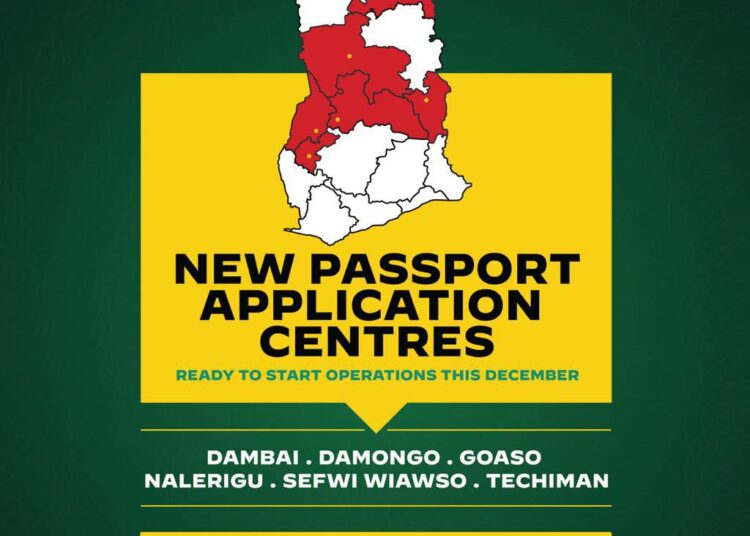
Ghana’s Minister for Foreign Affairs, Hon. Samuel Okudzeto Ablakwa, has announced the completion of new Passport Application Centres (PACs) across all six newly created regions, marking a historic milestone in the country’s passport administration system.
In a statement celebrating one year after Ghanaians voted for the Resetting Ghana agenda, the North Tongu Member of Parliament described the development as a fulfillment of a major promise and a significant step toward building a more efficient, inclusive, and citizen-friendly state.
For the first time in Ghana’s history, every region now has a Passport Application Centre, eliminating the long-standing inconvenience of interstate travel for biometric capturing.
Hon. Ablakwa emphasised that this achievement would bring immediate relief to millions of Ghanaians who previously had to travel several hours, sometimes across difficult terrain, to complete their passport application processes.
“This is the first time in Ghana’s history that all regions will have their own Passport Application Centres. No need to travel hours to another region to have your biometrics captured.”
Ghana’s Minister for Foreign Affairs, Hon. Samuel Okudzeto Ablakwa
The Minister noted that the commissioning of these facilities will take place within December, completing a year-long effort to decentralise passport services and ease the burden on applicants nationwide.

The establishment of these seven new centres, he stressed, was neither symbolic nor routine—it was a clear demonstration of the government’s commitment to resetting public service delivery and honouring the trust placed in them by the Ghanaian people. “I have kept my promise of establishing 7 Passport Application Centres this year in all the Regions lacking them,” he affirmed.
The timing of the announcement carries both administrative and symbolic significance. December 7 marks one year since the 2024 general election, in which Ghanaians handed the National Democratic Congress (NDC) an emphatic victory, returning John Dramani Mahama to the presidency and giving the party an unprecedented two-thirds majority in Parliament.
Commitment to Resetting Ghana Agenda
Hon. Ablakwa called the anniversary an important reminder of the mandate they received to rebuild national institutions and extend essential services to all corners of the country.
“…December 7 is exactly a year since you overwhelmingly voted to reset Ghana. We are determined to create that new Ghana and never to take your massive support for granted.”
Ghana’s Minister for Foreign Affairs, Hon. Samuel Okudzeto Ablakwa
In addition to the rollout of the regional centres, Hon. Ablakwa celebrated a major financial relief for Ghanaian passport applicants: a 30 percent reduction in the application fee. The price has been cut from GHS 500 to GHS 350, a move he described as part of a broader effort to make essential state services more accessible and affordable.

The fee reduction is expected to benefit students, young professionals, traders, artisans, and families who rely on passports not only for travel but also for identification, study abroad opportunities, and international employment.
This reform also comes at an opportune moment for Ghana’s sports enthusiasts. As preparations intensify for the Black Stars’ participation in upcoming tournaments in the United States and Canada, the expanded network of passport centres and lower fees are expected to make travel arrangements easier for fans across the country.
Hon. Ablakwa acknowledged the fortunate timing, saying, “I know this great development is also timely and fortuitous as Ghanaian football fans from all over Ghana prepare to go support the Black Stars in the US and Canada.”
The establishment of the new PACs is part of a broader agenda by the Foreign Affairs Ministry to modernise service delivery, reduce processing times, and decentralise essential functions.
Over the years, passport acquisition has been one of the most frequently criticised public services, with applicants facing delays, overcrowding, and long-distance travel—particularly in regions without dedicated centres. The new infrastructure is expected to ease pressure on older centres and improve turnaround time nationwide.
Hon. Ablakwa’s leadership at the ministry has been marked by strong emphasis on accessibility, transparency, and efficiency. His latest announcement reinforces a pattern of reforms designed to bring government services closer to citizens, especially in underserved regions.
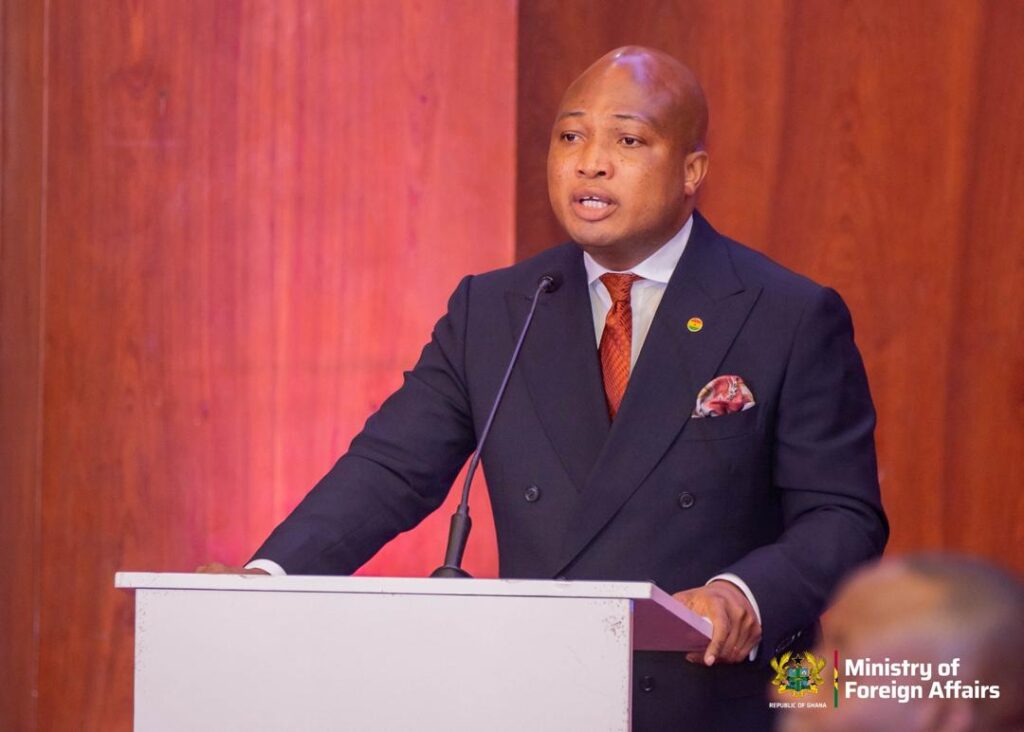
By meeting his commitment to establish seven new centres within one year, he noted, government is proving that the Resetting Ghana agenda is not merely theoretical but grounded in tangible actions.
The statement closed with the minister’s trademark sign-off, “For God and Country,” underscoring the public-service ethos he has repeatedly invoked since assuming the role.
As Ghana marks one year of renewed political direction, the commissioning of Passport Application Centres in each region stands as a concrete manifestation of the government’s pledge to build a fairer, more accessible, and more responsive state.
For millions of citizens who have long waited for equitable access to passport services, the upcoming commissionings represent more than a policy achievement—they signal a new era of decentralised public services and a sign that promises made are indeed promises kept.
READ ALSO: Africa Risks Losing Talent Without Urgent Skills Investment in Energy Sector