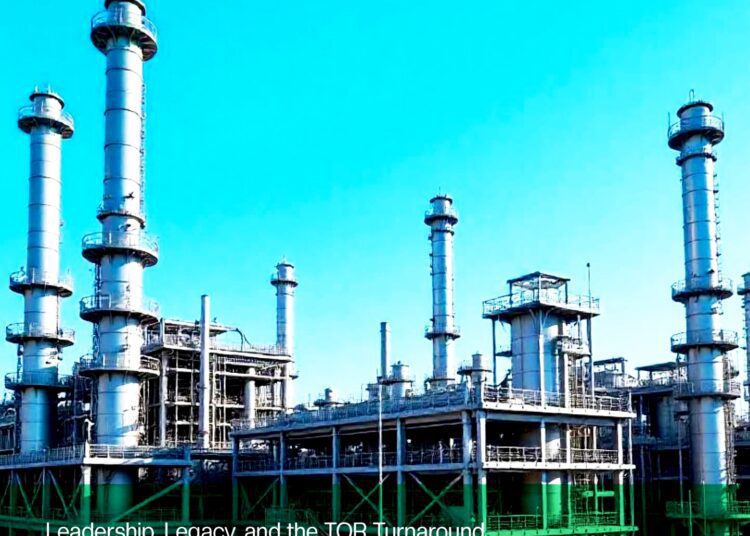
The Executive Secretary of the Chamber of Petroleum Consumers (COPEC), Duncan Amoah, has urged the government to prioritise sustained and targeted investments in the Tema Oil Refinery (TOR) as efforts to revive the country’s only refinery intensify.
Speaking amid growing public debate over the refinery’s future, he warned that without adequate financial support and strategic policy reforms, the long-awaited turnaround could falter soon after operations resume.
Mr. Amoah stressed that the refinery’s current financial condition makes it impossible to operate efficiently without fresh capital injection and structural support. According to him, any attempt to restart TOR without serious investment will only lead to yet another cycle of collapse and costly repair.

“TOR would need investment. So whatever they do there today, if we don’t pump in the appropriate investment, we would simply be waiting on them to fail so that we come back to blame them.”
Duncan Amoah, Executive Secretary of COPEC
He added that the refinery’s financial position is so precarious that “you cannot finance cargoes with TOR books currently. They are in huge deficits or debts.”
The comments reflect broader concerns within the energy sector that TOR’s long-delayed recovery will require more than temporary interventions or short-term fixes.
Use of TOR Recovery Levy for Real Sector Support

Mr. Amoah’s remarks come at a time when pressure is mounting on government to redirect part of the proceeds from the Tema Oil Refinery Recovery Levy into retooling and supporting the facility.
The levy, introduced years ago as a revenue source for revitalising the refinery, has yet to deliver the expected impact on TOR’s operational capacity.
He argued that applying the levy directly to the refinery’s revival is essential for securing its long-term sustainability.
“We would expect that the TOR recovery levy that we have collected over the years, the finance ministry will be magnanimous to apply part of it to their operations, retool them, get them some $80 million revolving funds so that at least they are assured of bringing in at least two, three cargoes so as to sustain their operations.”
Duncan Amoah, Executive Secretary of COPEC
Mr. Amoah cautioned that without a reliable revolving fund to procure crude oil for processing, any resumed operations could last only “two, three months” before the refinery shuts down again due to inadequate financing.
He emphasised that inconsistent operations have historically caused repeated shutdowns, expensive maintenance cycles and idle capacity, further weakening TOR’s long-term viability.
He called on both the Ministry of Finance and the Ministry of Energy to treat the refinery’s revitalisation as a matter of national economic urgency, noting that industry observers are closely monitoring the government’s next steps.
TOR’s Revival Key to Ghana’s Downstream Petroleum Sector
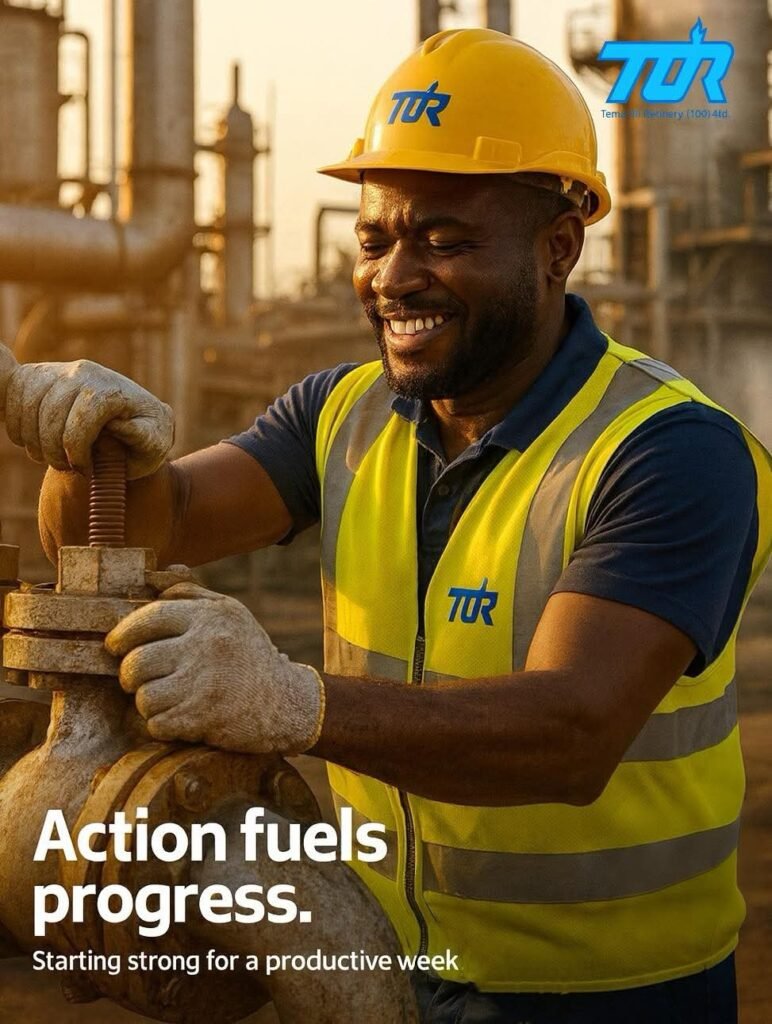
The push for sustained investment aligns with growing expectations that a fully revived TOR could play a transformative role in Ghana’s downstream petroleum sector.
After years of operating far below its potential, the refinery has become symbolic of lost opportunity in a country that produces crude oil yet relies heavily on imported refined products.
Recent indications of progress in TOR’s turnaround efforts have raised hopes among energy sector stakeholders. Industry players believe that restoring the refinery’s full operational capacity could reduce import dependence, stabilise fuel supply, create local jobs and strengthen national energy security.
Mr. Amoah emphasised that ensuring sustainable crude supply to the refinery must be a central part of any long-term strategy to keep TOR operating consistently.
Without this, he warned, Ghana will continue exporting crude and importing the refined products at a higher cost, an economic model he described as inefficient and contradictory.
Call for Policy Reforms to Ensure Consistent Crude Allocation

Mr. Amoah urged the government to introduce policy reforms guaranteeing that domestically produced crude oil is consistently allocated to TOR for processing.
He argued that this is essential for the refinery’s sustainability and for aligning petroleum agreements with national economic interests.
“You cannot continue to produce oil and then ship everything out of your country only to go and bring back refined products from Europe. It’s not good enough.”
Duncan Amoah, Executive Secretary of COPEC
He cautioned that petroleum agreements must be negotiated strategically to ensure crude availability for domestic refining.
He further explained that if Ghana intends for TOR to operate efficiently and sustainably, then “we would also find the need to provide them sustainable crude cargoes so that they can at least keep in operation.”
As Ghana charts a path toward energy security and refinery independence, the calls from COPEC underscore a pressing need for deliberate policy direction and financial commitment.
The success of TOR’s revival, industry analysts argue, will depend not only on technical intervention but also on governance choices that prioritise domestic refining as a cornerstone of national energy policy.
READ ALSO: GSE Indices Fight Back as Composite and Financial Stocks Hit Fresh Highs for December