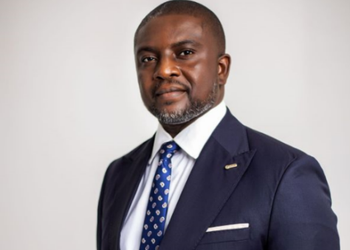
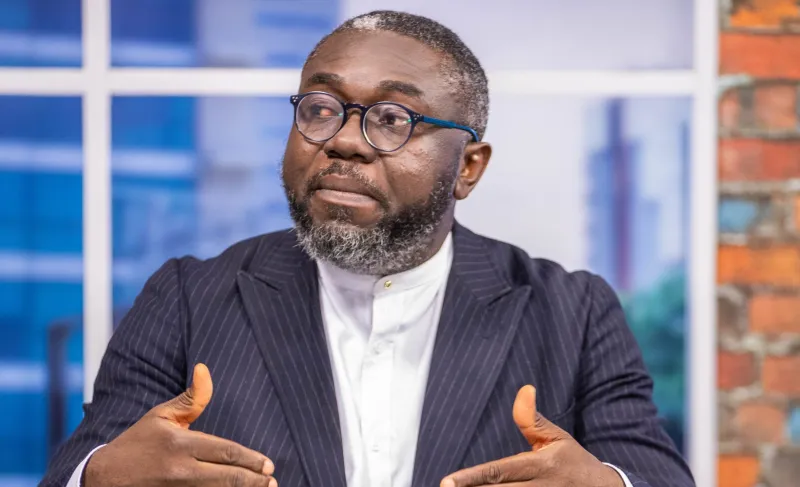
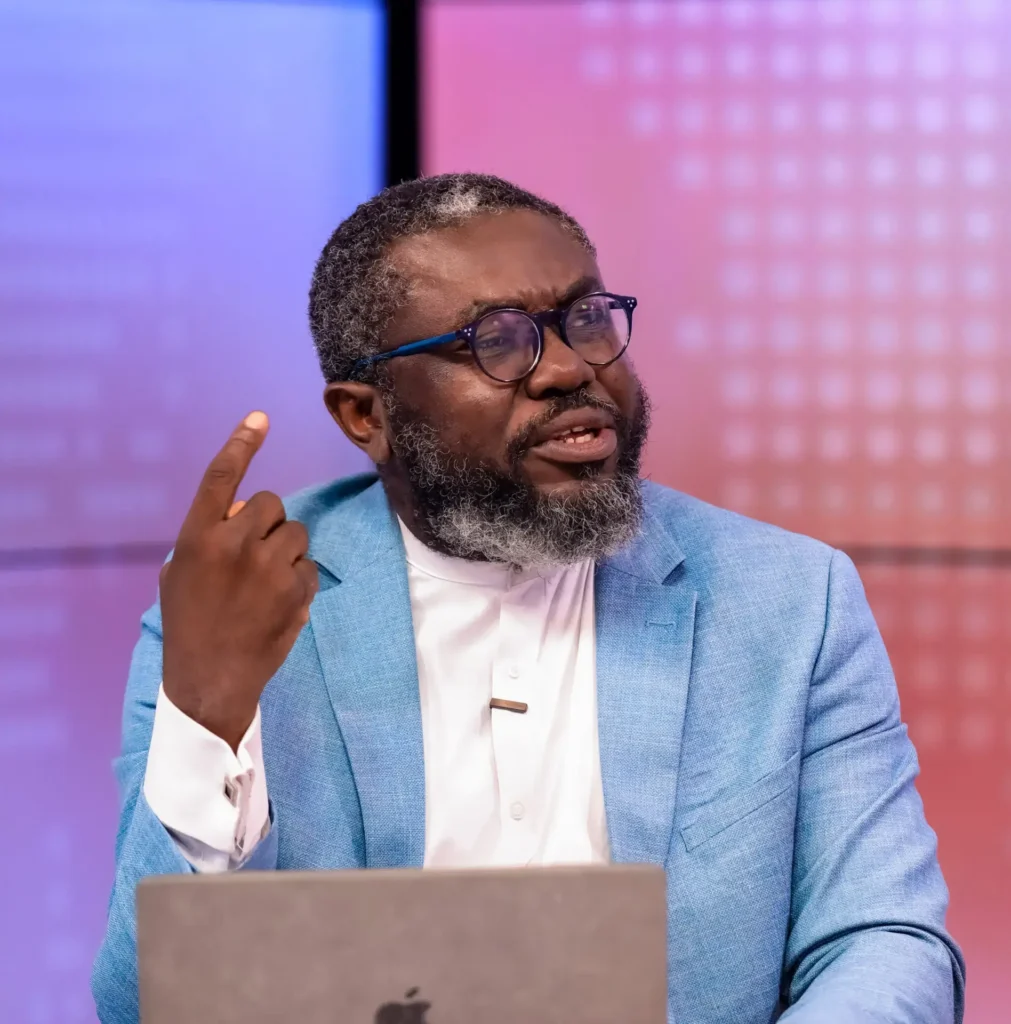
Seasoned activist and private legal practitioner, Osagyefo Oliver Barker-Vormawor, has launched a blistering critique of Ghana’s Parliament, describing it as a “travelling circus of national embarrassment” and arguing that the institution has lost its moral authority to discipline anyone.
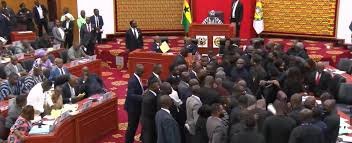
His comments come in the wake of another chaotic sitting on Tuesday, December 9, 2025, when parliamentary business was thrown into turmoil over the disputed Kpandai seat, prompting shouting, chanting, and repeated attempts to obstruct proceedings.
In a deeply reflective yet scathing assessment, Barker-Vormawor argued that the decline in parliamentary conduct is not sudden, but the result of years of eroding norms and avoided accountability.
“Fisticuffs on the floor of the House. Ballot boxes are being snatched like street loot. Drumming and dancing in moments meant for sober law-making. Accusations of murder flung casually across the aisle. Tables scattered. MPs jumping on desks. Others hiding under them. A legislature performing collapse as a theatre”.
Osagyefo Oliver Barker-Vormawor
For him, the roots of this behaviour were planted long before Tuesday’s events. He noted that “something fundamental was broken the day soldiers were invited into the Chamber and nothing came of it.”
That singular moment, he argued, represented an institutional rupture—a point where democratic space was militarised without consequence, creating a moral distortion that continues to shape parliamentary behaviour.
“Once you militarise a civilian space of debate and get away with it, you alter the moral physics of that space forever,” he wrote. In his view, that unaddressed crisis taught Parliament that “power can bruise procedure and walk off without even apologising,” turning disorder from an aberration into a norm.
Privileges Committee Ineffectiveness
Barker-Vormawor directed special criticism at the Privileges Committee, describing it as a body that inspires “no fear, no restraint, no introspection.” The Committee, tasked with holding members accountable for misconduct, has become ineffective, he argued, because it presides over “a political class that has never been taught consequences.”
He described the current political culture as “a politics of no consequences,” one that shapes both behaviour and expectations. According to him, Parliament “moves like a spoilt child who has learnt that tantrums attract attention, and rarely discipline.”
It was against this background that Barker-Vormawor derided the Speaker’s recent proposal to institute “awards of shame” targeting individuals and institutions whose conduct undermines national values.
“Awards. Of. Shame,” he remarked sarcastically, adding that the notion was laughable coming from a House he described as “a cesspool of national embarrassment.” He argued that Parliament, by its own conduct, no longer holds the moral standing to judge others.
“You preside over a cesspool of national embarrassment and want to distribute certificates of disgrace to others. If we are being honest, you do not award shame anymore. You normalise it. You ritualise it. You professionalise it.”
Osagyefo Oliver Barker-Vormawor
The activist suggested that Parliament itself should be the first recipient of any such award. “Give the awards to this Parliament and its superintendents,” he wrote, concluding with the lament: “This, truly, is no country for old men.”

Barker-Vormawor’s critique comes at a time when confidence in Parliament has been tested by repeated displays of disorder. On Tuesday, tensions erupted after Speaker Alban Bagbin deferred his ruling on the disputed Kpandai seat, which had been declared vacant by a letter from the Clerk of Parliament to the Electoral Commission.
The Minority insisted that no government business should continue until the issue was resolved, with Chief Whip Frank Annoh-Dompreh arguing that the Speaker’s decision was unacceptable.
But Bagbin maintained that proceedings would continue, ruling—after a voice vote—that the House would not adjourn. The Minority responded by chanting and attempting to disrupt the session, leading to a heated standoff with the Majority.
Earlier in the day, tensions had already escalated when the Minority blocked Bawku Central MP Mahama Ayariga from responding to demands that he retract a December 4, 2025, letter from the Clerk.
The events of the day reinforced the very concerns Barker-Vormawor raised: a Parliament that he believes has become unmoored from discipline, process, and constitutional sobriety.
To him, each episode of chaos is not merely a political spectacle but a symbol of institutional decay—an erosion accelerated by the absence of consequences for past misconduct.
As the dust settles from yet another turbulent sitting, Barker-Vormawor’s critique is likely to intensify public debate about the direction of Ghana’s democracy and the standards expected of its elected representatives.
His words echo a broader frustration among citizens who increasingly view Parliament not as a chamber of deliberation but as a stage where disorder is rehearsed and repeated.
Whether his remarks prompt introspection within the House remains to be seen. But the activist’s message was unequivocal: if shame is to be awarded, Parliament must be first in line.
READ ALSO: Analyst Warns Ghana’s Energy Crisis Threatens Future Industrial Growth