Concerned National Small-Scale Miners Association has publicly thrown its weight behind the government’s sustained campaign to eradicate illegal mining, locally known as ‘galamsey’.
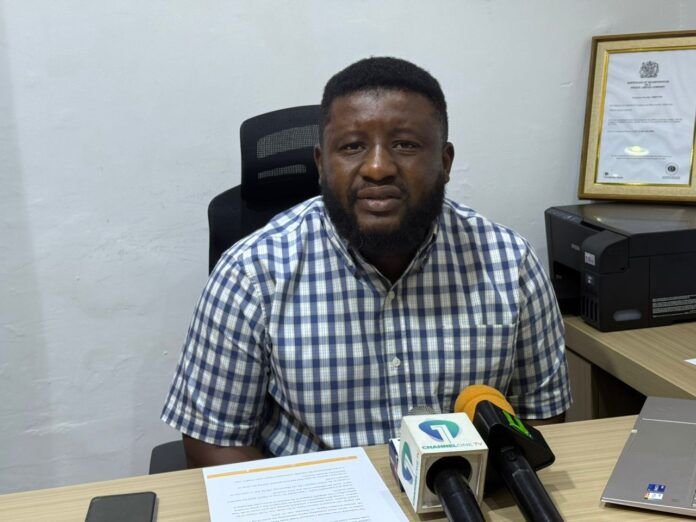
In a press briefing, the president of the association, Mr. Micheal Kwadwo Peprah confirmed their support for the government to eliminate the activities of illegal mining in the country.
He also enumerated the efforts of the association in the galamsey fight. Mr. Peprah added as part of their efforts, dedicated task force has been deployed to the Offin River in the Ashanti Region.
“Task Force activities that we inaugurated some months back to make sure we eradicate illegal mining on the Offin River in Ashanti region and in so doing we have been able to make sure that people who are mining on our various water bodies especially on the Offin Upper Streams being cleared off and for the past two weeks the task force started their operations in Akyiase.”
Mr. Micheal Kwadwo Peprah
This grassroots intervention by legitimate small-scale operators represents a crucial turning point, moving the anti-galamsey fight from purely governmental enforcement to a collective national effort.
This complementary move, as described by the Association, reinforces the necessity for a multi-stakeholder approach to tackle a menace that threatens Ghana’s environmental sustainability and long-term economic prosperity, particularly in the gold-rich Ashanti and Western regions.
Clearing the Offin River: A Practical Demonstration of Commitment
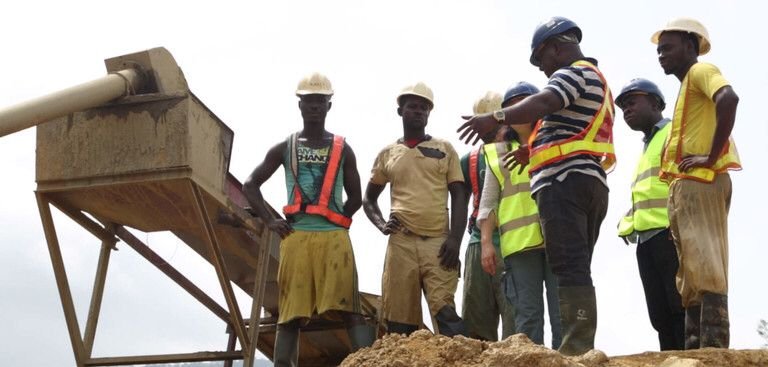
The association’s commitment is being demonstrated through tangible, weeks-long operations on the Offin Upper Streams.


As explained by the Mr. Michael Peprah, the Association’s Task Force, which was inaugurated months ago, is systematically dismantling illegal mining infrastructure along the river course.
According to him, the operations focused on areas including Akyiase, moving downstream to Beposo, and then sweeping through Afipaye and Keniagou in the Amansie West District.
During these focused sweeps, the Task Force successfully “destroyed over a hundred tutututu machines or chanfan machines” that were being used to mine destructively in the river.
These ‘chanfan’ machines, notorious for devastating riverbeds and polluting water with toxic residues, are central to the large-scale environmental damage observed across Ghana’s major
water sources, including the Pra, Ankobra, and Offin.
The association has been meticulous in monitoring “the activities of these people… by using our various speed boats,” yielding immediate, observable results.
The President noted a clear improvement, stating, “we all can testify that now the Offin Upper Stream is getting clearer and that is the advantage of what we have done so far.”
This practical effort is intended to “only to complement the work being done by the NAIMOS and before the Blue Water Guard would be integrated in let’s say the upper stream,” illustrating a willingness to integrate with broader state initiatives.
State and Sector Collaboration: The Next Phase of Anti-Galamsey Strategy

The move by these concerned Small-Scale Miners highlight the increasing convergence between state institutions and responsible industry players in addressing the galamsey crisis.
The government’s efforts have intensified through key strategic interventions, notably the establishment of the National Anti-Illegal Mining Operations Secretariat (NAIMOS), a centralised body under the Ministry of Lands and Natural Resources (MLNR) tasked with coordinating intelligence-led field operations.
NAIMOS has demonstrated its capacity through decisive taskforce operations, crippling illegal networks and dismantling equipment across various regions, including recent major offensives in the Ashanti and Eastern Regions, as documented by the MLNR.
Furthermore, the government launched the Blue Water Guards program, an initiative to train and deploy thousands of Ghanaian youth to monitor and protect the country’s water bodies in collaboration with the Ghana Navy.

These Guards, who serve as “eyes, ears, and first point of contact,” gather intelligence and report activities for swift action, thus establishing a sustainable, community-led surveillance layer.
The crucial role of legal small-scale miners is therefore shifting from mere compliance to active enforcement and partnership.
By cleaning up areas like the Offin River, the association is addressing the environmental fallout while simultaneously restoring credibility to the artisanal and small-scale mining (ASM) sector, which is reserved exclusively for Ghanaian citizens by law and is a significant economic contributor.
This cooperative approach acknowledges the reality that lasting solutions must originate from within the sector itself, effectively isolating the destructive, illicit miners from those committed to sustainable and responsible extraction.
This collective action is paramount to overcome the economic and environmental threats posed by illegal operations, which have led to severe water contamination, deforestation, and the destruction of farmlands.
READ ALSO: Ghana Unveils New Decentralization Policy to Drive Local Development