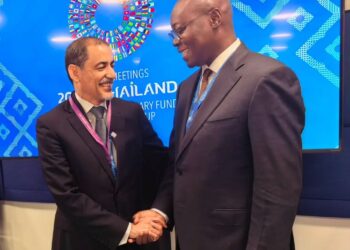
The International Monetary Fund (IMF) has commended Ghana’s economic turnaround in under a year, while offering pointers to sustain the current growth momentum upon adherence.
Ghana has significantly maximized the opportunities under the IMF-ECF program, surpassing all projections by the IMF, and upholding a robust fiscal and monetary momentum necessary for further growth. The IMF is optimistic about a brighter 2026 with the remarkable 2025 score sheet.
The IMF urges Ghana to remain robust in three broad key policy and sectoral areas in which Ghana has laid the structural reforms for their maximization in 2026, while ensuring consistency and advancement in terms of the government’s focus, commitment, and discipline.
Robust Macroeconomic Resilience
According to the IMF, macroeconomic stabilization is gaining momentum following sizable policy slippages in 2024. The Fund recognizes the new government’s “high level of program ownership by adopting corrective policy and structural measures to maintain the program on track and deliver on reforms towards its objectives.”
Though there have been some delays in implementing structural reforms in complex areas, Ghana’s performance has been satisfactory: real GDP growth has rebounded more rapidly than initially envisaged; inflation has declined faster than expected within the Bank of Ghana’s (BoG) target range; and international reserves are growing at a robust pace.
Ghana has also completed agreements with most of its Official Creditor Committee members. The IMF urges Ghana to continue efforts to reach an agreement with the remaining creditors.
According to the IMF, the full and sustainable restoration of macroeconomic stability requires unwavering commitment to the program’s objectives and policies. Risk still stems from external shocks (commodity price volatility and trade policy shocks) amid a generally favourable macroeconomic outlook. The Fund notes that reform slippages are possible, hence, “gains achieved thus far under the program need to be solidified.”
Curbing Debt Crises, Promoting Fiscal Adjustment
Ghana’s fiscal discipline has improved its debt trajectory, as the country’s “debt stock and debt service burden are declining faster than anticipated, and the mechanical signal from the DSA suggests that Ghana could already achieve a moderate risk of debt distress in 2025.”

The Fund again cautions the government of the fact that its “debt risk outlook remains subject to significant vulnerabilities, including related to large prospective domestic financing needs and exposure to commodity-driven exchange rate volatility.”
The staff will reassess Ghana’s debt risk clarification after its debt restructuring is completed and macroeconomic stabilization is well entrenched to avoid premature grading due to unforeseen shocks.
Ghana’s fulfillment of the fiscal policy adjustment under the program is key to preserving debt sustainability, while creating space to address emerging needs. The Fund commends the Ministry of Finance for delivering the 2026 Budget in line with the program objective of the primary fiscal surplus, at 1.5 percent of GDP.

The Fund advises that excess revenue beyond the target in 2026 should be saved or used to reduce arrears in the energy sector, for instance. Regular and transparent electricity tariff adjustments, continuous financial discipline at ECG, and consistent implementation of the Cash Waterfall Mechanism are critical to ensure regular payments to IPPs and fuel suppliers, reduce the energy sector shortfall, and improve transparency and governance in the sector.
The tax base must be broadened – taxation in extractive industries and the digital economy, while reforming the VAT system – to expand social and developmental needs. The government is also urged to strengthen social programs to protect the vulnerable and adopt timely contingency measures like frontloading the revenue measures and reprioritizing MDAs’ budget allocations.
Supporting fiscal adjustment and entrenching fiscal discipline in 2026 requires steadfast implementation of fiscal structural reforms. The government should enhance the fiscal responsibility framework, strengthen the PFM and procurement systems to foster effective compliance with PFM provisions.
According to the IMF, “the operations of the GoldBod should adhere to the highest governance standards and limit fiscal risks,” while “ensuring [that the] steadfast implementation of the CocoBod turnaround strategy remains a major priority.”
To ensure transparency, combat corruption, and effective spending, the asset declaration regime for public officials must be strictly adhered to. “The draft Conduct of Public Officials Bill submitted to Parliament introduces improvements in scope, coverage, and sanctions regime, but the absence of any publicity requirements for senior officials leaves a critical gap in its effectiveness,” the Fund declared.
BoG’s Steadfast Monetary Policy
The IMF also encouraged the BoG to remain prudent in its monetary policy stance and advance reforms. While inflation pressures declined and the Cedi appreciates, the Fund cautions the Bank on further monetary easing – gradual and data-dependent to anchor expectations. The BoG is further encouraged to increase reliance on OMOs for liquidity absorption and sterilization operations, as well as address the Fund’s safeguard assessment recommendations.

“Priority should be given to discontinue BoG’s loss-making quasi-fiscal activities, while ensuring that all accrued losses are absorbed by the government,” the Fund remarked. The BoG’s recent progress in strengthening international buffers and the FX operations framework is commendable, encouraging the deepening of FX markets and mitigating gold-related risks.
According to the Fund, the banking sector has largely performed in recapitalization, strengthened risk management frameworks and practices, reduced NPLs, and supported domestic debt restructuring. The BoG must curtail lingering vulnerabilities while utilizing the bank resolution framework to its fullest.
These aim to guide governance and policy formulation in 2026 for a sustained and robust Ghanaian economy.
READ ALSO: From 14.70 to 10.65: Ghanaian Cedi Records Stunning 27% Rally in One Year