Analysts have described Ghana’s 2025 economic performance and reforms as positioning the country to remain the foremost investment destination in Africa.
According to Forbes, through reforms such as labor policy, green jobs, digital finance, and infrastructure, Ghana has demonstrated itself as a beacon of stability in the region over the past year. The country, aside from its smooth democratic transition, also has a government committed to a new phase of economic opportunity.
“Ghana spent the first half of 2025 proving once again why it is seen as a beacon of stability in West Africa.”
Forbes Africa
The Bold Plan, 24-Hour Economy
The 24-Hour economy is one of the country’s boldest steps, promoting “midnight factories to sunrise farms.” The 24-Hour economy’s objective is to extend operating hours across key sectors such as agriculture, manufacturing, logistics, and public services.

According to President John Dramani Mahama, “Ghana’s 24-hour economy is aimed at transforming the country into an import substitution and export-led economy.” Night operations will be reinforced with low utility tariffs, extended port hours and licensing office hours, and a new Employment Act to guide shift-based work.



Forbes reveals that “local economists project that the policy, if properly implemented, could raise real GDP by more than 30 percent in a decade and create over three million jobs.”
Ghana’s Economy Going Digital
With over 92 percent of adults having the potential to use mobile money through some form of ID, the country can lead Africa in financial inclusion. FinTech platforms in Ghana, like Zeepay, are expanding to help close long-standing gaps.
This interest is at the heart of FinTech companies, as confirmed by Mr. Andrew Takyi-Appiah, Managing Director of Zeepay, “We want to revolutionize mobile money through both digital products and services.”
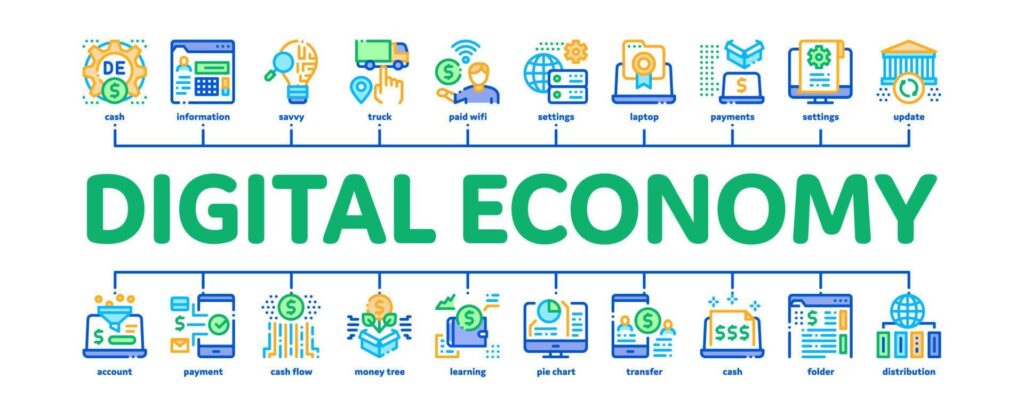
Ghana has invested more in the digital space to expand the economy for further growth. Forbes emphasized the work of the Ghana Investment Fund for Electronic Communications (GIFEC), which is bridging the digital divide by building ICT labs, telecom towers, and rural tech hubs. According to Mr. Tanko Rashid-Computer, CEO of GIFEC, “We [GIFEC] want our rural folks to communicate, browse, and trade, just like anyone in Accra.”
Farmers are being assisted in interpreting climate data, market women are being trained in online trade, and students are also being taught to code. Banks, including Traditional and Rural Banks, are shifting to digital services. Commercial banks are also expanding across the length and breadth of the country, while introducing digital tools to bring finance closer.
These digital expansions will drive the country’s GDP, increase key-sector productivity, and improve efficiency in economic activities. Digitalization should continue to cover all aspects of the economy.
Equipping the Green Jobs Strategy
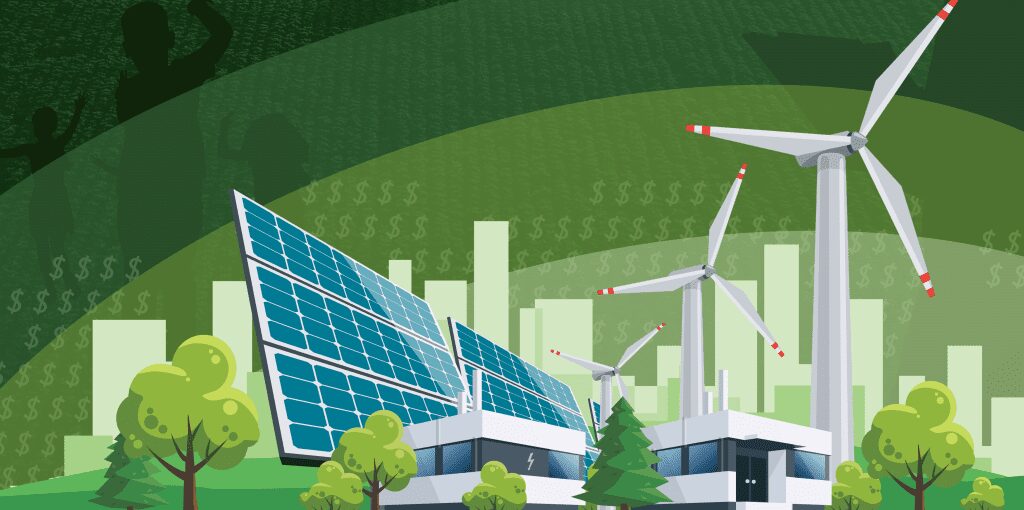
The government has begun investing in circular economic initiatives such as solar mini-grids and renewable energy corridors, targeting the creation of one million jobs. Forbes mentioned that agriculture, which remains the largest employer, is undergoing a major transformation.
Ghana spends over US$ 2 billion annually on food imports that could be produced at home. The government, through the Ministry of Food and Agriculture, is scaling up irrigation, school farms, and agro-processing hubs through its Feed Ghana and Feed Industry programs.
Hon. Minister Eric Opoku, the Food and Agriculture Minister, has professed that “If agriculture is rain-fed, you can’t run a 24-hour economy,” and that, as a government, “We want to feed people and feed industry.” These shifts are supported by a broader pro-business environment.

Ghana, the Investment Hub
According to annual regional rankings, Ghana is consistently ranked among the top five countries for doing business in West Africa, with incentives targeted at high-growth sectors including ICT, pharmaceuticals, agro-processing, and automotive assembly.
The Africa Continental Free Trade Area (AfCFTA) Secretariat, headquartered in Accra, gives Ghana direct access to a market of 1.3 billion people, Forbes remarked. Forbes added that “for investors, that means infrastructure, regulation, and opportunity converge in one of Africa’s most strategic locations.”
Infrastructure in Ghana is rising to meet the scale of its ambition. The Tema Port Expansion is boosting trade capacity, while major road corridors are connecting regions. Telecom and broadband infrastructure are also expanding rapidly, with GIFEC supporting digital access across all 268 districts in Ghana. Renewable energy, airport upgrades, and smart city plans are positioning Ghana as a regional hub.
Beyond Ghana’s economy, the country is leveraging its influence on the global stage. It plays an active role in ECOWAS diplomacy, peacekeeping, and climate negotiations.
Ghana’s soft power is growing through music, fashion, and film. Diaspora engagement and tourism strategies are helping rebrand Ghana as not only a business destination but also a cultural hub.
Forbes Africa reaffirmed that “the nation’s 24-hour economy is part of a larger strategy to reengineer productivity, inclusion, and sustainability. In doing so, Ghana is proving that with the right policies, systems, and leadership, time can be reclaimed as a national asset.”
READ ALSO: Energy Economist Urges Ghana to Monitor Oil Market as Venezuela Uncertainty Grows