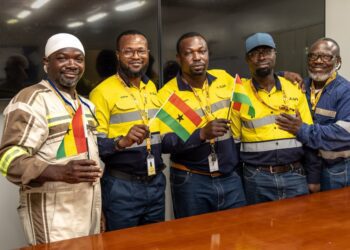
Ghana Extractive Industries Transparency Initiative (GHEITI) has called on the government to ensure that the Damang Gold Mine’s transition to state ownership in 2026 is anchored on local participation and rigorous governance.
Following an amicable settlement between Gold Fields and the Republic after the conclusion of a 30-year lease, the state must now decide whether to manage the asset as a government-owned commercial vehicle or offload it to private investors.
GHEITI asserted that the ultimate path chosen will have “far reaching implications for Ghana’s desire to localise the mining industry for greater value retention.”
“If Government decides to offload the mine to a foreign investor, GHEITI will strongly urge that local participation is highly prioritised. On the other hand, the Government is encouraged to consider a wholly owned Ghanaian company.”
GHEITI Report
As the 2026 deadline approaches, the Multi-Stakeholder Group (MSG) of GHEITI emphasizes that the transition period is a critical window to redefine how Ghana manages its finite mineral resources.
The choice to potentially transform Damang into a State-Owned Enterprise (SOE) brings both opportunity and peril, as GHEITI warns that such a move “again faces the risk of political capture and associated with it, operational inefficiency.“
To mitigate these risks, the initiative recommends that any future disposal or management plan be subjected to an open, competitive bidding process that prioritizes Ghanaian companies or ensures high-level local participation if a foreign partner is selected.
Strategic Governance and the Risks of Multinational Dominance

For decades, the leasing of massive concessions to multinational corporations has been a cornerstone of Ghana’s extractive policy, yet this model has often led to “value leakage” where the lion’s share of profits is repatriated.
While foreign direct investment (FDI) has historically provided the capital required for deep-level mining, the trade-off has frequently included environmental degradation and land-use conflicts that leave host communities “dispossessed of traditional livelihoods.”
The GHEITI report highlights that maintaining the status quo without increasing local equity often limits the country to receiving only royalties and taxes, rather than capturing the full value of the gold “from pit to port.”
To counter these historical imbalances, GHEITI suggests that the government could establish a Special Purpose Vehicle (SPV), domiciled in Ghana, to serve as the primary investor and operator.
This SPV would be empowered to seek both “equity and debt capital investments,” creating a hybrid model that retains sovereignty while accessing global finance.
By shifting away from total multinational control, Ghana can avoid the “implementation paradox” where environmental sustainability is promised by foreign firms but rarely realized due to weak local institutional support.
Boosting Economic Gains Through Local Ownership Models

The transition of the Damang Mine represents a unique opportunity to test the “consortium model,” where qualified local operators in the mining sector pool resources to manage large-scale assets.
Localizing ownership does more than just keep profits within the borders; it acts as a catalyst for “multiplier effects” across the Ghanaian economy.
When a mine is locally owned, procurement for heavy machinery, specialized labor, and engineering services is more likely to be sourced from Ghanaian SMEs, thereby driving GDP growth and creating high-value jobs for the nation’s youth.
Expert analysis suggests that a focus on local participation can transform the mining sector from an “enclave industry” into a fully integrated part of the national economy.
By empowering Ghanaian investors, the state reduces its vulnerability to the “boom and bust” cycles of global commodity prices that often dictate the investment decisions of multinationals.
Furthermore, a successful transition at Damang could provide a blueprint for other expiring leases, ensuring that Ghana’s mineral wealth serves as a “lever for productive transformation” rather than a depleting asset managed by outsiders.
Ensuring Accountability in the Post-Gold Fields Era
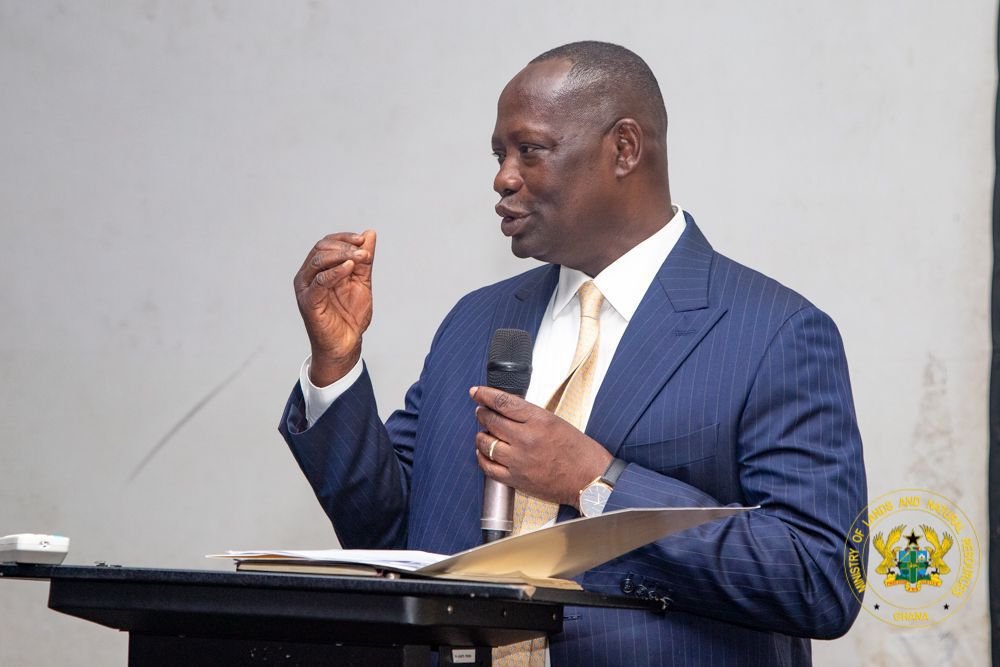
The expiration of Gold Fields’ lease is not merely a legal milestone but a test of Ghana’s commitment to the Extractive Industries Transparency Initiative (EITI) principles.
GHEITI maintains that “managing the mine will require discipline, rigorous governance structures and operational control” to remain sustainable.
Without these safeguards, the asset risks becoming a burden on the taxpayer rather than a national treasure. Transparency in the bidding process and the clear articulation of the government’s position are essential to building public trust and attracting the right caliber of local and international investment.
READ ALSO: Ten Convicted In Cyberbullying Case Targeting Brigitte Macron