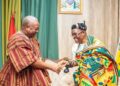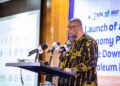

Abdul Razak Baba, the Deputy Chief Executive Officer (DCEO) of the Ghana Investment Promotion Centre (GIPC), has hailed KEDA (Ghana) Ceramics Company Limited as a “gold standard,” for domestic value addition and industrial sustainability during a high-level facility tour of the Shama-based factory in the Western Region.
Mr. Baba lauded the company’s massive $300 million investment since 2017 as a transformative force for the Western Region. With KEDA currently preparing for a Phase II sanitary ware expansion – projected to inject another $200 – 500 million into the local economy – the GIPC lead emphasized that the factory is a vital anchor for Ghana’s “Reset Agenda.”
“KEDA Ceramics is a prime example of the resilient, homegrown agribusinesses and industrial firms we are targeting through our Investment Opportunity Mapping Project (IOMP).
“By sourcing nearly all raw materials locally and investing in high-tech automation, KEDA is doing more than just manufacturing tiles; it is securing Ghana’s economic sovereignty. We urge other investors to replicate this model of deep integration and massive social impact”
Abdul Razak Baba, DCEO of GIPC
Currently commanding a 45% share of the domestic market, KEDA has moved beyond simple import substitution. For Baba, the company’s success proves that large-scale manufacturing can thrive in Ghana when anchored on local raw materials and a 24-hour production cycle.

He noted that by sourcing 99% of its raw materials locally, the company has effectively insulated itself from the foreign exchange volatility that often plagues import-dependent industries. The GIPC revealed that the facility is a regional export powerhouse, supplying markets across Africa, Europe, and the Americas.
A key highlight of the visit was the factory’s shift toward total self-sufficiency. KEDA management revealed that beyond tile and sanitary ware production, the company is now working toward the domestic manufacture of glazes and industrial chemicals.
This vertical integration is supported by a sophisticated skills-transfer program, where local staff are trained alongside Chinese experts and top-performing employees are sent to China for advanced technical specialization.
The Western Regional Investment Forum
The tour served as a crucial precursor to the upcoming Western Regional Investment Forum.
Earlier in the week, Abdul Razak Baba led a GIPC delegation to pay a courtesy call on the Western Regional Minister, Hon. Joseph Nelson, in Sekondi-Takoradi. The discussions focused on mapping investment-ready projects across mining, oil and gas, and agriculture.

Minister Nelson emphasized that the region is ready to provide the land and regulatory support necessary to turn the Western Region into an industrial enclave. Central to this vision is the improvement of supporting infrastructure, including the ongoing efforts to bolster regional healthcare.
“The Western Region is at a strategic inflection point. From the Petroleum Hub in Jomoro to industrial leaders like KEDA in Shama, we are creating a corridor of prosperity.
“Our partnership with GIPC is about ensuring that these investment opportunities are visible to the world. We are particularly focused on sustainable growth that touches every sector, including the critical infrastructure needed to support our growing industrial workforce”
Hon. Joseph Nelson, Western Regional Minister
Beyond industrial tiles and oil rigs, the GIPC mission highlighted the human cost of rapid industrialization. In his meeting with the Regional Minister, Abdul Razak Baba touched on the urgent need for enhanced medical facilities.
GIPC announced that discussions are currently being finalized for the establishment of a four-bed Intensive Care Unit (ICU) at the Takoradi Hospital – a project designed to provide the critical care capacity required by the region’s expanding population and industrial labor force.

“We cannot speak of industrial growth without addressing the welfare of the people driving it,” Mr. Baba noted.
As the engagement concluded, it was clear that the Western Region is being positioned as another industrial anchor of the 2026 economic reset, with KEDA Ceramics serving as the blueprint for what is possible when local resources meet global capital.
READ ALSO: NPP Unity Talks Face Credibility Questions