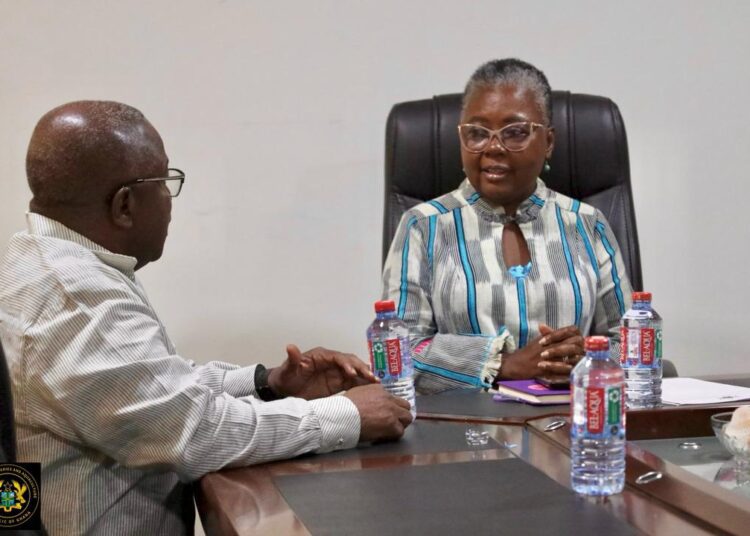
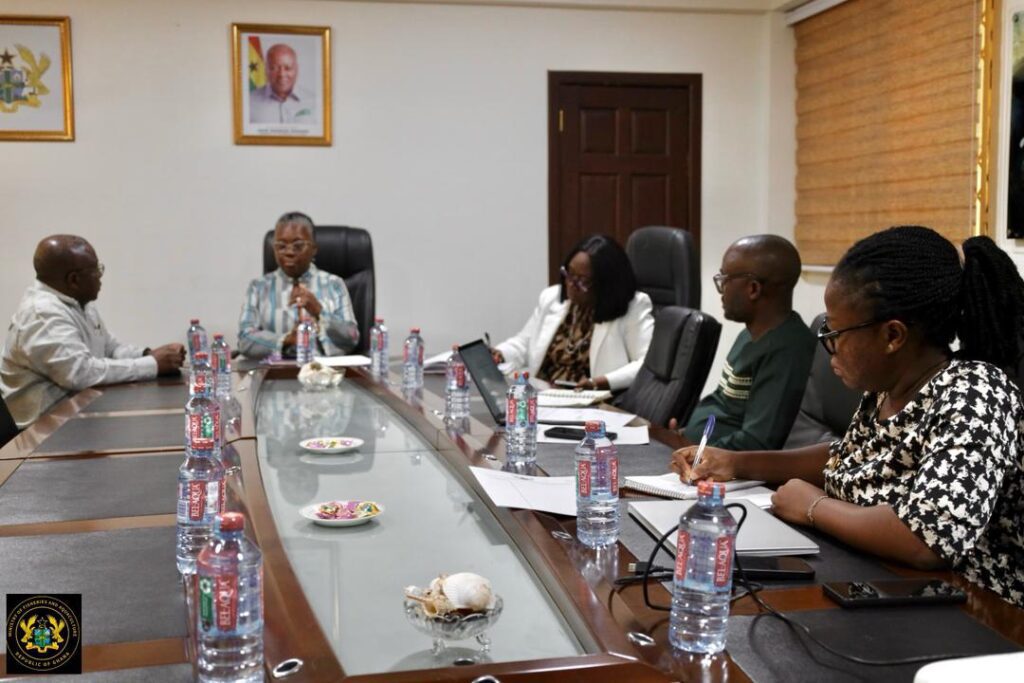
The Minister for Fisheries and Aquaculture, Hon. Emelia Arthur, has initiated a strategic alignment of Ghana’s marine policies to drive a more resilient and coordinated Blue Economy during a high-level engagement with Dr. Nii Moi Thompson, Senior Advisor to the President on the Sustainable Development Goals (SDGs) – to finalize the integration of the Ghana Blue Economy Strategy (BES) and the Ghana Sustainable Ocean Plan (SOP).
According to Hon. Arthur, this harmonization is designed to eliminate institutional overlaps and ensure that Ghana’s maritime resources are managed in a manner that supports both national industrial targets and global environmental commitments under SDG 14 (Life Below Water). The centerpiece of the engagement was the immediate formation of a Joint Technical Committee (JTC).
“The engagement forms part of government’s efforts to strengthen policy coherence, improve institutional coordination, and ensure effective implementation of Ghana’s ocean and blue economy agenda. These frameworks will enhance efficiency, reduce duplication of efforts, and enable Ghana to present a coherent and unified national position on ocean issues at regional and global levels”
Hon. Emelia Arthur, Minister for Fisheries and Aquaculture
The minister revealed that this JTC body will comprise experts from the Blue Economy Secretariat and the SDGs Advisory Unit at the Office of the President and will be tasked with creating a unified set of indicators and monitoring mechanisms, providing the Presidency with a “single source of truth,” for ocean-related data.
Hon. Author explained that this move is particularly critical as Ghana prepares for upcoming international maritime summits, where a coherent national position is essential for securing climate finance and attracting “blue” investments.
Strengthening Ocean Wealth
The Sustainable Ocean Plan, published in late 2025, serves as the overarching “umbrella” for marine governance, while the Blue Economy Strategy provides the industrial roadmap for sector-specific growth.
By merging these frameworks, the Ministry of Fisheries and Aquaculture aims to accelerate progress across six strategic pillars: Ocean Wealth, Health, Knowledge, Equity, Finance, and Maritime Security. Hon. Emelia Arthur emphasized that this integration is not merely an administrative exercise but a vital step toward protecting the livelihoods of millions of Ghanaians who depend on the sea.
Specifically, the harmonization will streamline the regulation of capture fisheries and aquaculture, ensuring that production targets – projected to reach over 38,000 metric tonnes in 2026 – are met without compromising the health of marine ecosystems.
This data-driven approach is expected to aid in lifting international regulatory “yellow cards” and opening up high-value export markets for Ghanaian seafood.
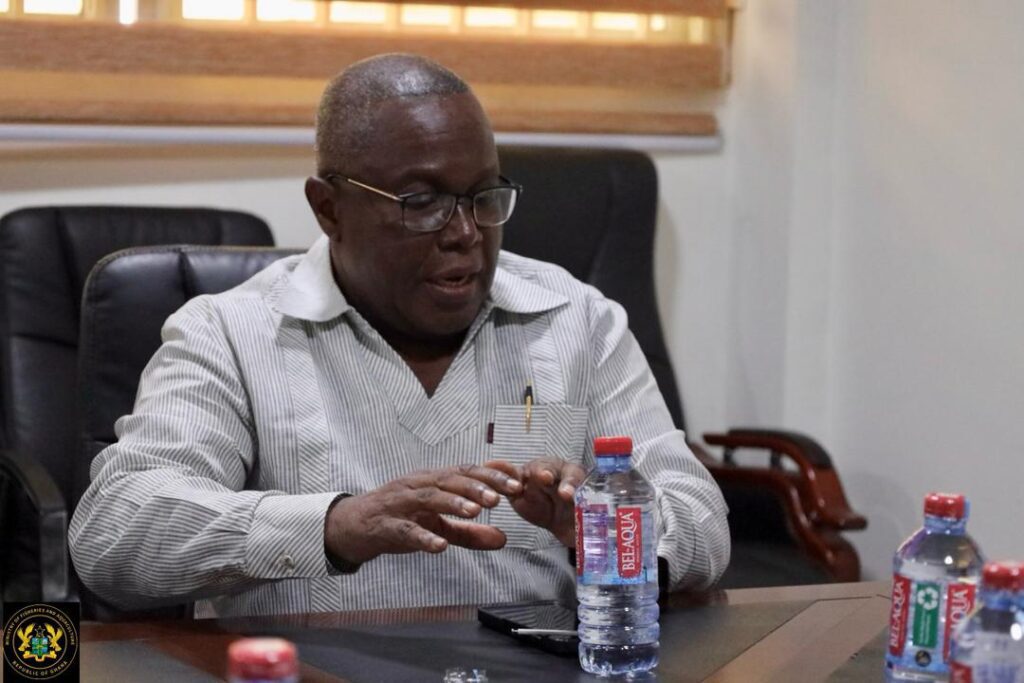
“Strong inter-sectoral collaboration is essential in strengthening ocean governance and promoting sustainable fisheries management. This committee will work to align activities and monitoring mechanisms, ensuring that our ocean resources remain a source of resilience and long-term prosperity for present and future generations”
Hon. Emelia Arthur, Minister for Fisheries and Aquaculture
Driving Value-Chain Integration
The Joint Technical Committee will also play a pivotal role in the “Feed the Industry” and “24-Hour Economy” programmes by ensuring a steady and sustainable supply of raw materials from the ocean.
By integrating the Sustainable Ocean Plan’s focus on ecosystem restoration with the Blue Economy Strategy’s drive for industrial expansion, the government is creating a “circular” maritime economy. This includes projects for mangrove restoration, which protects coastal infrastructure from erosion while providing breeding grounds for commercial fish species.
The Minister noted that the JTC would provide timely policy support to the Presidency, ensuring that “Ghana remains at the forefront of the High-Level Panel for a Sustainable Ocean Economy.” This leadership role is expected to unlock innovative financing options, such as Blue Bonds, to fund maritime infrastructure and community-led conservation projects.
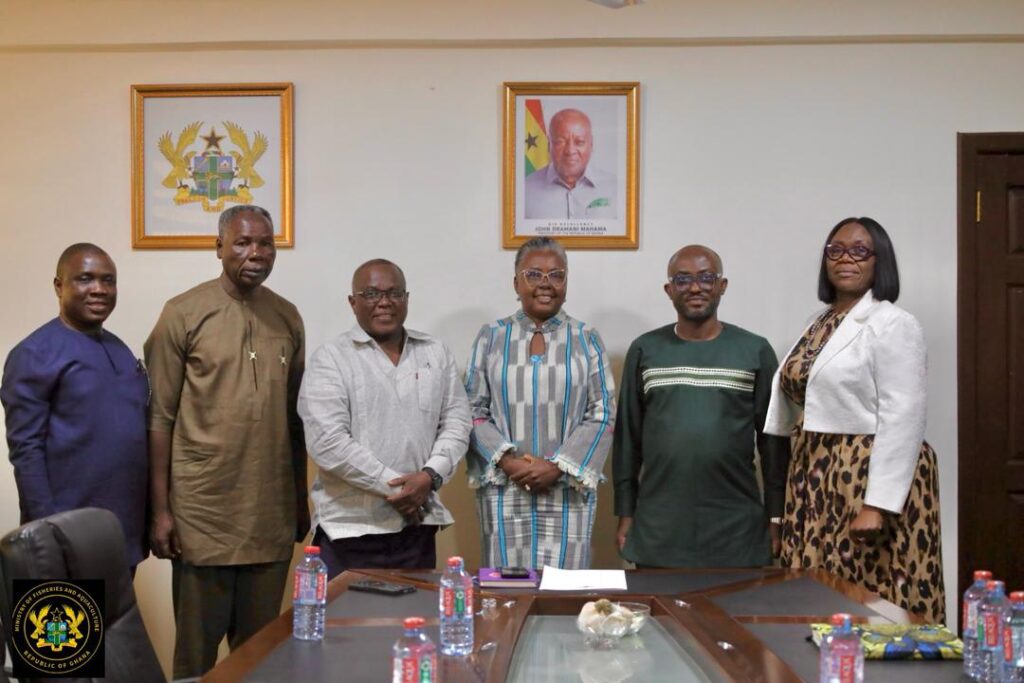
“This is a national vision for job creation, food security, and environmental stewardship. By ensuring that our policies move in tandem, we are building a globally competitive fisheries sector capable of safeguarding our resources while supporting the national industrial reset.
“We are committed to presenting a unified front that reflects our leadership in global ocean governance”
Hon. Emelia Arthur, Minister for Fisheries and Aquaculture
READ ALSO: Committee Commissioned to Investigate ‘Medical Kalabule’ at Korle-Bu, Ridge