
Institute of Economic Affairs (IEA) has hit back at assertions that Ghana lacks the financial muscle to take full control of its extractive sector, labeling such claims as a barrier to national prosperity.
In a recent press briefing in Accra, the IEA argued that the nation’s current royalty-based regime is a colonial relic that shortchanges citizens while exporting immense wealth to foreign entities.
The think tank emphasized that with the right institutional reforms and strategic investment, Ghana can transition from a mere rent-collector to a primary owner and operator of its mineral wealth.
Expanding on this position, the IEA highlighted that the technical expertise required for large-scale mining is already present within the country’s borders. Indigenous firms such as Engineersand Planners and Rocksure International are already executing the heavy lifting digging and excavating on behalf of foreign leaseholders.
Furthermore, the IEA maintains that Ghana’s underground resources serve as more than enough collateral to secure global financing, debunking the myth that the state must rely on foreign “ownership” to unlock capital.
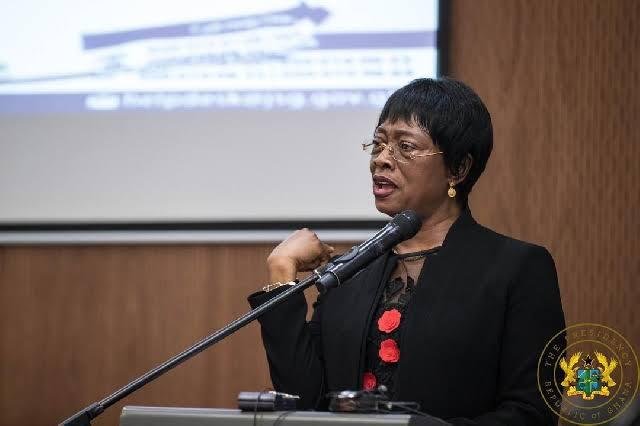
“What you have in the ground is worth enough for Ghana to be able to attract financing if we do lack the financing, globally, in Africa or even within the Middle East. Why can’t you do the same? What is required are institutional reforms, resource-backed financing mechanisms and strategic investment by us.”
Sophia Akuffo
The Myth of Technical and Financial Incapacity
A central pillar of the IEA’s argument is that technology and capital are no longer innate advantages exclusive to foreign conglomerates. These assets can be “purchased, leased, or acquired through partnerships,” mirroring the very strategies used by international firms. In many instances, foreign companies secure a contract first and then “shop for financing” based on the value of the lease.
Experts argue that if Ghana adopts similar resource-backed financing mechanisms, the state could fund its own operations without surrendering ownership rights. This shift would allow the country to move away from its “17 visits to the IMF” and instead leverage its mineral “wealth to reclaim control.”
Beyond the “Truncated” Sliding Scale

The IEA expressed strong reservations regarding the government’s proposed royalty framework, specifically the “truncated sliding scale” that caps royalties at 12%.
Under this model, the state’s take remains stagnant even if global commodity prices soar, a structure the IEA deems “inequitable and short-sighted.”
By contrast, nations like Norway and Botswana have utilized robust fiscal frameworks and state participation to build massive sovereign wealth funds.
The current Ghanaian system, which limits the upside to a “top 9 to 12%,” is criticized for failing to capture the full potential value of the natural resource environment, effectively “foreclosing development opportunities” for future generations.
A Call for Modern National Ownership

To achieve the success seen in hubs like Dubai, the IEA insists that Ghana must “abandon the colonial force of giving away ownership rights” and move toward a model of full national ownership. This strategy involves the state holding the primary rights to the resources while contracting the private sector for operational delivery.
Such a transition would align with the “best practices now prevailing” in resource-rich nations that have successfully bridged the gap between poverty and immense wealth.
By exercising greater sovereignty, Ghana can ensure that its gold, lithium, and other minerals serve as the bedrock for a prosperous, self-sustaining economy rather than a source of “outdated royalty structures” that enrich others.
READ ALSO: GSA Aligns 2026 Roadmap with MoTAI’s Strategic Planning