Ghana’s upstream petroleum sector is facing renewed scrutiny following a sharp decline in crude oil receipts and total petroleum revenues, prompting calls for urgent policy and regulatory reset to revive investment and production.
Energy analyst and Executive Director of the Centre for Environmental Management and Sustainable Energy (CEMSE), Benjamin Nsiah, has warned that the current trajectory of Ghana’s upstream petroleum sector is unsustainable, citing falling output levels, weak exploration activity and dwindling investor confidence as major threats to future revenue flows.
Speaking in an interview, Nsiah described the latest revenue figures as deeply troubling and indicative of broader structural challenges within the sector.
“The 2025 petroleum revenue is one of the worst performances in our petroleum upstream,” he said, describing the figures as a wake-up call for policymakers and industry stakeholders.
Official sector data show that crude oil lifting receipts fell significantly in the second half of 2025. According to figures released by the Bank of Ghana, receipts declined to US$198.25 million, down from US$369.25 million recorded during the same period in 2024. This represents a drop of more than 46 percent year-on-year.
The decline in crude lifting receipts mirrors a broader contraction in petroleum revenues. Nsiah noted that Ghana’s total petroleum revenue fell from about US$1.3 billion in 2024 to approximately US$769 million in 2025, a decline of roughly 43 percent.
Falling Production, Not Prices, Driving Revenue Decline
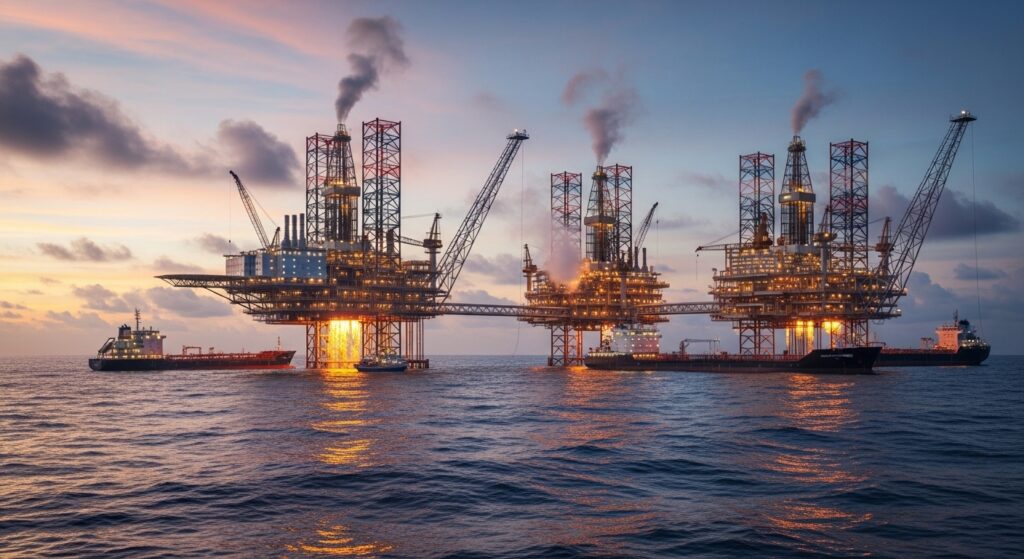
While global oil price volatility has affected petroleum-producing countries worldwide, Nsiah argued that Ghana’s revenue challenges are being driven more by declining production volumes than by unfavourable pricing conditions.
“Price may not be in our favour. But if we are able to produce more, output will be in our favour. And such output at even a constant or stable price brings in more revenue.”
Benjamin Nsiah, Energy analyst and Executive Director of CEMSE
According to the analyst, Ghana’s upstream output has fallen sharply over the past few years, reflecting reduced investment in both exploration and field development.
“An upstream that was doing around 70 million barrels is now doing around 35 million barrels,” Nsiah noted, attributing the decline largely to the country’s inability to attract significant new upstream investment since 2019.
Nsiah warned that the slowdown in upstream activity poses serious risks to Ghana’s long-term energy security and fiscal stability. He described the sector as being “almost near comatose,” stressing the need for decisive action to reverse the trend.

“It is worrying and it must be very troubling to we industrial players in the petroleum upstream.
“We need certain critical, very intentional interventions in attracting the needed investment for exploratory as well as developmental activities.”
Benjamin Nsiah, Energy analyst and Executive Director of CEMSE
He argued that without fresh capital inflows, Ghana risks accelerating declines in production from existing fields while missing opportunities to unlock new discoveries.
The energy analyst called on the Ministry of Energy and Green Transition to provide strong strategic leadership, particularly by empowering the Petroleum Commission to review regulatory frameworks and investment incentives.
He suggested that regulatory rigidity, fiscal terms and policy uncertainty may be discouraging potential investors at a time when competition for upstream capital is intensifying across Africa.
GNPC’s Financial Health at Risk
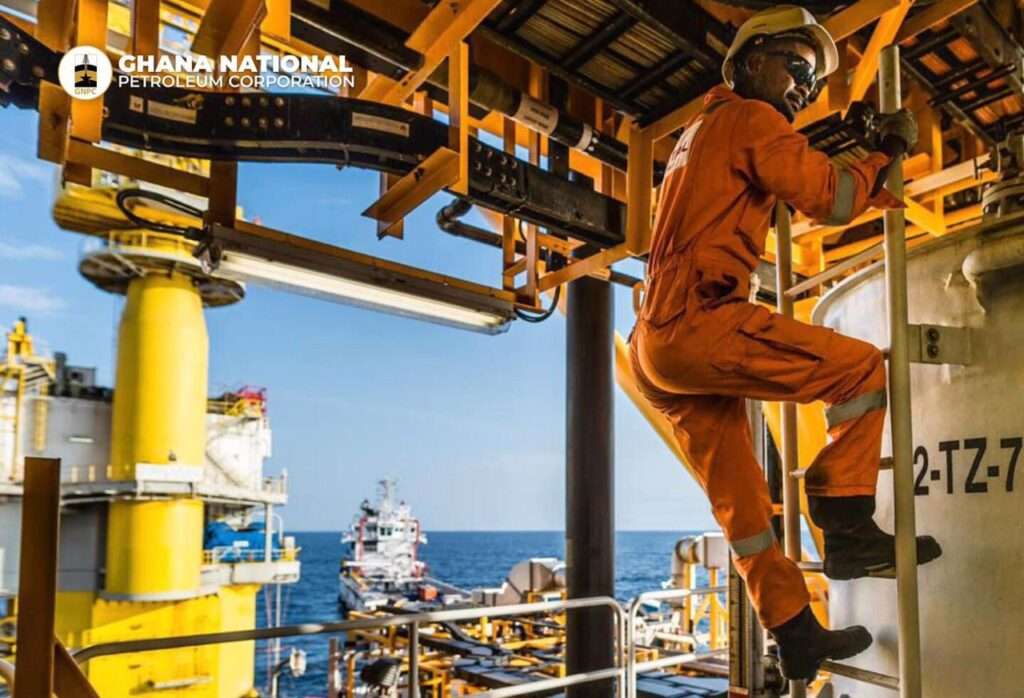
Beyond national revenue implications, Nsiah cautioned that prolonged weakness in upstream performance could undermine the financial position of the Ghana National Petroleum Corporation (GNPC), which relies heavily on petroleum receipts to meet its obligations.
“GNPC’s main source of revenue comes from our petroleum process.
“And if the sector is not doing well, it’s also going to impact GNPC negatively in terms of being able to contribute to cash calls and also being able to get other revenues to explore the Volta Basin and other offshore activities.”
Benjamin Nsiah, Energy analyst and Executive Director of CEMSE
He added that reduced cash flows could limit GNPC’s capacity to support frontier exploration, further compounding the sector’s challenges.
Nsiah warned that failure to act decisively could trap Ghana’s upstream petroleum sector in a vicious cycle of declining output, shrinking revenues and weakened institutional capacity.
“If we are not able to develop our wells, explore more oil, it means that our outputs will continue to crash.
“If our output continues to crash, revenue flows crashes, and GNPC crashes within the medium term, which I don’t think Ghanaians want to see.”
Benjamin Nsiah, Energy analyst and Executive Director of CEMSE
As Ghana navigates a broader energy transition agenda, Nsiah stressed that upstream petroleum remains critical to fiscal stability, industrial growth and funding for national development.
He urged policymakers to treat the current downturn as an opportunity to implement reforms that restore investor confidence and secure the sector’s future.