
The Bank of Ghana has disclosed that total inflows into the Petroleum Holding Fund (PHF) reached US$399.65 million in the second half of 2025, reflecting a combination of crude oil lifting proceeds, corporate income taxes and interest earned on the fund’s account.
The figures were contained in the Central Bank’s semi-annual report on Ghana’s petroleum finds for the second half of 2025, which provides an overview of revenue inflows, allocations and the performance of the country’s petroleum funds.
“Crude oil lifting proceeds accounted for US$198.25 million of the total receipts, while other income – made up of corporate income tax and PHF interest – stood at US$201.40 million.”
Semi-annual report on Ghana’s petroleum finds
This means non-lifting revenue slightly exceeded earnings from crude oil sales during the review period.
The Bank of Ghana explained that corporate income taxes formed the bulk of the non-lifting inflows into the Petroleum Holding Fund. Of the US$201.40 million recorded under other income, “corporate income tax contributed US$198.09 million, with interest on the PHF account amounting to US$3.31 million.”
This highlights the growing importance of tax revenues from petroleum companies in sustaining inflows into the PHF, particularly at a time when crude oil lifting volumes and prices have shown some volatility.
GNPC Undertakes Three Crude Oil Liftings
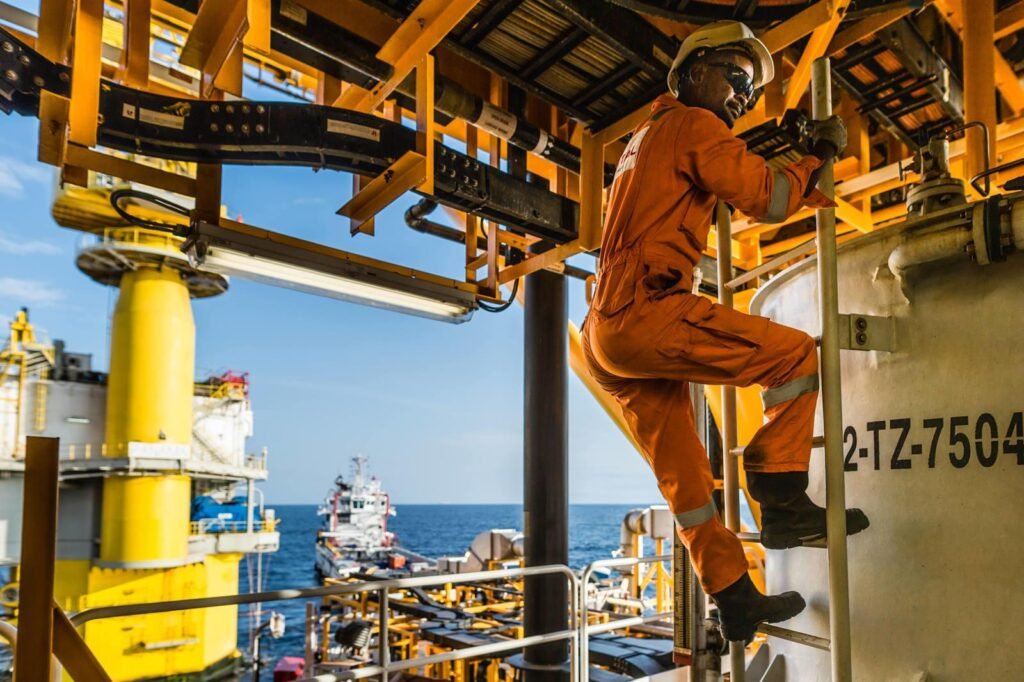
During the second half of 2025, the Ghana National Petroleum Corporation (GNPC), acting on behalf of the Government of Ghana, carried out three crude oil liftings. These comprised the 83rd and 84th parcels from the Jubilee field and the 18th parcel from the Sankofa Gye-Nyame (SGN) field.
The report noted that receipts from the two Jubilee liftings amounted to US$134.55 million, representing a decline from the US$144.20 million realised from the 81st and 82nd liftings in the same period of 2024.
Similarly, proceeds from the SGN field dropped to US$63.70 million, compared with US$68.54 million recorded from the 16th lifting in H2 2024.
The Bank of Ghana attributed the decline to a combination of production levels and prevailing global oil market conditions during the period.
The Central Bank further revealed that an expected crude oil lifting from the Tweneboa-Enyenra-Ntomme (TEN) field did not reflect in the 2025 petroleum receipts.
According to the report, “the 25th cargo from the TEN field, valued at US$60.79 million, was expected on November 16, 2025.”
However, because the proceeds had not been received by the end of the year, the amount was excluded from the petroleum receipts for 2025, despite being scheduled within the review period.
Petroleum Revenue Distribution Exceeds Inflows
Despite total inflows of US$399.65 million into the Petroleum Holding Fund, the report showed that total petroleum revenue distributed during the period amounted to US$493.40 million. This reflects disbursements from accumulated balances in line with statutory allocation formulas.
Out of the distributed amount, GNPC received US$42.63 million, while the Annual Budget Funding Amount (ABFA) was allocated US$285.06 million to support government spending. The Ghana Stabilisation Fund (GSF) received US$49.71 million, and the Ghana Heritage Fund (GHF) was allocated US$115.99 million.
The report highlighted a notable decline in allocations to GNPC for Capacity and Infrastructure Programme (CAPI) and Equity Financing Cost (EFC). Receipts for these purposes fell sharply to US$42.63 million in H2 2025, compared with US$166.29 million in the same period of 2024.
In contrast, allocations to the ABFA remained relatively stable. The US$285.06 million allocated in H2 2025 was only marginally lower than the US$287.68 million recorded in the second half of 2024, suggesting continued reliance on petroleum revenues to support the national budget.
Petroleum Funds Transfers Drop Significantly
Transfers to the Ghana Petroleum Funds declined significantly during the review period. The Ghana Heritage Fund received US$115.99 million, down from US$317.81 million in H2 2024, while allocations to the Ghana Stabilisation Fund fell to US$49.71 million from US$136.20 million over the same period.
Despite the lower transfers, the petroleum funds recorded improved investment performance. The Bank of Ghana reported that “the Ghana Petroleum Funds recorded a net realised income of US$28.11 million in H2 2025,” an increase from US$25.29 million in H2 2024.
The Ghana Heritage Fund accounted for 89.46 per cent of the net income, contributing US$25.15 million, while the Ghana Stabilisation Fund contributed US$2.96 million.
As at the end of H2 2025, the combined reserves of the Ghana Petroleum Funds stood at US$1.55 billion, up from US$1.46 billion at the end of H2 2024. The Ghana Heritage Fund accounted for US$1.38 billion of the total reserves, while the Ghana Stabilisation Fund held US$174.98 million.
The Bank of Ghana said the growth in reserves, despite lower inflows and distributions, reflects prudent fund management and positive investment returns, reinforcing the Petroleum Holding Fund’s role in supporting Ghana’s long-term fiscal stability.
READ ALSO: Agribusiness Chamber Demands Immediate Food Price Reductions