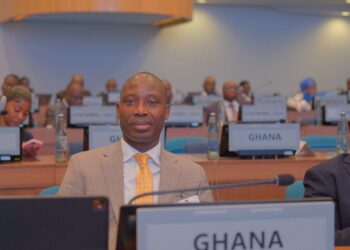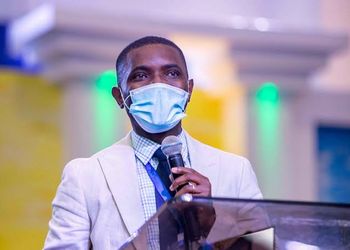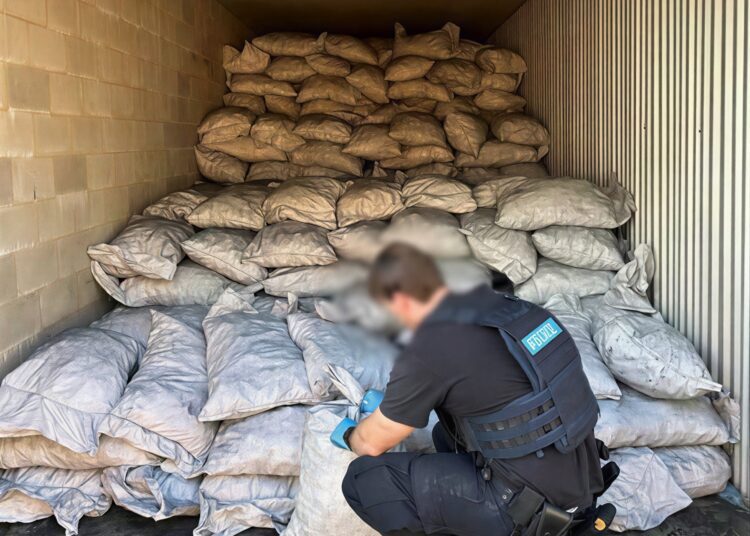
The Head of Public Relations for the Narcotics Control Commission, Francis Amoah has confirmed that investigations into the methamphetamine seizure linked to Australia have led to the arrest of a key suspect. He stated that the operation marks a major breakthrough in an ongoing probe into the multimillion dollar drug shipment.
Addressing the latest development, Mr Amoah disclosed that the arrest was made on Tuesday following days of intensive investigations involving NACOC and other internal security agencies. He noted that the commission had earlier assured the public that updates would be provided as soon as significant progress was made.

Discussing the significance of the arrest, the Public Relations Officer indicated that investigators are pursuing multiple leads connected to the case. He added that the first arrest could open the way for additional breakthroughs in the coming days.
“The investigations have led to a person and we have arrested that person. More arrests could follow. The person that has been arrested is going to help us, the security agencies, to unmask or unveil who was available at the time it was shipped, what did the person do, or what did the person did not do.”
Francis Amoah
He explained that the probe extends beyond the suspect currently in custody. The Public Relations Officer said security agencies are focused on identifying all individuals involved in the chain of movement from shipment to export.
The focus remains on uncovering operational gaps that allowed the consignment to pass through port systems. In light of this, investigators are examining who handled the cargo and what security checks were conducted.
Moreover, Mr Amoah noted that intelligence gathered from the arrested suspect is expected to assist in exposing collaborators. He stated that investigators are moving quickly to piece together the full network behind the trafficking operation.
The investigation is also focused on identifying the origin of the seized narcotics. Mr Amoah said authorities are working to establish whether the methamphetamine originated in Ghana or merely transited through the country before reaching Australia.
Correspondingly, the commission is also reviewing maritime and port routes linked to the consignment. He indicated that all relevant findings will be communicated to the public once verified.
The emphasis, he said, rests on transparency and accountability throughout the investigation. Mr Amoah ultimately assured the public that NACOC will continue providing updates as new intelligence emerges.
Schools Face Intensified Crackdown Over Rising Drug Abuse
The Narcotics Control Commission is intensifying anti-narcotics interventions in educational institutions as drug use among young people gains renewed national attention. Security officials say the growing spread of substance abuse within schools and university campuses demands urgent and coordinated action.
Discussing lessons from international drug interdiction, Francis Amoah stressed that combating drug trafficking requires cross border collaboration among security agencies. He stated that organised drug crime thrives across jurisdictions, making intelligence sharing essential.

A key aspect of that strategy involves timely information exchange between institutions and countries. The Public Relations Officer explained that no single agency can effectively dismantle transnational trafficking networks in isolation.
“Drug trafficking is cross border crime. Collaboration is essential and ntelligence sharing is critical.”
Francis Amoah
Against this backdrop, Mr Amoah pointed to the rising presence of drug abuse within schools. He revealed that reports from educational institutions show growing cases involving teenagers and young adults.
Additionally, he cited an incident involving a girls’ school in Ghana where 20 students were reportedly asked to leave over drug related issues. He said such cases point to a troubling trend that requires early intervention.
He also noted the university campuses, where substance abuse continues to surface. Mr Amoah referenced operations at Central University, explaining that intelligence driven enforcement has uncovered drug related activity within tertiary institutions.
Furthermore, he shared personal observations from conversations with students, noting that drug use appears increasingly visible on campuses. This, he said, signals a deeper social challenge affecting the country’s youth.

Preventive education, he said, is the response of NACOC. Mr Amoah disclosed that the commission recently organised a nationwide seminar involving guidance and counselling teachers from 50 schools across all 16 regions.
Similarly, the training programme focused on equipping counsellors with skills to identify students showing signs of drug dependency. He noted that early detection remains essential to preventing long term addiction.
In addition, NACOC is working closely with the Ministry of Education and the Ghana Education Service to deepen school based interventions. The collaboration aims to strengthen awareness campaigns and improve student support systems.
READ ALSO: Canada Qualify for WC Knockout Round For The First Time Despite Defeat