
Ghana has used the eve of Africa Oil Week 2026 to reinforce a central message to international investors: the country remains open to long-term capital, but future investment in its natural resources must generate deeper domestic value, strengthen African capabilities and support broader economic transformation.
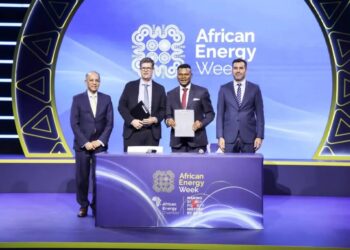
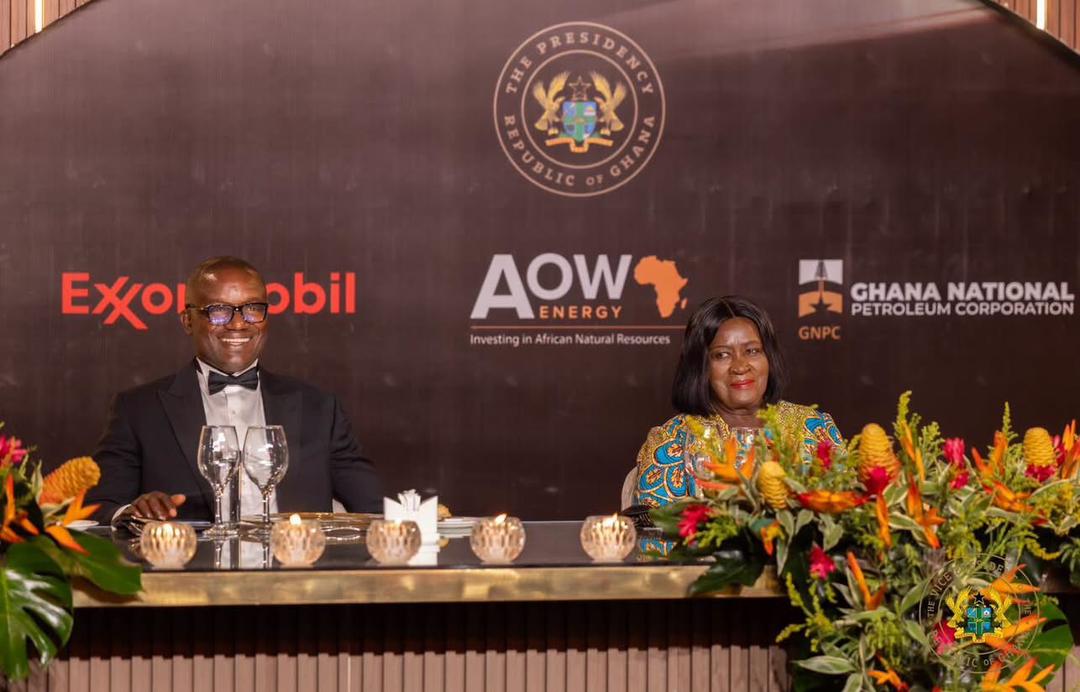
The message was delivered at a high-level Presidential Dinner hosted by the Ghana National Petroleum Corporation (GNPC) and ExxonMobil in Accra, ahead of the official opening of Africa Oil Week.
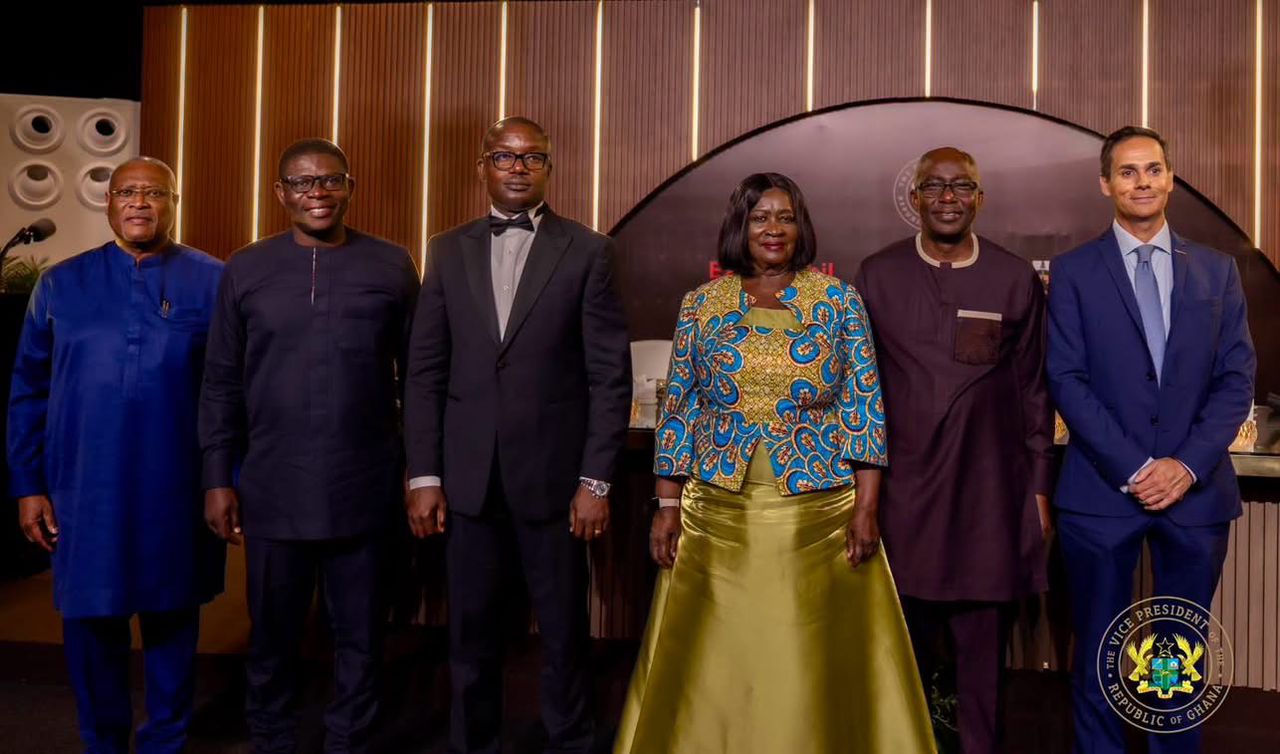
The dinner brought together Vice President of Ghana, H.E. Prof. Naana Jane Opoku-Agyemang, Minister for Energy and Green Transition John Abdulai Jinapor, senior government officials, investors, industry executives and other sector stakeholders.
The engagement provided an early indication of the policy and investment themes expected to shape discussions at Africa Oil Week, as Ghana seeks to attract capital into its upstream petroleum sector while ensuring that resource development produces stronger economic linkages at home.
Investment Must Deliver More Than Capital
Speaking at the dinner, Vice President Prof. Naana Jane Opoku-Agyemang said Ghana remained receptive to serious investment, but stressed that the economic case for resource development should extend beyond the immediate revenues generated from oil and gas.
She argued that the more significant opportunity lies in developing the capabilities, businesses and institutions that surround natural-resource projects, allowing a greater share of the resulting value to remain within African economies.
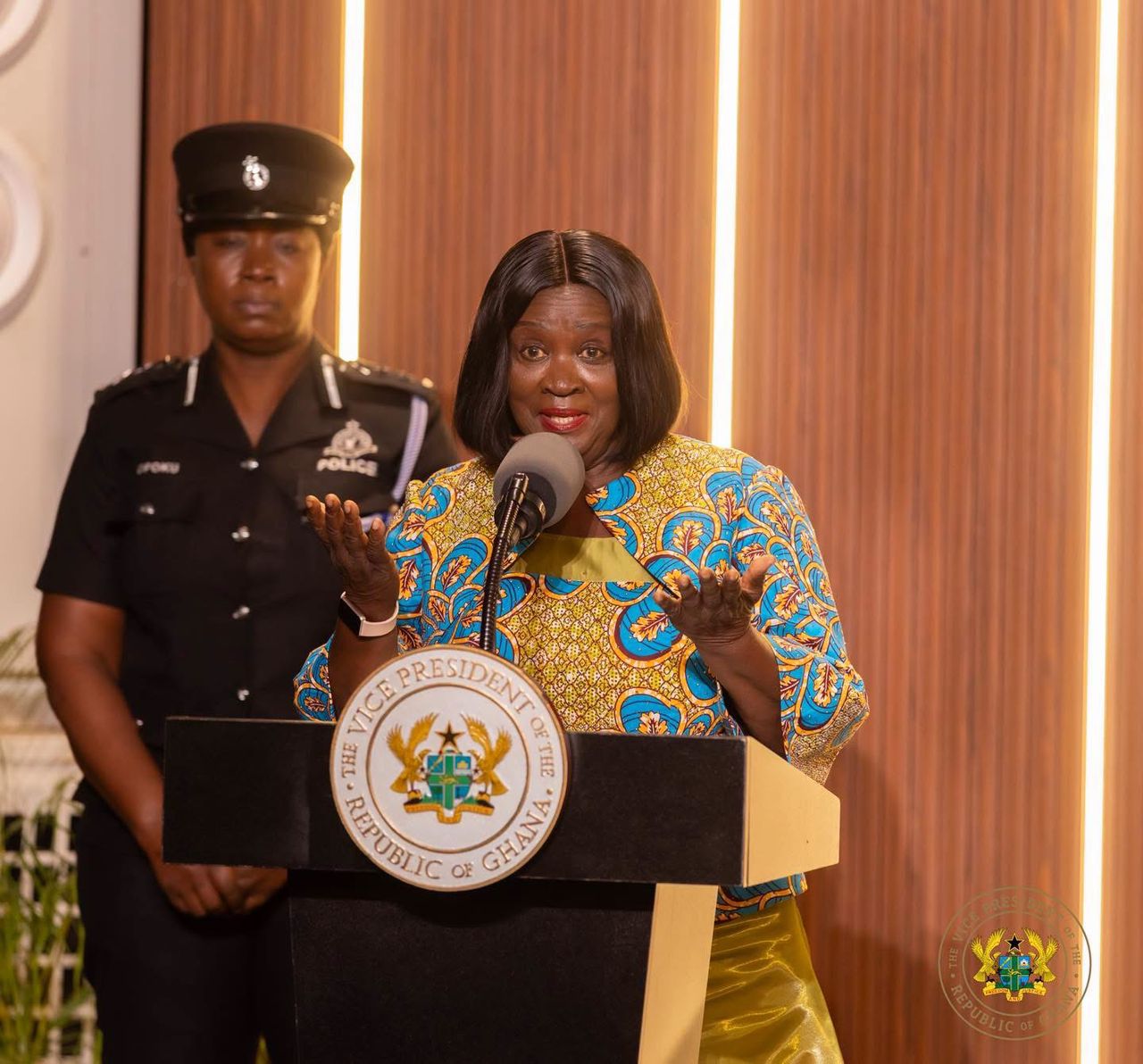
“Our economies need the revenues generated by our natural resources, but the greater opportunity lies in how we develop them, the capacity we build around them, and how much of the resulting value stays in our countries.”
H.E. Prof. Naana Jane Opoku-Agyemang, Vice President of Ghana
The position reflects a broader shift in Africa’s resource-development debate.
For decades, the success of petroleum investment has often been measured principally by capital committed, production volumes and government revenues. Increasingly, however, governments are placing greater emphasis on local participation, technology, skills development and domestic ownership of economic opportunities created by extractive industries.
For Ghana, this question is particularly relevant as the country seeks to sustain upstream investment while also confronting the limitations of an economy that can receive substantial resource revenues without necessarily capturing the full value generated along the petroleum value chain.
The Vice President’s remarks therefore place international investment and local participation as complementary rather than competing objectives.
Strategic Partnerships At Centre Of AOW Discussions
The Presidential Dinner also highlighted the importance of partnerships between international energy companies and African institutions.
GNPC Chief Executive Kwame Ntow Amoah, in welcoming guests, emphasised the role of relationships and trusted partnerships in moving opportunities beyond discussions and towards commercially viable projects capable of delivering long-term value.
That message is important as Ghana attempts to position itself as an attractive destination for upstream investment at a time when global energy companies are becoming increasingly selective about where they deploy capital.
International investors bring capital, technology, technical expertise and experience in managing complex petroleum projects.
African institutions, meanwhile, bring knowledge of local markets, regulatory environments and national development priorities.
The policy challenge is ensuring that these respective strengths produce a partnership in which African participation deepens over time rather than remaining concentrated at the margins of the value chain.
The Vice President specifically acknowledged ExxonMobil’s contribution while encouraging the company to continue developing local capacity in the countries where it operates.
“Achieving this will require strategic partnerships that combine international expertise and investment with stronger African participation.”
H.E. Prof. Naana Jane Opoku-Agyemang, Vice President of Ghana
The emphasis on capacity development is significant because local content is most economically valuable when it moves beyond procurement quotas towards genuine capability creation.
That means developing Ghanaian companies capable of competing for technically demanding contracts, strengthening professional expertise, building engineering and fabrication capacity and creating institutions that can retain knowledge after individual projects are completed.
GNPC Faces Greater Role In Resource Development
The Vice President also placed responsibility on Ghana’s own institutions, particularly GNPC, to ensure that Ghana is positioned to play a larger role in developing its petroleum resources.
She called for the national oil company to strengthen its position while continuing to attract appropriate international investment.

“In Ghana, the Ghana National Petroleum Corporation must also position Ghana to play a greater role in developing our own resources while attracting the right investment.”
H.E. Prof. Naana Jane Opoku-Agyemang, Vice President of Ghana
This creates an important strategic balance for Ghana.
Increasing national participation does not necessarily mean replacing international oil companies.
Petroleum exploration and development require significant financial resources and specialised technical capabilities, particularly in deepwater environments where the cost and risks associated with exploration and production can be substantial.
The more immediate policy question is therefore how Ghana can use partnerships to build domestic capability while ensuring that investment continues to flow.
A stronger GNPC could potentially play a more active role in project development, technical decision-making and commercial negotiations.
However, greater participation also requires financial discipline, technical capacity and governance systems capable of managing increased exposure to upstream risks.
That makes the development of institutional capability as important as attracting new acreage or investment.
African Companies Key To Energy Sovereignty
The dinner’s message extended beyond Ghana’s petroleum industry to the wider question of Africa’s ability to influence its own energy future.
Prof. Opoku-Agyemang argued that African countries need stronger domestic companies operating in strategically important sectors, alongside greater investment in technical capabilities and wider participation by African businesses across the energy value chain.
“For Africa to play a greater role in shaping its energy future, we need stronger African companies in strategic sectors, investment in our technical capabilities, and greater participation by African businesses across the energy value chain.”
H.E. Prof. Naana Jane Opoku-Agyemang, Vice President of Ghana
The argument has implications beyond oil production.
Africa’s energy challenge is simultaneously a financing, infrastructure and industrialisation challenge.
Countries need electricity generation and transmission infrastructure, petroleum products, natural gas, renewable energy systems and industrial capacity capable of supporting expanding economies.
African ownership of companies operating across these areas could help retain a larger share of investment expenditure and expertise within the continent.
But building competitive African companies will require more than government protection.
Firms must develop the technical competence, access to finance, governance standards and commercial scale necessary to compete with established international companies.
This is where regional markets become particularly important.
Regional Markets Could Expand Resource Value
The Vice President also called for African countries to make greater use of regional markets so that natural resources contribute to industrialisation and economic transformation across national borders.
The idea is especially relevant to West Africa, where energy resources and demand are unevenly distributed.
Ghana possesses oil and gas resources, but its domestic market is relatively small compared with the potential scale of a more integrated regional energy market.
Stronger regional electricity, gas and petroleum markets could therefore create larger demand centres and improve the commercial case for infrastructure investment.
Regional integration could also support a more efficient division of energy resources, allowing countries with surplus generation or fuel supplies to serve neighbouring markets while creating larger markets for investors.
However, regional integration requires more than political commitments.
Differences in regulation, infrastructure standards, tariffs, market rules and institutional capacity can make cross-border energy projects difficult to execute.
The same challenge applies to petroleum and gas infrastructure.
Regional projects require long-term agreements and confidence that participating countries will maintain stable policy and commercial arrangements.
Africa Oil Week consequently arrives at a time when the continent’s energy debate is moving towards a more complex question: not simply how to attract investment, but how to structure investment so that it creates lasting economic capacity.
For Ghana, the Presidential Dinner has already established a clear policy direction. International capital remains welcome, but investment must increasingly be connected to local capability, African enterprise development and regional economic integration.
The test will be whether the conversations generated during Africa Oil Week can translate that ambition into concrete partnerships, investment commitments and stronger participation by Ghanaian and African institutions across the energy value chain.
READ ALSO: Ghana Hails UN Report Declaring Reparations a Legal Obligation