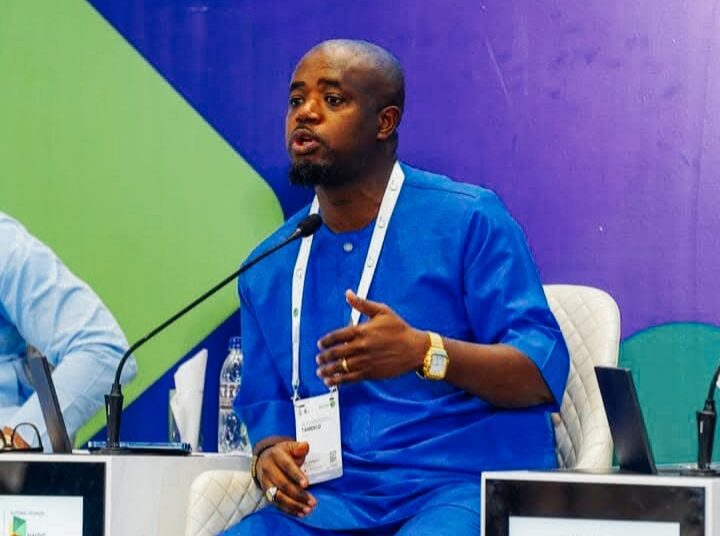
The Chief Executive Officer of Ghana’s National Petroleum Authority (NPA), Godwin Kudzo Tameklo, has reaffirmed Nigeria’s growing role as a regional energy hub, stressing that closer cooperation between both countries could significantly reduce fuel costs for Ghanaian consumers.
Speaking at the 2026 Nigeria International Energy Summit (NIES), he said a strategic reliance on Nigeria’s refined petroleum products, particularly from the Dangote Refinery, offers clear economic advantages.
Mr. Tameklo made the remarks during a panel session on “Driving Domestic Value: Transforming Downstream Market & Refining,” where he highlighted the importance of regional integration in strengthening West Africa’s downstream petroleum market.
“I do not think it will be much of an argument to say that Nigeria has firmly positioned itself as the energy hub of Africa,” he said, urging stakeholders to consolidate that position through cooperation rather than competition.
Ghana’s Refining Capacity and Import Dependence
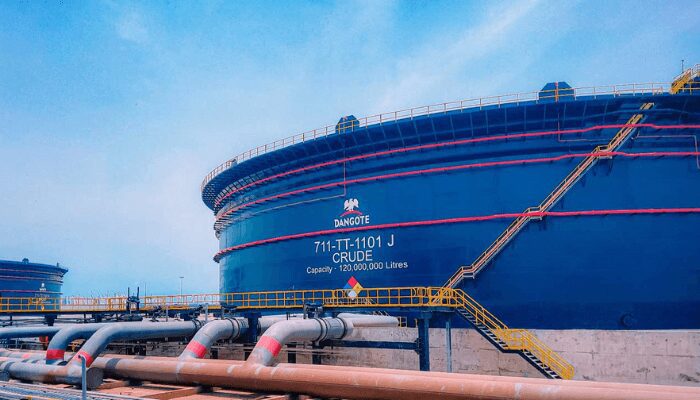
The NPA boss provided context on Ghana’s domestic refining capacity, explaining that the country operates two major refineries alongside a relatively small modular refinery. In comparison with Nigeria’s large-scale facilities, Ghana’s output remains modest.
“In Ghana, what we have been trying to do as a country is that we have two major refineries and what you call a modular refinery of roughly 5,000–6,000 barrels, which is quite small.”
Godwin Kudzo Tameklo, Chief Executive Officer of NPA
Mr. Tameklo noted that while such capacity may be considered significant in Ghana, it pales in comparison to Nigeria’s refining scale.
As a result, Ghana has historically relied on imports for both crude oil and refined petroleum products, making regional supply relationships essential.
According to Mr. Tameklo, the Dangote Refinery presents a unique opportunity for Ghana to secure reliable and affordable fuel supplies. He described Ghana as a natural and strategic offtake market for refined products from Nigeria’s largest refinery.
“We have always relied on imports, both in terms of crude oil and refined products. I want you to believe that Ghana happens to be a great offtake for the Dangote Refinery.”
Godwin Kudzo Tameklo, Chief Executive Officer of NPA
He added that Ghana has engaged extensively with Alhaji Aliko Dangote to position the country as a key destination for refined products, emphasizing that such collaboration aligns with Ghana’s goal of reducing fuel costs.
Proximity and Cost Reduction Advantages

Mr. Tameklo argued that geography alone makes Nigeria an ideal partner for Ghana’s fuel supply needs. With shorter transportation distances compared to imports from distant markets, reliance on Nigerian refineries could lower logistics costs and, ultimately, pump prices.
“Given the proximity between Ghana and Nigeria, a reasonable dependence on Nigeria’s refined petroleum products will help reduce the cost of fuel reaching Ghana.”
Godwin Kudzo Tameklo, Chief Executive Officer of NPA
However, he cautioned that economic alignment is critical for such a partnership to deliver mutual benefits. Currency stability and macroeconomic performance, he noted, play a major role in determining outcomes for both countries.
Beyond supply arrangements, Mr. Tameklo stressed the need for harmonised regulatory frameworks across the sub-region. According to him, a uniform regulatory architecture would strengthen cooperation and enhance West Africa’s global energy profile.
He emphasized that Nigeria and Ghana share common interests in building resilient downstream markets and should leverage shared regulatory experiences to support sustainable growth.
“That is why we believe that a relationship with refineries like the Dangote Refinery, which have promised quality products for us, will ensure that we are not only adding value but also delivering affordable, cheaper, and quality products.”
Godwin Kudzo Tameklo, Chief Executive Officer of NPA
He also reassured Nigerian stakeholders that Ghana offers a reliable and ready market, describing the relationship as one based on cooperation and mutual benefit.
Pricing Regulation and Industry Stability

Mr. Tameklo used the platform to explain Ghana’s approach to downstream pricing regulation, noting that the NPA avoids regulatory pricing that could destabilize the industry.
“We have a floor price below which you cannot sell, and the idea is to help position the industry and provide the needed regulatory support.”
Godwin Kudzo Tameklo, Chief Executive Officer of NPA
Allowing companies to sell below sustainable prices, he warned, risks wiping out competitors and undermining long-term sector stability.
Reflecting on Ghana’s past experience with fuel subsidies, Mr. Tameklo said deregulation had strengthened the downstream sector. He recalled that delayed subsidy payments in 2015 nearly crippled fuel stations, prompting a shift toward full deregulation.
He concluded that these lessons should inform deeper Nigeria–Ghana collaboration, positioning the Nigeria Ghana energy partnership as a model for regional energy integration built on shared experience, cooperation, and mutual benefit.
READ ALSO: Famine Conditions Spread To More Areas in Sudan’s Darfur