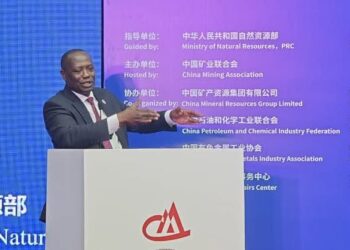
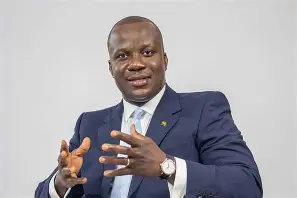
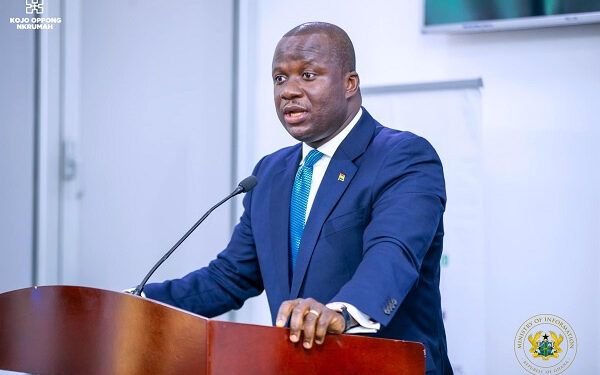
Former Minister for Lands and Natural Resources, Hon. Samuel Abu Jinapor, has asserted that for Africans to achieve “meaningful participation” in the extractive sector, there must be a deliberate shift toward acquiring specialized skills and fostering innovation.
This transition is viewed as the primary mechanism for local actors to navigate and integrate into complex mining value chains that have historically excluded indigenous players.
The former Minister emphasized that the era of passive involvement is over. He argued that the true potential of Africa’s mineral wealth can only be unlocked when women, youth, and Small and Medium Enterprises (SMEs) are equipped with the “technological know-how” required for downstream activities.
By moving beyond primary extraction, Ghana and its neighbors can catalyze industrial growth and ensure that the economic “multiplier effect” of mining remains within the continent’s borders.
“Meaningful participation requires acquiring the right skills and raising innovation and understanding how mining value chains function. Ultimately, it is up to each of us to take initiative, equip ourselves, and actively pursue these opportunities. Expanding participation of women, youth, and SMEs in Africa’s mining sector is about ensuring that our resources work for our people.”
Hon. Samuel Abu Jinapor
Driving Industrialization Through Local Value Addition
The traditional model of exporting raw ores has long been identified as a bottleneck to Africa’s economic sovereignty.
Hon. Jinapor highlighted a “historic opportunity” to pivot toward local processing and the manufacturing of semi-finished or finished products. This strategy is designed to dismantle the “unlawful” leakage of wealth where minerals are exported in their raw state, only to be imported back as expensive finished goods.
By establishing regional refineries and processing plants, African nations can capture a “greater share of the wealth” and foster a more resilient industrial base.
Harmonizing Trade Under the AfCFTA Framework
A critical component of this vision is the seamless movement of mineral products across borders. The former Minister noted that achieving a self-reliant mining sector requires “cooperation among governments” and the implementation of “harmonised standards.”
Such delivery policies are essential to making cross-border trade under the African Continental Free Trade Area (AfCFTA) both “easier and predictable.”
For Ghana, driving this agenda is not merely a policy preference but a necessity for transforming theoretical integration into “real, practical actions” that empower local businesses to grow beyond national markets.
The Innovation Imperative in Modern Extraction

In the broader context of the extractive industry, innovation serves as the bridge between resource abundance and sustainable development. As ore grades decline globally, the need for “Mining 4.0” technologies including AI-driven exploration and automated mineral processing becomes paramount.
These advancements allow for a smaller environmental footprint and higher operational efficiency, which are vital for attracting investment and maintaining a “social license to operate.”
By integrating SMEs into these high-tech value chains, Africa can solve the dual challenge of youth unemployment and technological lag, ensuring the mining sector remains a “catalytic role” in the continent’s re-industrialization.
READ ALSO: Africa Must Control Its Natural Resources – President Mahama