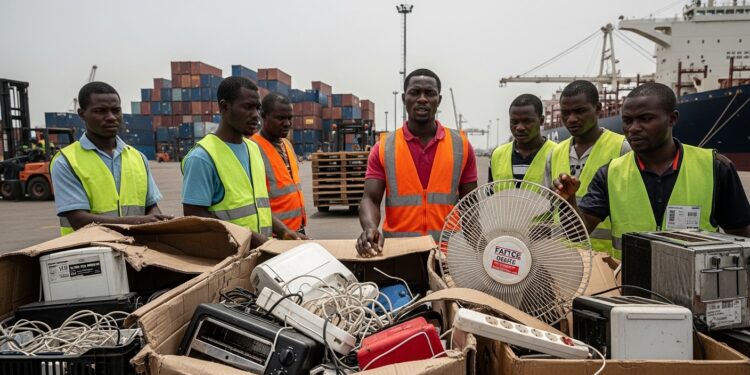
Concerns over public safety at Ghana’s ports have intensified following revelations of serious operational gaps in the inspection of imported electrical appliances at the Tema Port.
The Board of the Energy Commission, led by Professor John Gatsi, has expressed deep concern that poor inspection facilities are allowing uncertified and substandard electrical products to enter the Ghanaian market, exposing consumers to the risk of fires, equipment failure and property damage.
“This situation is worrying and cannot be allowed to continue. The safety of consumers must not be compromised.”
Professor John Gatsi, Board Chair of Energy Commission
At the centre of the problem, according to inspectors stationed at the port, is the absence of a dedicated warehouse facility for the Energy Commission. This limitation, they said, severely restricts their ability to seize and securely store unapproved electrical appliances for further investigation.
“The lack of a warehouse makes it extremely difficult for our inspectors to seize and securely keep unapproved goods for further investigation,” one inspector explained during a briefing to the Board. “In most cases, the importers are allowed to keep the goods, and this increases the risk of unapproved and substandard appliances entering the market.”
Inspectors warned that once such goods leave the port, tracking and enforcement become nearly impossible, effectively weakening the Commission’s regulatory authority.
Inspectors Cite Multiple Operational Constraints
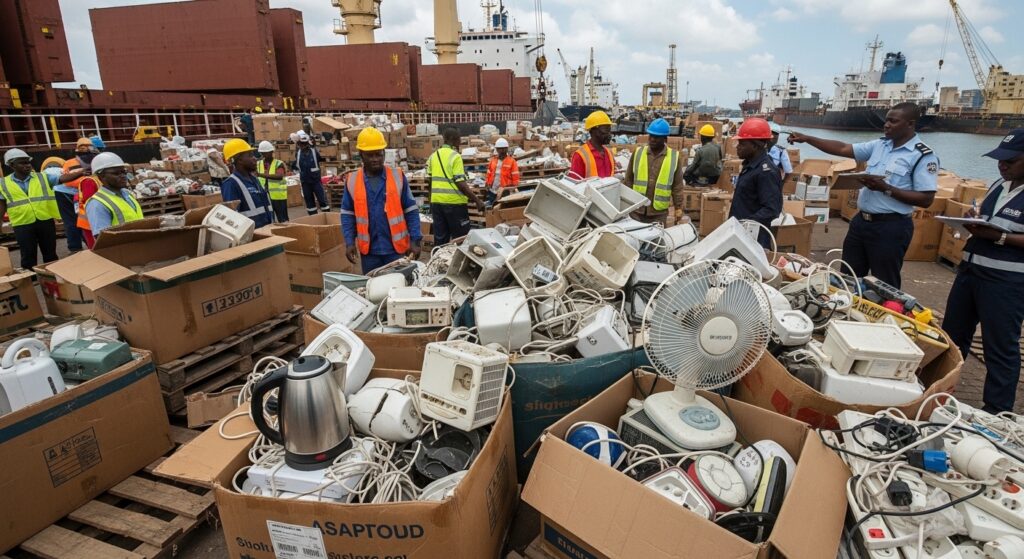
Beyond the absence of storage facilities, inspectors highlighted a range of additional challenges affecting Tema Port electrical appliance inspection.
These include inadequate personnel to handle the growing volume of imports, limited office space for regulatory work and insufficient logistics to support routine inspections.
According to the inspectors, these constraints combine to weaken enforcement at one of Ghana’s busiest ports. “Without adequate space and logistics, effective enforcement becomes almost impossible,” another inspector noted, adding that the current situation creates loopholes that unscrupulous importers can exploit.
The working visit was attended by members of the Energy Commission’s Board, the Executive Secretary of the Commission and other senior officials, giving leadership a firsthand understanding of the operational realities on the ground.
Board Chairman Describes Situation as Unacceptable

Reacting to the briefing, Professor John Gatsi did not hide his dissatisfaction with the conditions under which inspectors are expected to operate.
He described the situation at the Tema Port as unacceptable, particularly given the potential danger posed by uncertified electrical appliances to the general public.
He stressed that electrical appliances that fail to meet approved standards are a known cause of household fires and equipment damage, making effective inspection at the point of entry a critical public safety issue.
Professor Gatsi called for immediate investigations into the challenges raised by inspectors and urged the management of the Energy Commission to prioritise improvements at the port. “We need urgent interventions to strengthen inspection and enforcement at the Tema Port,” he stressed.
According to him, addressing the gaps will require collaboration with port authorities and other stakeholders to ensure that inspectors have the facilities and logistical support needed to carry out their mandate effectively.
The Board Chairman also encouraged inspectors not to relent in the face of operational difficulties.
“I want to encourage you to be strict in enforcing the rules, despite the challenges, to ensure that unapproved and substandard electrical appliances do not reach the market.”
Professor John Gatsi, Board Chair of Energy Commission
Risks Posed by Substandard Electrical Appliances
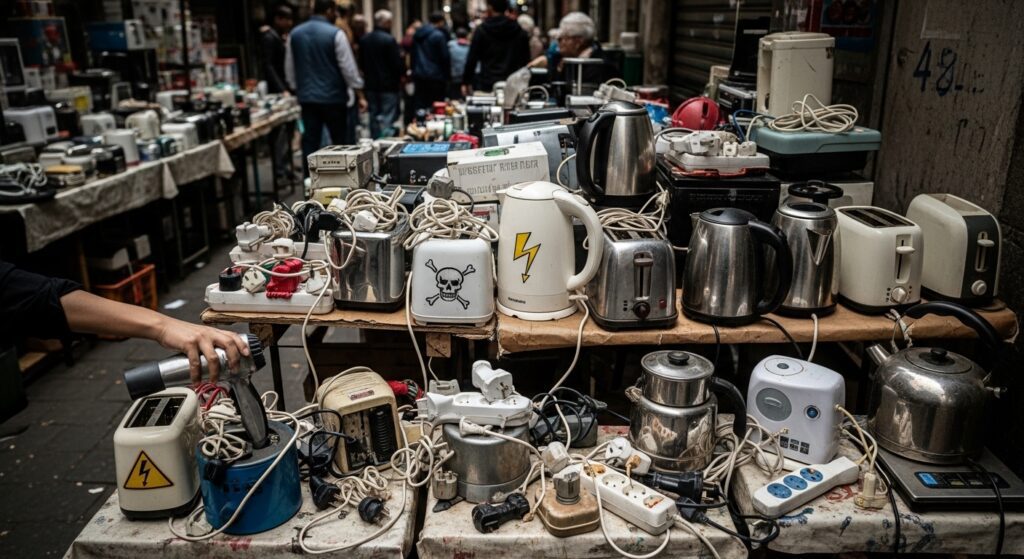
The Energy Commission has repeatedly warned that the importation and sale of uncertified electrical appliances pose serious risks to public safety.
Faulty wiring, poor insulation and substandard components are known to cause electrical shocks, fires and damage to valuable equipment in homes and businesses.
Officials say the situation at the Tema Port highlights the urgent need to strengthen front-line regulation, as preventing unsafe products from entering the country is far more effective than attempting to remove them once they are already in circulation.
Despite the challenges, the Energy Commission has reaffirmed its commitment to safeguarding consumers through effective regulation and enforcement.
The Commission believes that resolving the infrastructure and staffing gaps at the Tema Port will significantly improve compliance and reduce the circulation of unsafe electrical appliances on the market.
As investigations into the challenges continue, the Board has signalled that it expects concrete actions to be taken to improve conditions for inspectors.
For consumers, the Commission says stronger Tema Port electrical appliance inspection is essential to ensuring that safety standards are upheld and public confidence in regulated products is restored.
READ ALSO: Trade Minister Pledges Infrastructure Support For Beverage Giants