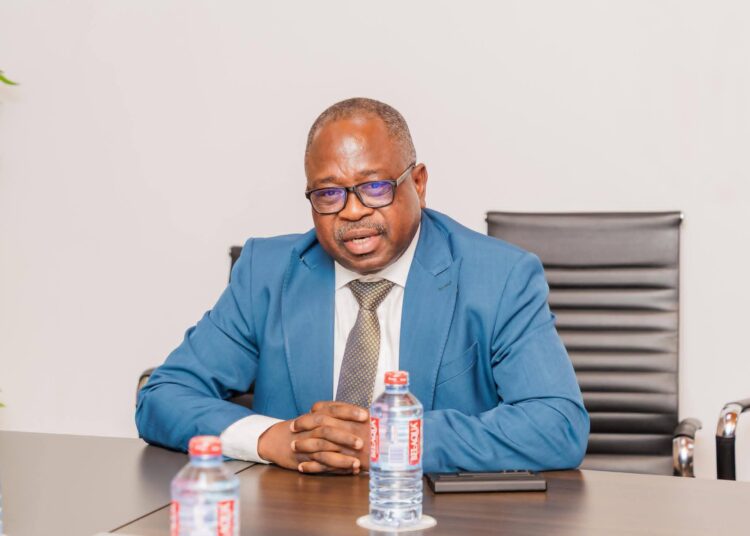
The Minister of State in charge of Climate Change and Sustainability, Hon. Seidu Issifu, has underscored the growing link between environmental protection and national security during a working visit to the Narcotics Control Commission (NACOC).
The visit forms part of ongoing institutional engagements aimed at decarbonising government operations, strengthening enforcement, and promoting environmental sustainability across Ghana.
Addressing officials of NACOC, Hon. Issifu stressed that environmental degradation is no longer only an ecological concern but a broader national security issue.
“Protecting Ghana’s natural environment is closely connected to national security and public safety,” he said, highlighting the increasing overlap between criminal activity and damage to sensitive ecosystems.
The Minister noted that illegal activities, including illicit crop cultivation and trafficking, often take place in remote and environmentally fragile locations.
According to him, such activities contribute significantly to deforestation, land degradation, and biodiversity loss, particularly within forest reserves and protected areas.
He explained that criminal networks frequently exploit weak monitoring systems in hard-to-reach areas, leaving behind long-term environmental damage that undermines livelihoods and accelerates climate vulnerability.
“Illegal activities, including illicit crop cultivation and trafficking, often occur in remote and environmentally vulnerable areas,” he observed, adding that the environmental consequences of such operations are often overlooked in conventional enforcement approaches.
Exploring Institutional Collaboration
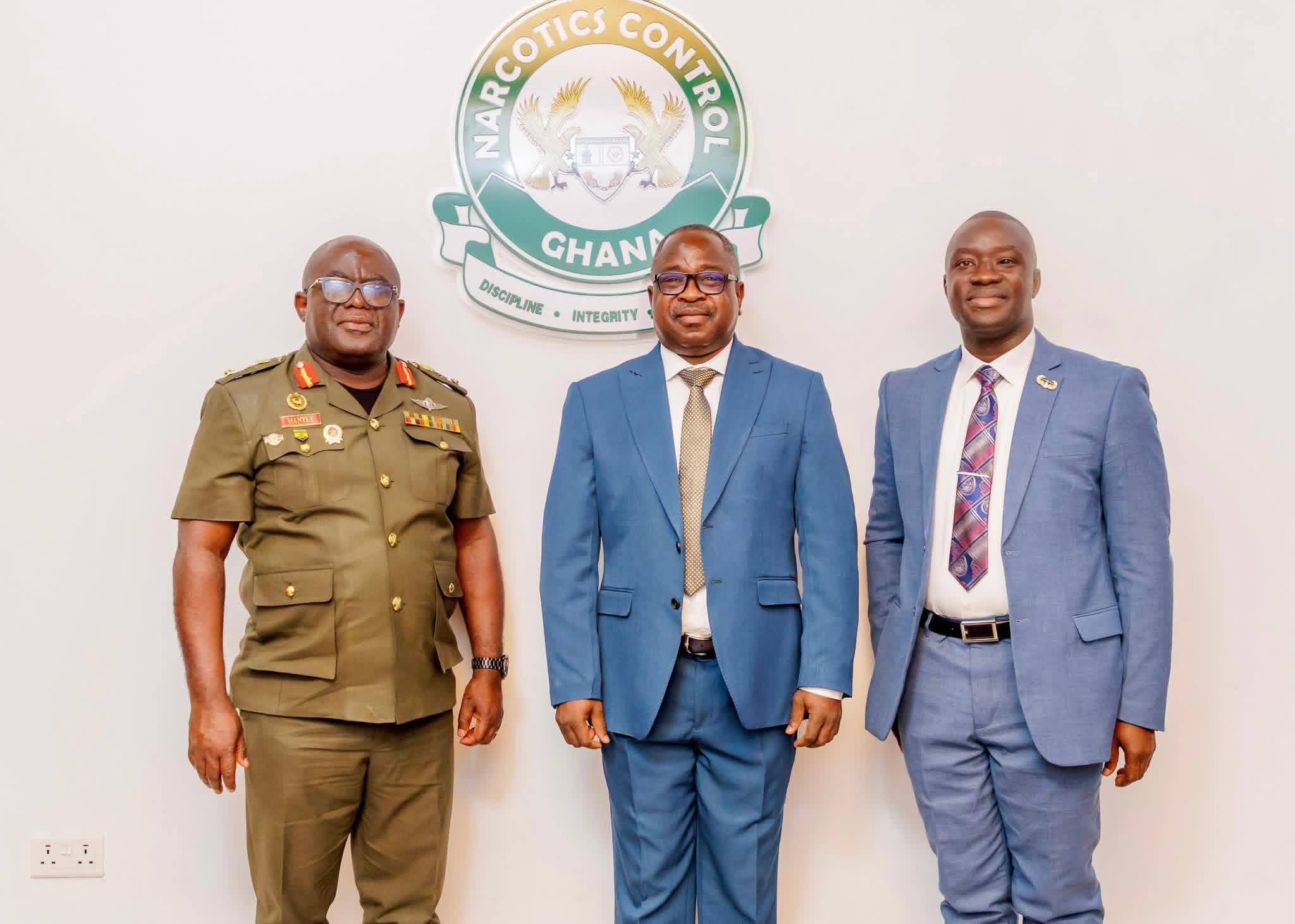
The visit sought to identify practical areas of collaboration between the Office of the Minister of State for Climate Change and Sustainability (OMSCCS) and NACOC.
Both institutions acknowledged that addressing environmental degradation linked to criminal activities requires a coordinated and multi-sectoral response.
Discussions focused on how enforcement strategies could be strengthened by integrating environmental considerations, particularly in regions where illegal drug cultivation overlaps with deforestation and land misuse.
The engagement also aligns with the Minister’s broader stakeholder consultation strategy, which targets key state agencies and selected private sector partners to support Ghana’s climate action commitments under the Paris Agreement.
NACOC Outlines Operational Challenges

During the meeting, the Director-General of NACOC, Brigadier General Maxwell Obuaba Martey, briefed the Minister on the Commission’s mandate, operational scope, and challenges.
He noted that one of the major difficulties faced by NACOC is monitoring and controlling illegal activities in remote locations, where access constraints hinder surveillance and enforcement.
These areas, he explained, are often characterised by dense forests and poor infrastructure, making them vulnerable to illicit crop cultivation and other illegal activities that destroy farmlands and degrade ecosystems.
Brigadier General Martey noted that these challenges demand closer cooperation with agencies responsible for environmental protection and climate governance.
“Comprehensive institutional reforms have been implemented to enhance the effectiveness and nationwide impact of NACOC’s operations,” he stated, emphasising the Commission’s renewed focus on intelligence-led enforcement and inter-agency coordination.
Beyond enforcement, he highlighted plans to introduce alternative livelihood programmes for individuals involved in illicit drug cultivation.
According to him, addressing the socio-economic drivers of illegal activities is critical to achieving sustainable outcomes. Providing viable economic alternatives, he said, would reduce pressure on forest reserves and help communities transition away from environmentally harmful practices.
Integrating Climate Action into Enforcement
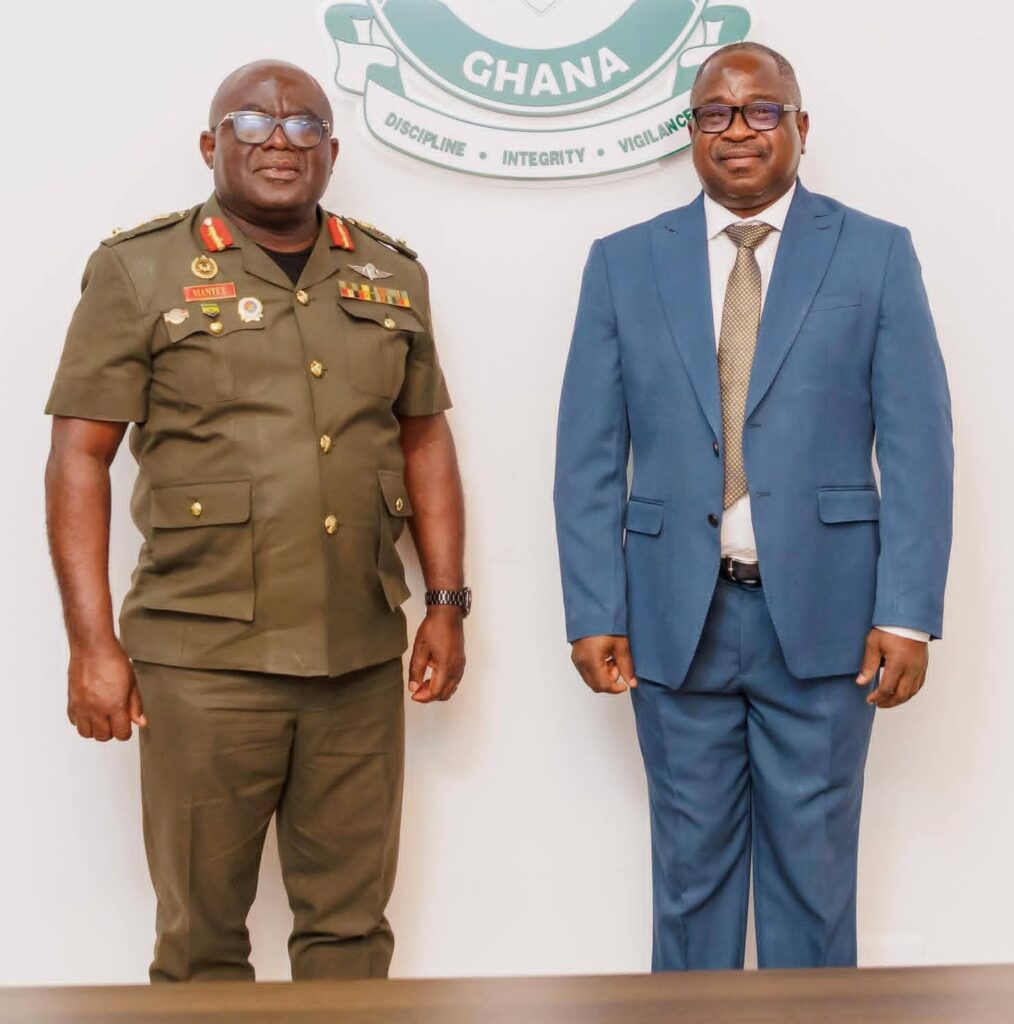
Both the Minister and NACOC leadership expressed readiness to deepen collaboration to ensure environmental sustainability is embedded within enforcement operations.
They agreed that climate change considerations should inform public sensitisation campaigns, operational planning, and field activities.
Hon. Issifu emphasised that climate action cannot be pursued in isolation from governance and security institutions. He called for closer collaboration to safeguard ecosystems while strengthening enforcement against illegal activities.
According to him, integrating environmental protection into security operations would help Ghana address climate risks more holistically.
The meeting concluded with agreement on a range of joint initiatives aimed at strengthening enforcement and environmental protection.
These include enhanced information sharing between the two institutions, coordinated monitoring of high-risk areas, joint training programmes for officers, and public education campaigns using print and electronic media.
The discussions also touched on the use of modern technology to enhance surveillance and environmental monitoring.
Both parties acknowledged that tools such as satellite imagery, drones, and geospatial data could significantly improve the detection of illegal activities in remote locations while supporting environmental conservation efforts.
READ ALSO: Staff Celebrate Sarpong’s One-Year Milestone