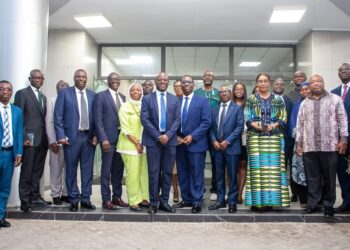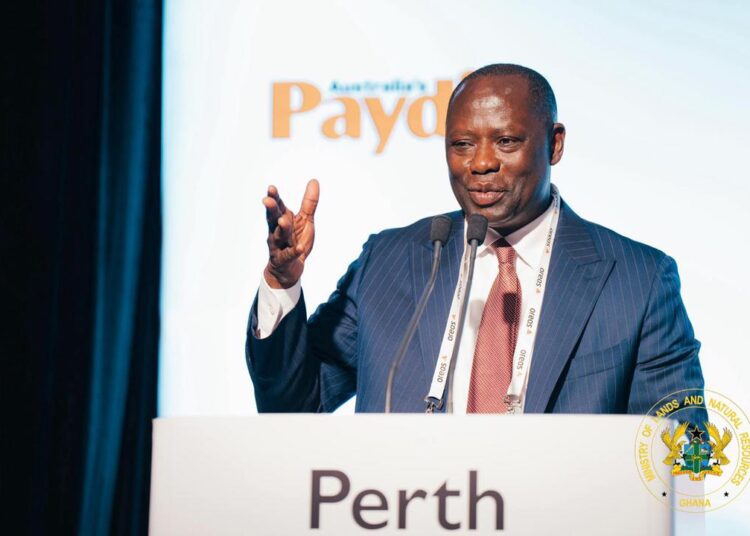
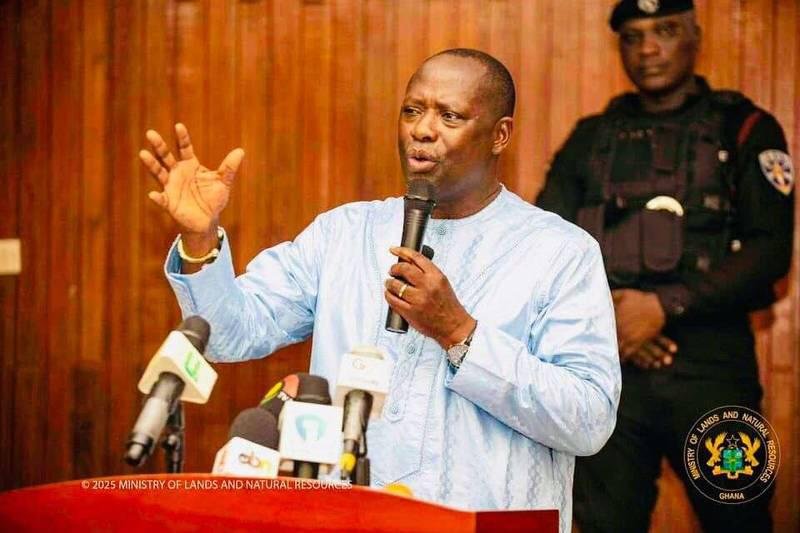
Minister of Lands and Natural Resources, Hon. Emmanuel Armah-Kofi Buah, has affirmed that the nation’s revamped mineral legal framework is specifically engineered to provide protections for international capital.
Speaking at the 2026 Mining Indaba during the “Ghana Day” event, the Minister detailed a regime that prioritizes stability agreements, the sanctity of contracts, and a transparent fiscal policy designed to shield investors from the volatility of political shifts.
By aligning domestic laws with modern technological demands and global best practices, the government aims to solidify Ghana’s standing as the premier mining jurisdiction in Africa.
“I can assure you that you can invest in Ghana with confidence knowing that your investments are protected by a stable political system and the government that upholds the principles of good governance including the rule of law and the sanctity of contracts.”
Hon. Emmanuel Armah-Kofi Buah
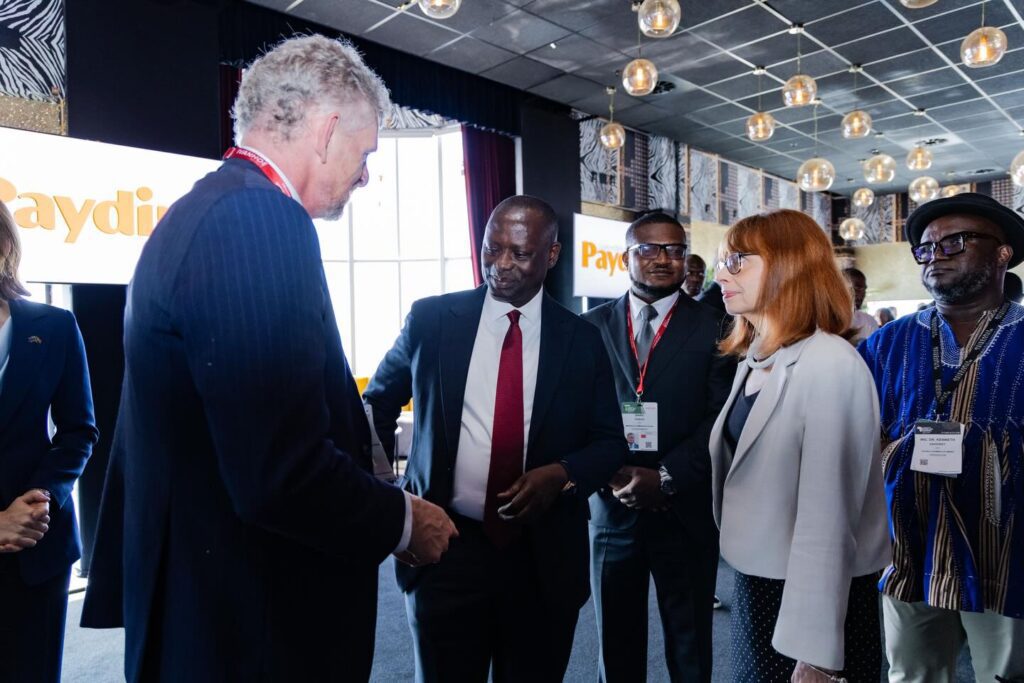
The architecture of this protective legal system is anchored in predictability and a “transformative research agenda” directed by the presidency. Beyond the traditional safeguards, Ghana has recently intensified its investor-friendly posture by scrapping taxes on mineral exploration, a move aimed at reducing the high-risk financial burden of greenfield projects.
Furthermore, the legal regime utilizes generous capital allowances and loss-carry-forward provisions to ensure project viability. This is managed by a suite of robust regulatory bodies including the Minerals Commission, Environmental Protection Agency (EPA), and the Water Resource Commission which collectively ensure that while the rule of law is upheld, the bureaucratic process remains efficient and conducive to long-term investment.
“Our recent decision to scrap for example a tax on exploration is just one example of what I’ve described,” Hon. Armah-Buah emphasized
Stability Agreements and the Rule of Law
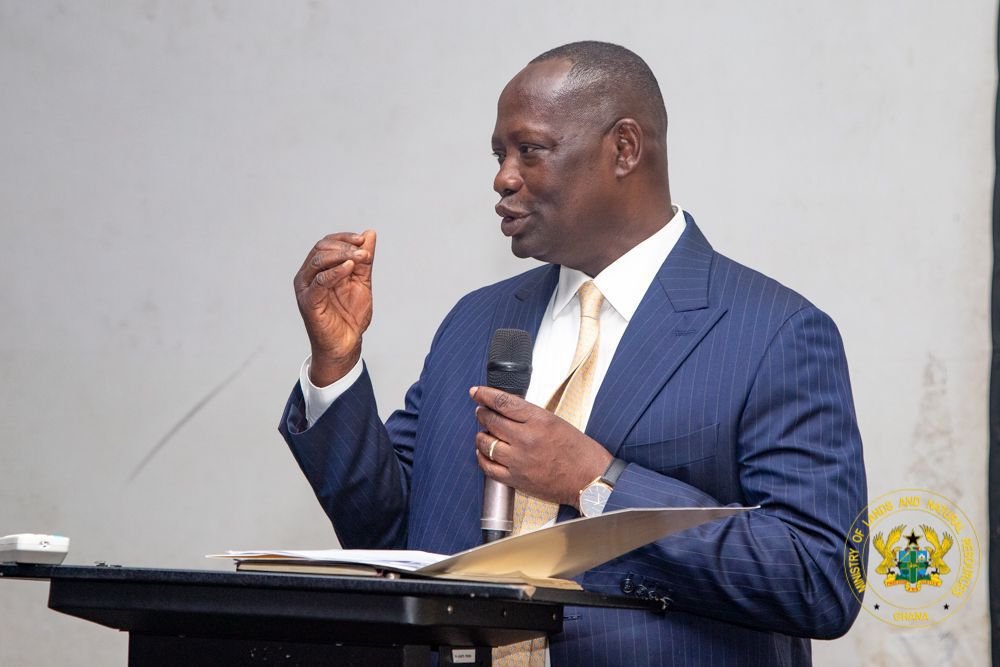
Ghana’s legal framework is distinguished by its use of stability agreements, which effectively “freeze” the fiscal and regulatory environment for a specified period typically up to 15 years to protect large-scale investments from retroactive legislative changes.
“These legal regimes offer strong investors protections including stability agreements shielding investors from retroactive policy changes, respect for contract sanctity and accrued rights, tax exemptions on select imported mining equipment among others.”
Hon. Emmanuel Armah-Kofi Buah
According to Hon. Buah, these agreements are a “living testament” to Ghana’s commitment to the sanctity of contracts, ensuring that rights accrued by investors are not eroded by subsequent political transitions.
This predictability is a cornerstone of the nation’s democratic reputation, positioning the country as a “beacon of political stability” where the legal environment remains secure regardless of who holds the presidency.
Fiscal Incentives and Competitive Reforms
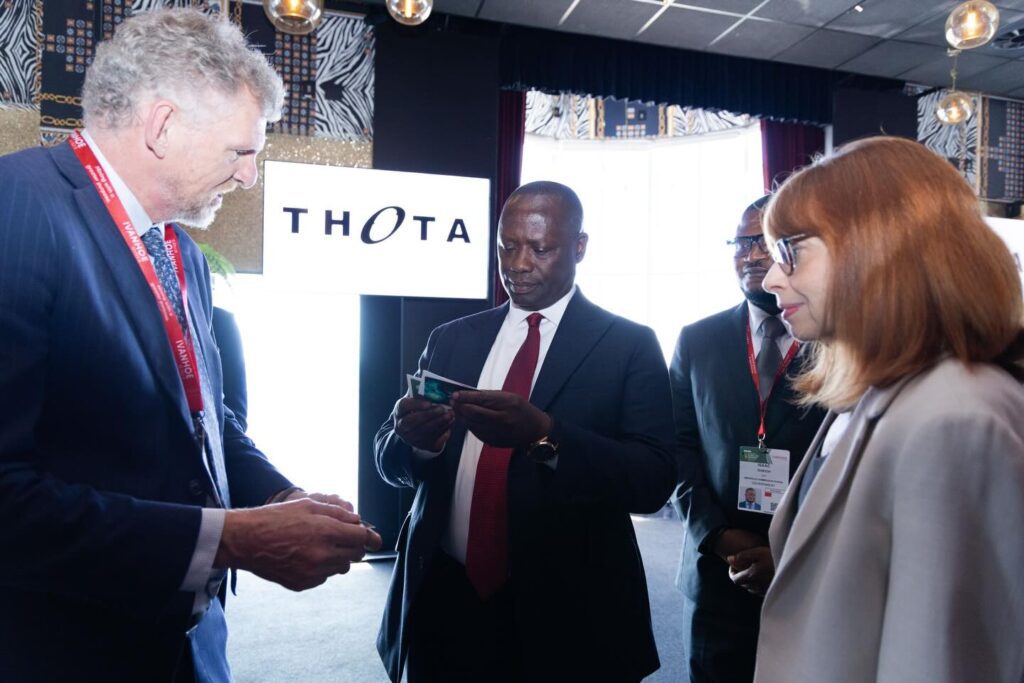
The recent decision to abolish the value-added tax (VAT) on mineral exploration serves as a strategic catalyst for new discoveries.
By removing this 15% levy on high-risk activities like drilling and assaying, the government has directly lowered the entry barrier for junior miners and global majors alike. This fiscal flexibility is complemented by “generous capital allowances” that allow firms to recover their initial investments faster.
The minister emphasized that these “massive reforms” are not just about revenue but about making Ghana “the most attractive mining jurisdiction” by balancing national development with competitive investor returns.
A Gateway to the Unified African Market
As the host of the African Continental Free Trade Area (AfCFTA) secretariat, Ghana offers more than just mineral wealth; it provides a strategic gateway to a unified market of 1.3 billionpeople.
This geographical and political advantage, paired with the fact that Ghana is the “number one producer of gold on the continent,” creates a compelling ecosystem for the entire mining value chain.
The Minister concluded that the current leadership in bauxite, manganese, and lithium is merely “the tip of the iceberg,” with ongoing research and proven data pointing toward a future of even greater world-class discoveries.
READ ALSO: Staff Celebrate Sarpong’s One-Year Milestone