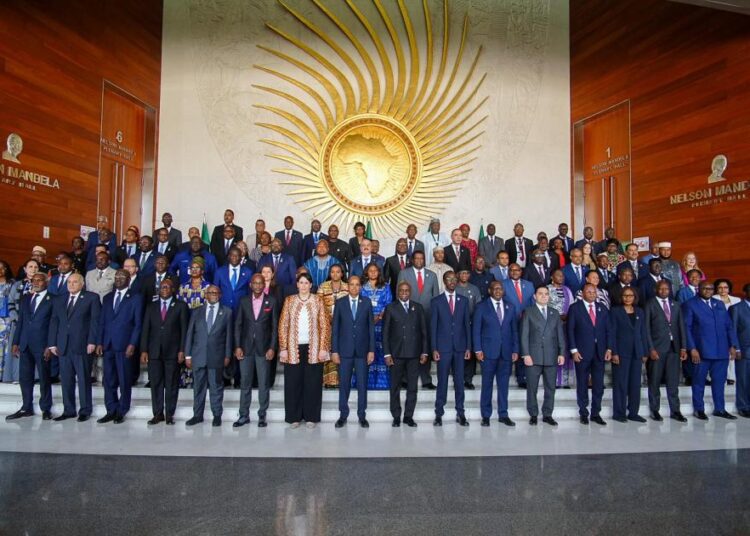
The Forty-Eighth Ordinary Session of the Executive Council of the African Union (AU) has opened at the AU headquarters in Addis Ababa with a strong call for enhanced unity, sustainable development, and collective action to confront the continent’s most pressing challenges.
The two-day meeting, bringing together Foreign Ministers from AU member states, is convened under the African Union’s 2026 theme of the year; “Assuring Sustainable Water Availability and Safe Sanitation Systems to Achieve the Goals of Agenda 2063.”
The theme placed water and sanitation at the center of deliberations, highlighting their critical role in Africa’s long-term development ambitions.
Addressing the Council, Chairperson of the AU Commission, H.E. Mahmoud Ali Youssouf, stressed the urgency of safeguarding water resources amid mounting climate pressures.
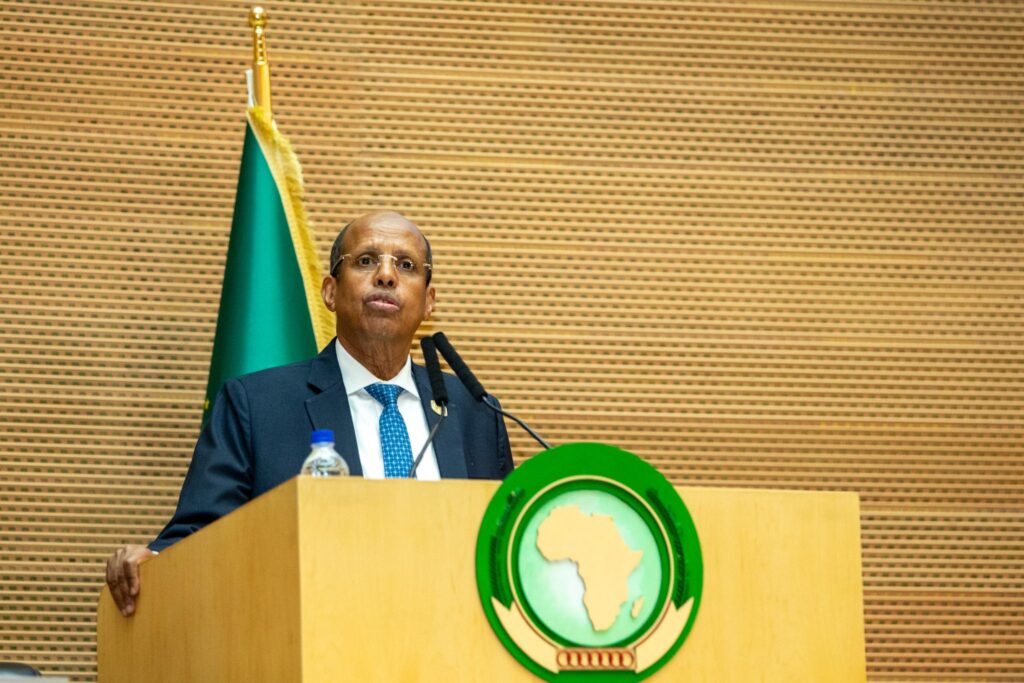
He framed water not only as an environmental or economic necessity, but as a shared continental asset with the potential to strengthen cooperation among member states.
“In the face of observed climate disruptions, the prudent use of water in all aspects of daily life is a major imperative. This vital resource must be perceived as a collective good to be preserved at all costs and as a vector for bringing our States closer together and for peace.”
H.E. Mahmoud Ali Youssouf
Beyond the thematic focus on water and sanitation, the Chairperson highlighted ongoing institutional reform efforts within the Commission. He pointed to the validated 2024–2028 strategic plan and the continued implementation of institutional reforms being carried out in coordination with Champion President H.E. William Ruto.
Security and political stability also featured prominently in the Chairperson’s address. He expressed concern over persistent political instability, security crises, and unconstitutional changes of government in parts of the continent.
While acknowledging positive developments in some countries, he cautioned that progress remains uneven. At the same time, he drew attention to continuing threats posed by terrorism, particularly in the Sahel and the Horn of Africa.
“While there has been regression and progress is minimal, our mediators are active. On unconstitutional changes of government, I welcome the return to constitutional order of the Gabonese Republic and the Republic of Guinea and their return to the AU.”
H.E. Mahmoud Ali Youssouf.
On the development front, the Chairperson cited tangible progress made through the African Continental Free Trade Area (AfCFTA) and the work of specialized AU agencies.
He emphasized that deeper economic integration and expanded trade remain central to achieving Agenda 2063, the African Union’s long-term blueprint for inclusive growth and sustainable development. However, he also stressed the importance of mobilizing broader support and resources to sustain this momentum.
“More than ever, the continent needs to capitalize on its instruments to boost the momentum of development and integration, reflecting on innovative sources of financing and involving all actors, however marginal they may seem.”
H.E. Mahmoud Ali Youssouf.
His remarks called for greater inclusion of the private sector, civil society, and philanthropic foundations in driving Africa’s development agenda.
The Chairperson concluded his address by urging focused and efficient summit deliberations, signaling the need for concrete decisions that can advance both immediate and long-term objectives.
As the Executive Council continues its work, much of its deliberations will take place in closed sessions. Ministers are expected to consider the report of the 51st Ordinary Session of the Permanent Representatives’ Committee and review the report on AU participation in the G20.
The Council will also conduct elections and appointments to key AU organs, including the Peace and Security Council, the African Commission on Human and Peoples’ Rights, and the African Committee of Experts on the Rights and Welfare of the Child.
In addition, the Council will receive updates on the implementation of its previous decisions, including progress on the Skills Assessment and Competence Audit process. Draft legal instruments will be examined, alongside reports from ministerial committees on issues such as the scale of assessment and contributions, African candidatures within the international system, and the implementation of Agenda 2063.
Ministers will also examine the draft agenda and decisions of the 39th Ordinary Session of the Assembly of African heads of state and government, which is scheduled to take place on February 14-15, before adopting the decisions of the current session.
As the session unfolds, the emphasis remains on translating strategic priorities into practical outcomes. By aligning discussions around water security, institutional reform, political stability, and economic integration, the AU seeks to reinforce a unified continental approach to shared challenges.
READ ALSO: Iran Marks 47th Anniversary Of 1979 Islamic Revolution