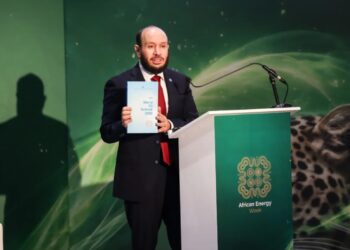
Ing. Wisdom Edem Gomashie, a Mining Consultant and Policy Analyst, has raised a red flag over the government’s recent fiscal maneuvers in the extractive sector, warning that the proposed reduction in the Growth and Sustainability Levy (GSL) may be a tactical “bait” to secure much higher mineral royalties.
This intervention comes at a pivotal moment as the state seeks to overhaul its fiscal relationship with gold producers, moving from a standard 5% flat rate to an aggressive sliding scale.
The expert’s warning highlights a growing tension between short-term revenue mobilization and the long-term health of the extractive sector, emphasizing that while the state must maximize its gains, it must avoid “draconian” shifts that could destabilize existing investments and deter future exploration.
“While I agree that the State should make gains from the mining sector, we should be strategic not to pass laws that may take retrospective effects to collapse the sector. There can be a win-win situation.”
Ing. Wisdom Edem Gomashi
The complexity of the current situation is rooted in a series of policy shifts that began in 2023 with the introduction of the Growth and Sustainability Levy (GSL), Act 1095, which imposed a 1% gross production levy on gold mining companies.
Despite initial protests from the then-opposition NDC, who claimed the 1% rate was “killing the mines,” the levy was paradoxically tripled to 3% in 2025.
By December 2025, the government further intensified the fiscal pressure by laying a Mineral Royalty Bill in Parliament, seeking a sliding scale between 5% and 12% as gold prices surged.
In response to the Ghana Chamber of Mines’ warnings of job losses and investment flight, the government has offered to reduce the GSL back to 1%, a move viewed by Gomashie as a calculated tactic to secure a much larger portion of revenue through the royalty hike.
The Sliding Scale: Revenue Boon or Investment Bait?

The government’s determination to implement a 5% to 12% sliding scale on gold is aimed at capturing windfall profits during market peaks, yet it faces stiff resistance from industry players.
The Ghana Chamber of Mines has voiced concerns that such a high cap could cripple mining operations and tag Ghana as a jurisdiction with an unstable and unpredictable mining regime.
Instead, they have suggested a more balanced royalty range between 4% and 8%, with an additional 1% earmarked specifically for mining communities.
A strategic win-win approach would require the state to adopt these more moderate scales to ensure that mining remains viable during price dips, thereby preventing the premature closure of mines and the subsequent loss of thousands of livelihoods.
Balancing the GSL and Long-Term Stability

The strategy of reducing the Growth and Sustainability Levy (GSL) from 3% back to 1% is widely interpreted by analysts as a concession meant to appease the industry while the state moves to “tax more royalty” on the back end.
This maneuver risks creating a lack of trust between the government and the private sector, which is detrimental to the country’s global competitiveness.
Ing. Wisdom Gomashie argued that for a truly sustainable win-win, the government should consider scrapping the GSL entirely in exchange for a fair, price-indexed royalty system that provides the state with its due share without over-leveraging the balance sheets of mining firms.
By maintaining a competitive Average Effective Tax Rate (AETR), Ghana can continue to attract the massive capital inflows required to sustain its position as a leading gold producer in Africa.
The Socio-Economic Impact of Shared Prosperity

A balanced fiscal framework offers profound benefits to the national economy by ensuring that the state receives substantial revenue during bull markets while protecting the industry’s survival during periods of price volatility.
Thorough research into the extractive sector indicates that when royalty laws are transparent and consultative rather than imposed “by force,” they lead to higher levels of reinvestment and exploration.
Furthermore, dedicating a specific percentage of royalties to mining communities addresses the underlying social issues that often lead to local unrest and illegal mining activities.
Ultimately, a strategic approach ensures that the mining sector remains an engine of growth that supports infrastructure development, local procurement, and stable employment, creating a legacy of wealth that benefits both the state and the investors for generations to come.
READ ALSO: AU Endorses Ghana’s Resolution on Slave Trade as Gravest Crime