
The Chief Executive Officer of the Chamber of Oil Marketing Companies (COMAC), Riverson Oppong, has issued a strong warning of a possible nationwide strike over what he describes as an unlawful ELPG fund diversion.
According to him, the alleged redirection of funds threatens the integrity of Ghana’s liquefied petroleum gas (LPG) regulatory framework and could disrupt supply across the country.
Speaking in an interview, Dr. Oppong accused the Ministry of Energy and the National Petroleum Authority (NPA) of breaching statutory procedures by directing money from the Energy Liquefied Petroleum Gas (ELPG) fund to the Ghana Cylinder Manufacturing Company (GCMC).
“The fund is not a bank to pre-finance anybody’s operations.
“For the minister to direct the NPA to release funds into the account of a manufacturing company without due process is wrong and unlawful.”
Dr. Riverson Oppong, CEO of COMAC and Industry Coordinator
Fund Meant for Safety and Infrastructure
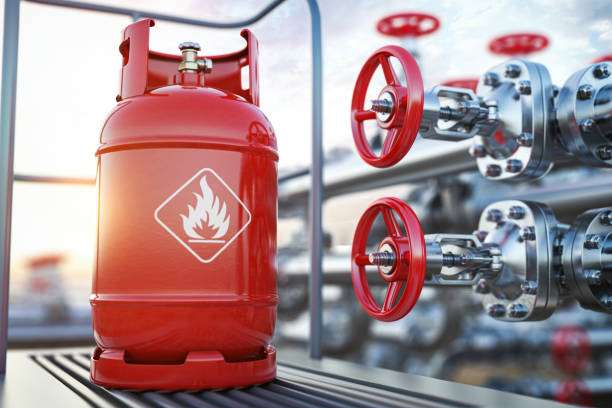
Dr. Oppong explained that the ELPG fund is financed through a public levy paid by LPG consumers and is legally ring-fenced for specific purposes.
These include developing LPG bottling infrastructure and implementing the Cylinder Recirculation Model (CRM), a major safety reform introduced to reduce gas-related explosions and improve handling standards across the country.
He stressed that the fund is governed by clear legal and administrative guidelines designed to ensure transparency and fairness in its use. The money, he argued, cannot be diverted at the discretion of any authority without following laid-down processes.
According to him, disbursements from the fund are subject to strict Standard Operating Procedures (SOPs). Under these rules, companies must first undertake approved investments, after which regulatory authorities verify the completed work before reimbursements are made.
“Some companies waited two to three years after investing before they were reimbursed.
“So how do you release money upfront to one company without any work done?”
Dr. Riverson Oppong, CEO of COMAC and Industry Coordinator
His remarks suggest that the alleged payment not only bypassed procedure but also created an uneven playing field within the industry, potentially disadvantaging companies that adhered to the established rules.
Governance Concerns at Fund Management Level
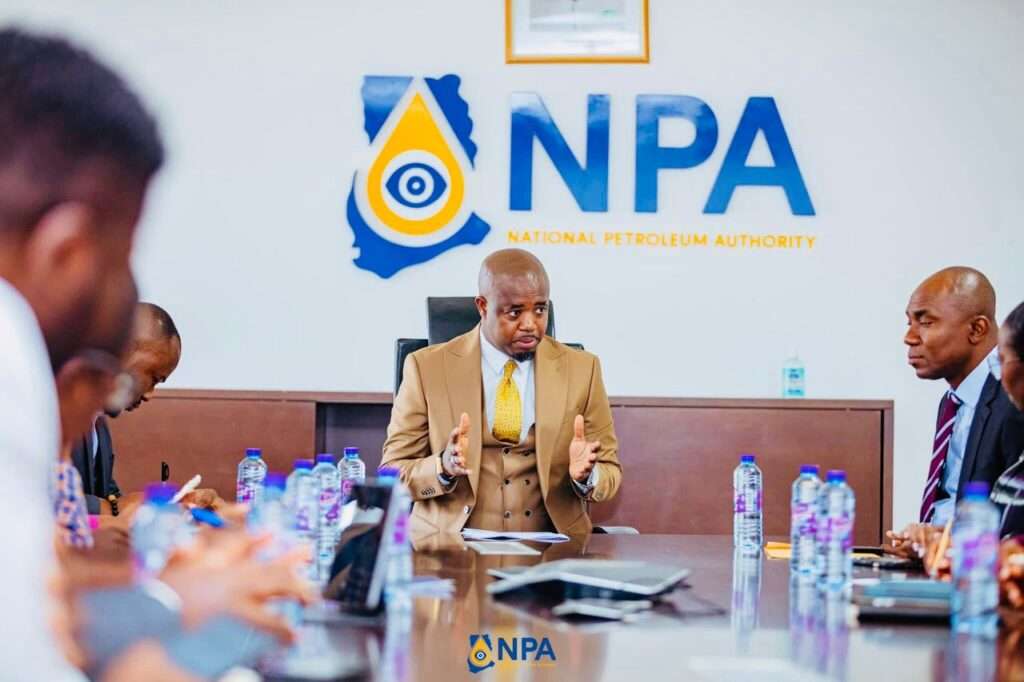
The controversy deepened when Oppong disclosed that the issue first surfaced at a Fund Management Committee meeting in January 2026.
According to him, it was at that meeting that members were informed that the NPA board had already approved the payment before bringing the matter to the committee for discussion.
“That defeats the whole purpose of having a fund management committee,” he argued, implying that the oversight structure meant to safeguard the ELPG fund had been sidelined.
The Fund Management Committee is designed to provide checks and balances in the administration of the levy. By approving a payment before committee deliberations, Dr. Oppong suggested that the regulatory framework intended to ensure accountability had been undermined.
Industry observers note that governance transparency is particularly critical in funds financed by public levies, as such monies are ultimately borne by consumers.
COMAC has formally written to both the Ministry of Energy and the NPA demanding that the disputed payment be reversed and returned to the ELPG fund.
The association insists that restoring the funds is necessary to maintain the integrity of the system and preserve trust among stakeholders.
Failure to comply, Oppong warned, could trigger an industry-wide strike. Such action would likely disrupt LPG supply nationwide, affecting households, commercial establishments, and industries that rely on gas for cooking and production.
Broader Implications for the LPG Sector

The dispute highlights underlying tensions within Ghana’s LPG sector as it continues to implement reforms under the Cylinder Recirculation Model.
The CRM was introduced to enhance safety by shifting responsibility for cylinder maintenance from consumers to licensed bottling plants. The ELPG fund plays a central role in financing infrastructure necessary to support this transition.
Oppong’s allegations suggest that deviations from established financial procedures could weaken confidence in the reform agenda.
As discussions continue, stakeholders will be watching closely to see how the Ministry of Energy and the NPA respond to the demands.
Whether the dispute is resolved through dialogue or escalates into industrial action may determine the immediate future of LPG supply stability in Ghana.
For now, the threat of a strike underscores the seriousness of the allegations surrounding the ELPG fund diversion and the growing unease within the oil marketing community.
READ ALSO: BoG Orders Banks to Brace for Shocks