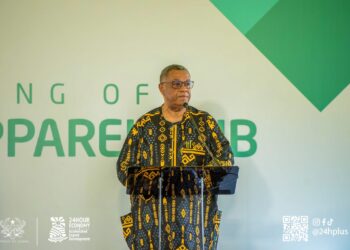

In a watershed moment for Ghana’s agricultural research landscape, Dr. Daniel Fahene Acquaye has officially been inducted as the Board Chairman of the CSIR-Crops Research Institute (CRI) in a radical pivot signalling ceremony held in Kumasi.
Moving from the ivory towers of academic discovery to the frontlines of commercial industrialisation, Dr. Acquaye, the visionary founder of the Agri-Impact Group, is now tasked with transforming CRI into a commercial engine capable of slashing Ghana’s $2 billion annual food import bill.
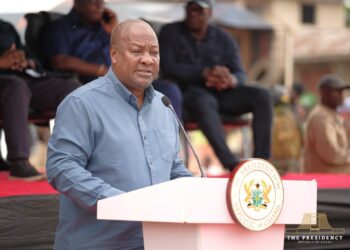
The appointment comes at a time when the John Dramani Mahama administration is aggressively pursuing its “Feed Ghana” agenda. For the CRI, this means the days of “research for research’s sake” are over.
“The new board’s immediate mandate is to bridge the yawning gap between scientific innovation and market-ready agricultural products. By focusing on commercial-grade seed systems, particularly for the rice and poultry sectors, the institute is being repositioned as the technical backbone of Ghana’s agro-industrial reset”
CRI
Central to Dr. Acquaye’s mission is the large-scale commercialisation of high-yield seed varieties. Ghana currently imports a significant percentage of its rice seeds and poultry feed components, leading to high production costs for local farmers.
The CRI’s new strategy involves establishing elite seed banks that can provide farmers with climate-resilient, “firm,” varieties capable of competing with imported brands.
This shift isn’t just about biology; it’s about business. Under the new leadership, the institute will foster direct partnerships with agribusiness giants to ensure that research outputs are funded and utilised in real-world commercial farming.
This “research-to-industry” pipeline is expected to trigger a tenfold increase in domestic poultry production, potentially displacing the frozen chicken imports that currently dominate 95% of the Ghanaian market.

A Veteran At The Helm
The CRI noted that Dr. Acquaye brings over 30 years of agribusiness expertise to the role, having successfully mobilised over $100 million in agricultural project funding in the last five years alone. His experience with global bodies like USAID, AGRA, and the Mastercard Foundation makes him uniquely qualified to lead this transition.
During his tenure at Agri-Impact, he grew medicinal plant exports from $3 million to $25 million, proving that Ghanaian agriculture can be a high-value global competitor when backed by the right technology.
The new eight-member board includes a mix of plant breeders, soil scientists, and private-sector consultants. This multidisciplinary team is designed to ensure that the CRI’s innovations are not only scientifically sound but also financially viable for the smallholder farmers who form the bedrock of the economy.
“Dr. Acquaye’s appointment is seen as a strategic step toward strengthening research–industry collaboration and accelerating the commercialisation of agricultural innovation”
CRI

As the CRI enters this new chapter, the focus remains on “industrial sovereignty.” By producing its own seeds and feed, Ghana can insulate itself from global supply chain disruptions and currency volatility.
The establishment of the Dan F. Acquaye Drone Innovation and Simulation Unit at KNUST earlier this year further underscores the commitment to integrating precision agriculture into the national research framework.
The ultimate goal of the “New CRI” is to turn harvest into industry. By providing the technical blueprint for the “Feed Ghana” programme, the institute will ensure that agriculture becomes the primary engine for job creation and rural economic transformation.
READ ALSO: Performance Trends of the 100% State-Owned Enterprises with the Largest Losses in 2025