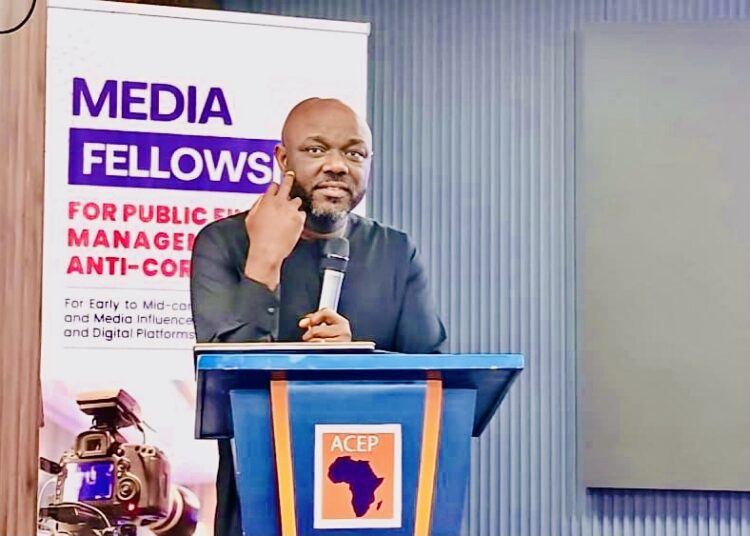
The Electricity Company of Ghana (ECG) efficiency and revenue collection challenges remain a critical weak link in Ghana’s energy sector recovery efforts, according to the Executive Director of the Africa Centre for Energy Policy (ACEP), Ben Boakye.
Speaking during a NorvanReports and Economic Governance Platform (EGP) X Space discussion on the theme “Energy Sector ‘Reset’: Will It End the Circular Debt or Recreate It?”, Mr. Boakye underscored the distribution company’s central role in the sector’s persistent financial stress.
“ECG is doing relatively well in accounting for what it collects, but not in improving efficiency or advancing collection.”
Benjamin Boakye, Executive Director of the Africa Centre for Energy Policy (ACEP)
A major contributor to the problem, Mr. Boakye explained, is weak revenue collection driven in part by widespread power theft. He said illegal connections and meter bypassing remain common, depriving the sector of much-needed income.
“Those who have been stealing power, keep stealing. We get the same complaints of people bypassing their meters, running electricity without paying for it.”
Benjamin Boakye, Executive Director of the Africa Centre for Energy Policy (ACEP)
The continued prevalence of electricity theft, he suggested, erodes the gains made in other reform areas and limits the sector’s ability to finance its operations without relying on state support.
Mr. Boakye cautioned that tackling inefficiencies at ECG is more important than focusing solely on tariff adjustments. Without stronger enforcement and improved revenue mobilisation, he argued, the sector will struggle to pay for its own inputs, including gas supply and generation costs.
Tariff Increases Not a Silver Bullet
Addressing the issue of tariffs, Mr. Boakye stressed that incorporating gas costs into electricity pricing does not automatically require tariff hikes. Instead, the emphasis should be placed on improving collections and reducing losses.
“Tariff adjustment alone is not enough.
“The more we increase tariffs when people cannot pay, the more credible customers slip into power theft, deepening ECG’s collection challenges.”
Benjamin Boakye, Executive Director of the Africa Centre for Energy Policy (ACEP)
He warned that repeated upward tariff adjustments, without corresponding improvements in efficiency, could backfire by driving more consumers into illegal consumption.
In his view, raising tariffs in a context of weak enforcement risks widening the revenue gap rather than closing it, as struggling consumers resort to bypassing meters to avoid higher bills.
Cash Waterfall Reforms Show Progress
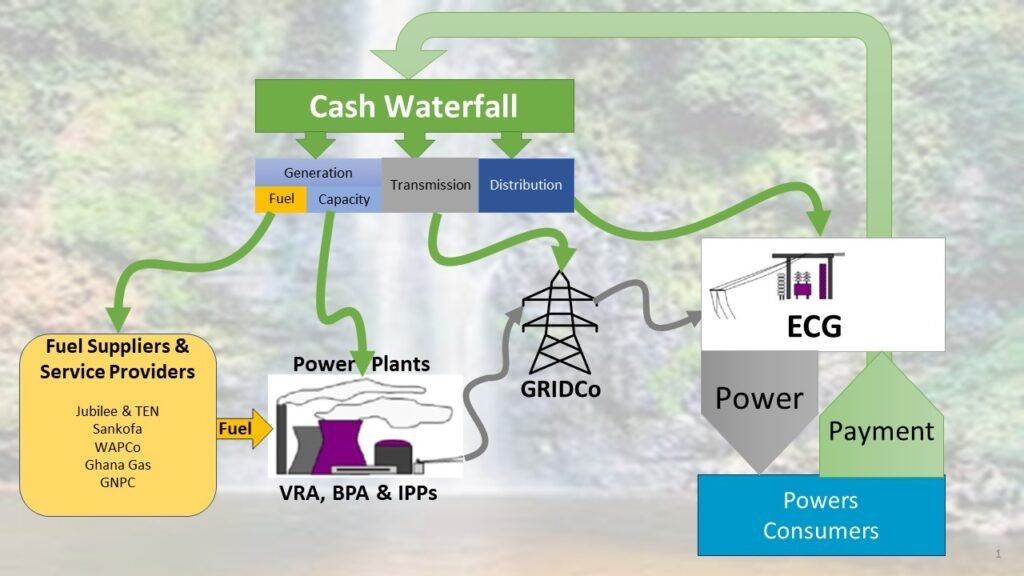
Mr. Boakye also reflected on longstanding disputes over the cash waterfall mechanism, which governs how revenues collected within the electricity value chain are distributed among stakeholders.
“In the previous administration, we were always complaining about the cash waterfall.
“ECG complained that they couldn’t pay into the cash waterfall, even though they were instructed to do so, and they would give excuses around why they need the money for their operations.”
Benjamin Boakye, Executive Director of the Africa Centre for Energy Policy (ACEP)
He said repeated back-and-forth engagements yielded little progress at the time, with ECG underpaying its required contributions, leaving other operators in the sector shortchanged.
However, he acknowledged that the situation has improved over the past year.
“For the past one year, that has changed, where the management of ECG decided that they will pay everything into the cash waterfall. And then it is distributed according to the formula that PURC supervises.”
Benjamin Boakye, Executive Director of the Africa Centre for Energy Policy (ACEP)
The involvement of the Public Utilities Regulatory Commission (PURC) in supervising the process has, according to Mr. Boakye, strengthened transparency and oversight.
Despite improvements in the administration of the cash waterfall mechanism, Mr. Boakye cautioned that revenues remain insufficient to address the broader structural challenges facing the sector.
His remarks suggest that while governance reforms are beginning to yield results, deeper operational inefficiencies continue to undermine financial sustainability.
Bigger Challenge Ahead
At the heart of Mr. Boakye’s argument is the need for ECG to transition from basic accounting compliance to operational excellence. Transparency in revenue reporting, he implied, is only one part of the solution.
The real test lies in reducing technical and commercial losses, enforcing payment discipline and restoring confidence in the system.
As Ghana pursues its energy sector reset, the performance of ECG will remain pivotal. Without significant improvements in efficiency and revenue collection, the sector may continue to depend heavily on fiscal support from government.
For ACEP, the path to lasting stability does not lie in frequent tariff adjustments but in strengthening enforcement, closing revenue leakages and ensuring that electricity consumers who use power pay for it.
Until ECG efficiency and revenue collection challenges are fully addressed, the risk of renewed financial strain within Ghana’s energy sector will remain ever present.