Ghana’s Energy Sector Reset must confront what has been described as “hydra-headed” challenges if it is to prevent a return to circular debt and persistent fiscal risks, Economist and Technical Advisor at the Ministry of Finance, Dr. Theo Acheampong, has warned.
Speaking during a NorvanReports and Economic Governance Platform (EGP) X Space discussion on the theme “Energy Sector ‘Reset’: Will It End the Circular Debt or Recreate It?”, Dr. Acheampong said recent reforms have improved cash flow stability but deep-rooted structural weaknesses remain unresolved.
According to him, the sector’s difficulties extend beyond a single problem, encompassing tariff under-recovery, governance lapses, distribution inefficiencies and historical misuse of sector revenues.
Dr. Acheampong pointed to weaknesses in the implementation of the cash waterfall mechanism, particularly by the Electricity Company of Ghana, as a major contributor to the sector’s debt accumulation.
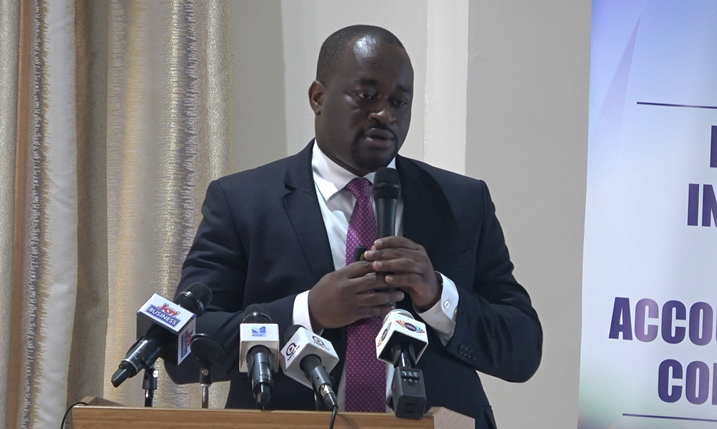
“Payments collected into the cash waterfall were not always used to remunerate players within the sector.
“ECG was using part of those funds for other purposes, while tariffs themselves were also not covering full sector costs.”
Dr. Theo Acheampong, Economist and Technical Advisor at the Ministry of Finance
The cash waterfall mechanism was designed to ensure that revenues collected across the electricity value chain are distributed transparently and equitably among generators, gas suppliers and other stakeholders. However, lapses in enforcement undermined its effectiveness, exacerbating financial imbalances.
Dr. Acheampong noted that these vulnerabilities were clearly identified under Ghana’s programme with the International Monetary Fund, launched in May 2023. The IMF programme flagged the energy and cocoa sectors as the two most critical sources of fiscal risk to the economy.
A $2 Billion Annual Burden
At the peak of Ghana’s economic crisis, the energy sector shortfall was estimated at 2.2 per cent of GDP. In monetary terms, this translated into nearly $2 billion annually spent by the state to cover inefficiencies, tariff gaps and unpaid obligations.
“To put this into context, that is money that could have gone into schools, roads, hospitals and productivity-enhancing infrastructure, but instead had to be channelled into plugging gaps in the energy sector.”
Dr. Theo Acheampong, Economist and Technical Advisor at the Ministry of Finance
The scale of the shortfall underscored the urgency of reform, as continued subsidies and debt accumulation placed immense strain on public finances.
Providing historical perspective, Dr. Acheampong recalled that the Energy Sector Recovery Programme, developed in 2019 with support from the World Bank and the IMF, sought to clear legacy arrears within four to five years through strict application of the cash waterfall system.
However, implementation weaknesses meant that the intended debt reduction targets were not fully achieved. As a result, legacy arrears continued to weigh heavily on the sector.
Under the current reset agenda, he said, economic managers are recommitting to firm enforcement of the cash waterfall system as a first step toward restoring financial discipline.
“I can state on authority that as we speak, the government remains largely current on bills related to ongoing electricity and gas supply.
“These are not legacy arrears, but current obligations, and most of them have been cleared.”
Dr. Theo Acheampong, Economist and Technical Advisor at the Ministry of Finance
Distinguishing Legacy Debt from Current Obligations
Dr. Acheampong stressed the importance of distinguishing between historical arrears and present payment flows. While progress has been made in keeping up with current bills, he cautioned that resolving legacy debts remains a major policy challenge.
Addressing the debt overhang, he pointed to the renegotiation of several power purchase agreements as a critical intervention. Some contracts have already been crystallised, while others are pending parliamentary approval.
According to him, the 2026 Budget estimates savings of nearly $250 million from renegotiated power purchase agreements, with further savings anticipated once outstanding amendments receive legislative backing.
Beyond financial adjustments, Dr. Acheampong emphasised the need for durable institutional reforms. He cautioned that sector stability should not depend on discretionary ministerial interventions or external oversight.
“The processes and systems must work with or without ministerial or IMF oversight,” he said, underscoring the need for robust governance frameworks.
Central to the reset is reform within ECG, particularly efforts to reduce technical and commercial losses that were estimated at between 27 and 30 per cent at their peak. Lowering these losses, he argued, is essential to restoring operational efficiency and revenue integrity.
Three Pillars of the Reset Strategy
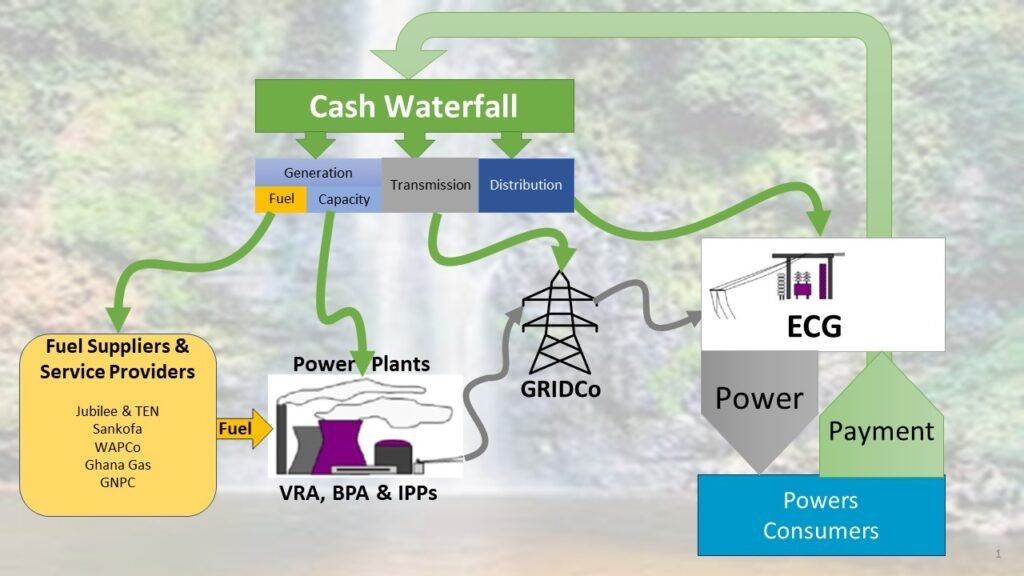
Dr. Acheampong explained that the energy sector reset strategy rests on three interconnected pillars. The first is stopping the immediate cash bleed through strict enforcement of the cash waterfall mechanism.
The second involves addressing legacy debt through contract renegotiation and targeted savings. The third requires ensuring that future tariffs and collections reflect full sector costs, including gas supply expenses.
He added that recent macroeconomic improvements, particularly exchange rate stability, are helping ease some tariff pressures.
However, he cautioned that lasting reform will depend on reducing distribution losses, strengthening governance and improving revenue collection across the entire value chain.
As Ghana pursues the Energy Sector Reset, the economist’s remarks serve as a reminder that stabilising cash flows is only the beginning.
Without structural reforms and institutional discipline, the risk of recreating circular debt could remain a persistent threat to the country’s fiscal stability.
READ ALSO: Ghana’s Democracy at Risk from Hyper Partisan Politics – CDD-Ghana Fellow