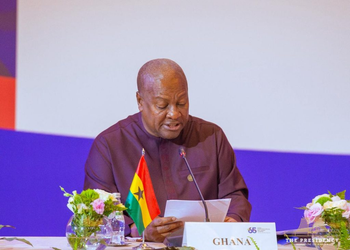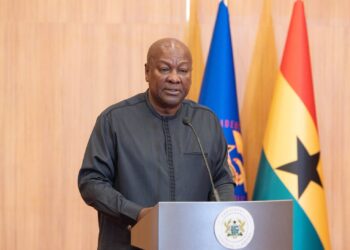
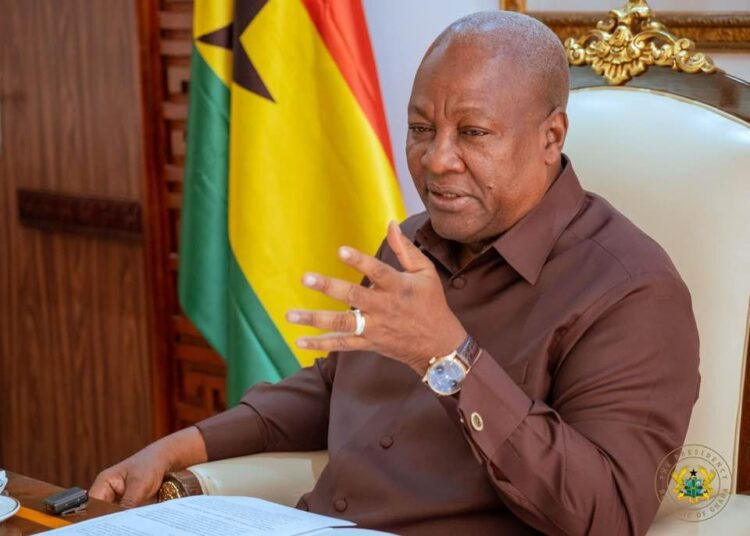
The Ghana Centre for Democratic Development (CDD-Ghana) has described President John Dramani Mahama’s restoration of District Assembly Common Fund disbursements to at least 80 percent as one of the most commendable governance achievements of his first year in office.
The assessment was delivered during the One-Year Review of the Mahama Administration organised by the Ghana Centre for Democratic Development, with the presentation led by Kojo Pumpuni Asante, Director of Policy Engagement and Partnerships.
Addressing the local government component of the review, Dr Asante said 2025 marked a decisive shift toward rebuilding the policy and legal foundations required for a more effective decentralised governance system.
Central to this effort, he noted, was the government’s action to ensure that statutory releases to Metropolitan, Municipal and District Assemblies were significantly improved after years of constraints.
“The government did very well in ensuring that the releases to the District Assembly Common Funds were going,” Dr Asante said, adding that making sure “at least 80 percent of that was going” represented a critical intervention for local development.

According to CDD Ghana, the restoration of DACF flows must be understood against the background of severe fiscal limitations between 2022 and 2024. During that period, statutory funds were subject to extensive caps, with district assemblies receiving between 40 and 50 percent of expected allocations.
Dr Asante described those years as “very strange periods financially,” noting that the impact on local governance was profound. Assemblies struggled to execute basic development projects, maintain infrastructure, and deliver essential services. The result, he said, was a further erosion of public confidence in local government institutions.
Restoring the flow of funds, therefore, was not simply an accounting decision but a governance statement. Dr. Asante observed that ensuring resources reached the MMDAs was “a very important thing” because it re-enabled local authorities to resume their statutory responsibilities.
Beyond Funding to Structural Reform
While commending the improved disbursement of funds, CDD-Ghana stressed that financing alone would not fix long standing weaknesses in Ghana’s decentralisation system. Dr Asante noted that much of 2025 was devoted to developing a broader framework aimed at making local government more functional and responsive.
“The other thing was developing the framework and how we are going to make local government work,” he said, pointing to the need for deeper reforms that go beyond fiscal transfers. CDD surveys, he revealed, consistently show that many citizens do not believe the local government system delivers tangible results.
This trust deficit, according to the think-tank, poses a serious challenge to democratic governance. When citizens perceive district assemblies as ineffective, participation declines, and accountability weakens, undermining the very rationale for decentralisation.

A major pillar of the proposed reforms lies within the ongoing constitutional review process. Dr Asante highlighted recommendations for the establishment of a Devolution Commission that would take a comprehensive look at how power, resources, and responsibilities are distributed between central and local government.
Such a commission, he explained, would provide a structured approach to recalibrating decentralisation and ensuring that local authorities are not merely administrative extensions of the centre.
The goal, in his words, is to move toward a system where local government can genuinely plan, implement, and be held accountable for development outcomes.
A standalone emphasis captured the significance of this agenda: recalibrating local government is no longer optional but essential to restoring citizen confidence in democratic governance.
Electing MMDCEs Back on the Agenda
Another reform highlighted by CDD-Ghana is the proposal to elect Metropolitan, Municipal, and District Chief Executives. Dr. Asante noted that the issue remains firmly on the table and could be implemented without entrenching constitutional provisions.
“It can be done as a non-entrenched provision,” he explained, suggesting that Parliament could act swiftly once the necessary amendment bills are introduced. Electing MMDCEs, proponents argue, would strengthen local accountability by making chief executives directly answerable to residents rather than appointed from the centre.
CDD-Ghana views this reform as a potential turning point in decentralisation. If implemented carefully, it could align authority with responsibility and give citizens a stronger voice in local governance.
In concluding his assessment, Dr Asante framed the restoration of DACF disbursements and the push for structural reforms as interconnected elements of a broader democracy and governance agenda. Improved funding creates the conditions for local development, but institutional redesign is required to ensure sustainability.
“These are just an overview of what I’ve shared with you on the democracy and governance front,” he said, underscoring that the work remains unfinished. The challenge ahead, according to CDD-Ghana, is to translate policy intent into lived experience for citizens at the local level.

As Ghana continues to consolidate its democratic gains, the think tank’s assessment suggests that strengthening local government could be one of the Mahama administration’s most enduring legacies.
By restoring funding and advancing reforms that deepen decentralisation, the government has taken steps toward rebuilding trust in a system many citizens had come to view as ineffective.
Whether these initiatives will fully deliver on their promise will depend on sustained political will, legislative action, and continued engagement with citizens. For now, CDD-Ghana’s verdict is clear. Restoring 80 percent DACF disbursement is a highly commendable start, but meaningful decentralisation will require going further.
READ ALSO: Ghana’s Energy Sector Reset Faces ‘Hydra-Headed’ Challenges