
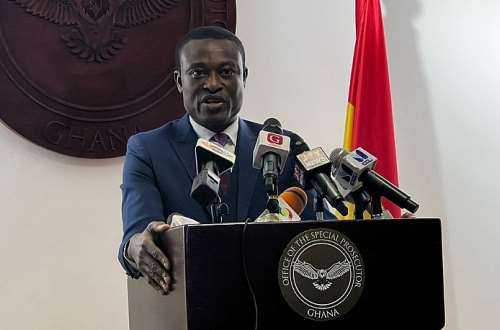
The Office of the Special Prosecutor has launched an investigation into suspected corruption involving the diversion of fifty(50) twenty-foot containers of palm oil valued at GHS25.8 million.
The consignment was declared as goods in transit to Burkina Faso but was allegedly diverted into the local market without the payment of required duties and taxes. According to the Office, the suspected actions resulted in an estimated tax loss of GHS10.5 million to the state.
In a statement dated February 24, 2026, the Office of the Special Prosecutor said the investigation followed an intelligence-led operation conducted in November 2025.
Preliminary findings indicate the involvement of some Customs officers, National Security operatives, and clearing agents, suggesting a coordinated scheme that exploited weaknesses within the transit regime. The Office stressed that the investigation remains ongoing and that further details will emerge as inquiries deepen.
The Special Prosecutor explained that the probe was initiated after intelligence pointed to irregular movements of transit goods that should have exited Ghana but instead found their way into the domestic market.

Officials familiar with the investigation say the palm oil containers were part of a shipment officially documented as transiting through Ghana to Burkina Faso. However, surveillance and verification exercises revealed inconsistencies between declared routes and actual distribution patterns.
The diversion of high value goods such as palm oil is considered particularly damaging because of its impact on domestic markets and public revenue. When goods meant for export or transit are sold locally without duties, they undercut legitimate businesses that comply with tax obligations, while depriving the state of funds needed for development.
Customs Interceptions Along the Eastern Corridor
The OSP investigation coincides with a separate but related development involving the Customs Division of the Ghana Revenue Authority. Customs officials recently intercepted several articulated trucks suspected of abusing the transit regime under the pretense of transporting goods to Niger.
The enforcement operation focused on trucks that entered Ghana through the Akanu Border Post and were declared as transit goods destined for Niger via Kulungugu. Intelligence and field surveillance showed that the trucks were traveling without the required customs escorts.
This was despite the fact that they had been officially released from the Akanu Border Post for transit through the Eastern Corridor, with Kulungugu designated as the exit point under a specific bill of entry. The absence of escorts raised red flags, as transit regulations require close monitoring to prevent diversion.
The transit regime remains one of the most persistent sources of revenue leakage in border management. Transit arrangements are designed to facilitate regional trade by allowing goods to pass through Ghana without being taxed locally. However, when oversight is weak or compromised, such systems can be exploited for illicit gains.

In the palm oil case, investigators believe the diversion was not accidental but the result of deliberate actions by individuals with knowledge of customs procedures. The alleged involvement of state officials and private agents has heightened public concern about accountability and integrity within border operations.
Government Response and Investigations
Reacting to the developments, Cassiel Ato Forson has directed the Ghana Revenue Authority to commence comprehensive investigations without delay. The Finance Minister has pledged that all individuals found culpable will face tough sanctions in line with the law.
According to sources at the Finance Ministry, the directive reflects the government’s determination to plug revenue leakages and strengthen domestic resource mobilization. Authorities believe that firm action against transit abuse is essential to sustaining fiscal discipline and protecting the public purse.
In a related move aimed at reinforcing oversight and restoring confidence, John Dramani Mahama has appointed Brigadier General Glovor Ashong Annan as the new Commissioner of the Customs Division of the Ghana Revenue Authority. He replaces Brigadier General Ziblim Ayorrogo.
The appointment is widely interpreted as part of broader efforts to tighten controls at Ghana’s borders and improve enforcement of customs regulations. Government officials say the new Commissioner is expected to focus on discipline, internal accountability, and the effective supervision of transit operations.
The Office of the Special Prosecutor reiterated its commitment to protecting public resources and upholding integrity in public administration. By investigating complex cases that involve collaboration between public officials and private actors, the Office aims to deter future misconduct and reinforce the rule of law.
Legal analysts note that the outcome of the palm oil investigation could have far reaching implications for how transit related corruption cases are handled. Successful prosecutions would send a strong signal that abuse of customs systems will not be tolerated, regardless of the rank or institution of those involved.
The twin developments involving palm oil diversion and intercepted transit trucks have intensified scrutiny of Ghana’s transit framework. While transit trade remains vital for regional commerce, authorities acknowledge the need for stronger tracking systems, better coordination among security agencies, and stricter enforcement of escort requirements.
As investigations continue, businesses and the public alike are watching closely to see whether the promised sanctions and reforms will materialize. For now, the Office of the Special Prosecutor says it remains focused on following the evidence and ensuring that those responsible are held accountable.
READ ALSO: Ghana’s Economy Crosses $100 Billion Mark