Ghana’s financial authorities have taken a decisive step toward bringing digital assets into the heart of the country’s formal financial system.
In a move that signals both caution and ambition, regulators have formed a coordinated supervisory committee to oversee virtual asset activity, marking a new phase in Ghana’s capital market evolution.
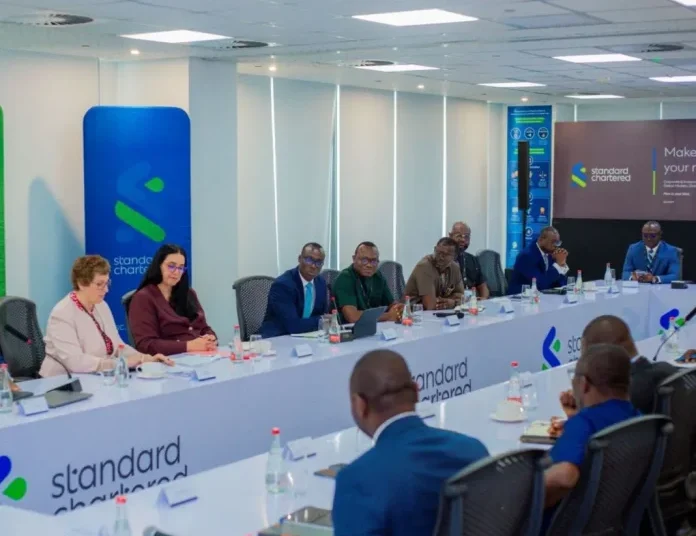
The development was confirmed during a high-level business roundtable hosted by Standard Chartered Bank Ghana Plc in Accra. The gathering brought together regulators, exchange officials, pension fund trustees, real estate investment trusts, asset managers and banking executives to discuss the future of digital finance in Ghana.
At the center of the discussions was one message. The era of fragmented oversight is over.
A United Front on Digital Oversight
The newly formed coordinating committee comprises the Securities and Exchange Commission, the Bank of Ghana, the Financial Intelligence Centre and the Ministry of Finance. Together, these institutions will align digital asset supervision under a unified framework designed to eliminate regulatory gaps.
For years, digital asset activity in Ghana has grown rapidly, largely driven by retail investors and tech savvy entrepreneurs. Yet much of that growth occurred outside traditional regulatory structures. Authorities acknowledged that while innovation has flourished, the absence of a clear institutional framework created vulnerabilities in areas such as investor protection, anti money laundering compliance and systemic risk management.
The new framework is built around activity based licensing. This means operators will be supervised based on the nature of services they provide rather than under a one size fits all model. Regulators believe this approach will provide clarity while preventing overlaps or blind spots between agencies.
Participants at the roundtable described the initiative as a proactive effort to position Ghana as a credible digital finance hub in Africa.

Cybersecurity Becomes Non Negotiable
A key feature of the new regulatory architecture is a strong cybersecurity component. The Securities and Exchange Commission, working alongside the Cyber Security Authority, disclosed that it is finalising mandatory cybersecurity requirements for digital asset operators.
Under the proposed regime, applicants seeking licenses will have to meet defined security standards before approval. Even after licensing, operators will remain subject to continuous monitoring, vulnerability testing and compliance reviews.
Industry stakeholders welcomed this development. Digital assets represent investor funds held in digital form, which makes secure custody and technological resilience critical. Without robust safeguards, confidence in the entire ecosystem could erode quickly.
Executives at the meeting emphasized that custody services, which involve the secure safekeeping and legal servicing of digital assets, are foundational. Institutional investors such as pension funds cannot participate at scale without clear legal ownership structures and reliable infrastructure.
Learning from Global Experience
Standard Chartered used the platform to share insights from its own digital asset journey. The bank traced its eight year effort to build digital infrastructure, beginning with early launches in the United Arab Emirates and tokenisation pilots in Hong Kong involving money market fund structures.
According to representatives from the bank, digital capabilities have since been integrated into its corporate and investment banking operations. The experience, they noted, demonstrates that innovation and regulatory discipline can coexist when institutions collaborate closely.
The presence of global executives, including Margaret Harwood Jones, Global Head of Financing and Securities Services, reinforced the message that Ghana’s ambitions are being watched beyond its borders.
Moving Beyond Retail Dominance
One recurring theme at the roundtable was the imbalance between retail and institutional participation in Ghana’s digital asset market. Much of the current activity has been driven by individual investors. While this has fueled rapid growth, it has also limited market depth and stability.
Pension funds, asset managers and real estate investment trusts have remained cautious. Participants agreed that translating regulatory frameworks into practical, investable products will determine how quickly institutional adoption accelerates.
The Ghana Stock Exchange used the opportunity to advocate for deeper institutional engagement. Officials argued that long term capital from structured investors is essential to building market resilience and attracting foreign participation.
However, regulation alone will not be enough. Stakeholders acknowledged that investor confidence and public understanding of digital asset risks must improve. Market education campaigns, transparent communication and consistent enforcement will be crucial in shaping perceptions.
Balancing Innovation with Protection
The formation of the coordinating committee reflects a broader policy philosophy. Ghana does not intend to suppress digital asset innovation. Instead, authorities aim to channel it into a framework that balances growth with investor protection.
By aligning the Securities and Exchange Commission, the Bank of Ghana, the Financial Intelligence Centre and the Ministry of Finance, policymakers hope to avoid the fragmented oversight that has challenged other jurisdictions.
For Ghana’s financial ecosystem, the initiative represents more than regulatory reform. It is an attempt to integrate emerging technologies into mainstream finance without compromising stability.
As one participant remarked during the discussions, the question is no longer whether digital assets belong in Ghana’s financial system. The real question is how to structure them responsibly.
If successfully implemented, the super regulator model could become a blueprint for other African markets grappling with similar challenges. For now, the focus shifts from policy dialogue to operational execution.
The next phase will test whether coordinated action can transform Ghana’s fast growing digital asset landscape into an institutional grade market capable of supporting sustainable economic growth.
READ ALSO: Ghana’s Economy Crosses $100 Billion Mark