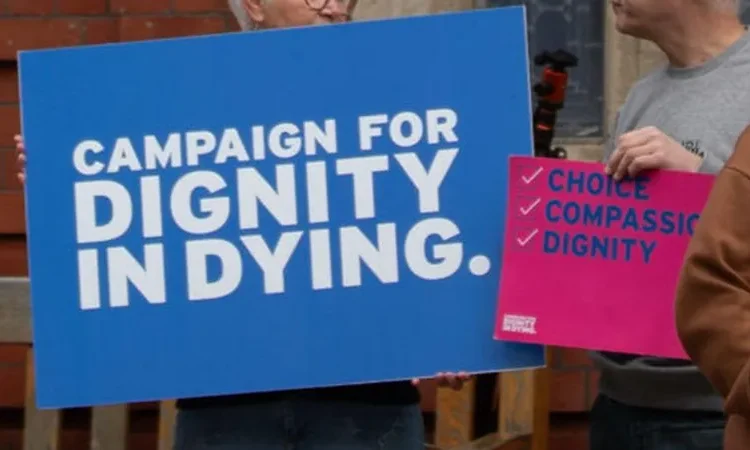
Lawmakers in Jersey have approved legislation that will allow terminally ill adults the right to choose to end their own lives, marking a significant shift in the island’s approach to end-of-life care.
Thirty-two politicians voted in favour of the law with 16 voting against it. The bill will be sent for Royal Assent, which should be a formality.
The move follows public debate and consultation over assisted dying, with supporters arguing that the measure provides compassion and autonomy for those facing irreversible and painful illnesses, while opponents have raised ethical and safeguarding concerns.
Proponents of the measure say it offers dignity and choice at the end of life. They argue that for some individuals facing advanced, incurable conditions, the ability to decide how and when they die can provide comfort and control in circumstances otherwise marked by suffering. Supporters also contend that clear legal parameters are preferable to uncertainty or the risk of unregulated actions.
Critics, however, have expressed concern about the broader implications of legalizing assisted dying. Some fear that vulnerable individuals could feel pressure to choose the option, even with safeguards in place. Others have cited moral or religious objections, emphasizing the traditional role of medicine in preserving life.
The approval marks the final legislative stage for the landmark proposals before they get Royal Assent in the UK – and once approved the first legal assisted deaths could happen as early as next summer.
It means Jersey is now the second part of the British Isles where assisted dying has been fully approved. The Isle of Man was the first.
Those eligible are people with terminal illnesses causing unbearable suffering where they are expected to die within six months, or 12 months for those with neurodegenerative conditions such as Parkinson’s and motor neurone disease (MND).

Jersey Minister for Health and Social Services, Tom Binet, said that Jersey would have “one of the safest and most transparent assisted dying laws in the world.”
Humanists UK Chief Executive, Andrew Copson said that it was a “momentous vote of confidence for compassion, dignity, and choice at the end of life.”
“For far too long, terminally ill people were denied the right to decide the manner and timing of their own deaths. Today, Jersey has changed that.
“The proposals contain strong safeguards and reflect the clear wishes of the public, who have spoken through citizens’ juries and repeated surveys.”
Andrew Copson
Jersey Politician Disappointed By Assisted Dying Law Approval

Jersey politician, Deputy Sir Philip Bailhache voted against the law and said that he was “disappointed” by the result.
He said that he is all in favour of compassion, in favour of people having deaths which are “good deaths, but I’m not in favour of the law which has just been passed.”
“Life is a precious thing and I don’t think really that it’s for people to remove life in the way in which the assisted dying law is now going to authorise. I think there are very deep ethical issues involved in this subject and I’m not sure what the outcome is going to be.
“I fear that it will change the community of Jersey in a way in which we may not yet be able to foresee.”
Deputy Sir Philip Bailhache
Westminster and Scotland are debating assisted dying, with the draft law in England and Wales making slow progress in the House of Lords.
A UK government spokesperson said that the length of processing time “depends on the complexities and sensitivities of a bill, as well as any legal and constitutional issues.”
The various proposals across the UK have generated huge controversy, with passionate arguments for and against the changes.
READ ALSO: Analyst Sees Operational Obstacles For Board Of Peace