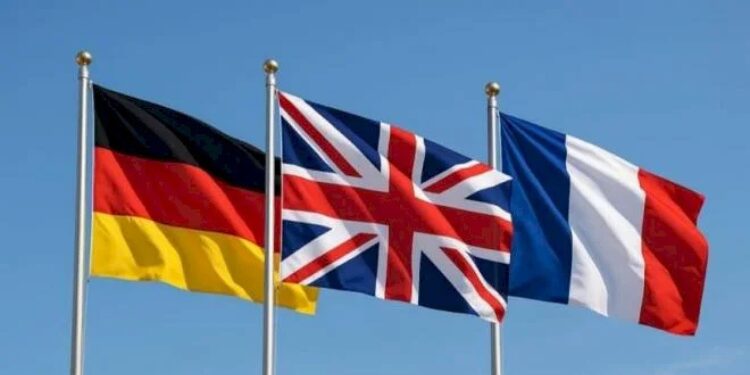
UK, France and Germany have jointly expressed concern over China’s recent maritime activities in waters east of Taiwan, warning that the operations risk undermining regional stability and threatening freedom of navigation in one of Asia’s most strategically sensitive waterways.
In a rare coordinated statement issued through their representative offices in Taipei, the three European nations stated they were closely monitoring “novel Chinese activity” in the waters off Taiwan’s eastern coast
The warning comes amid heightened tensions in the region after China dispatched coast guard vessels into waters east of Taiwan earlier this month as part of what Chinese authorities described as a “special maritime traffic law-enforcement operation.”
The move drew immediate criticism from Taiwan, which accused Beijing of attempting to extend its jurisdiction into waters where it has no legal authority.
China’s latest operation has added another layer of complexity to an already sensitive geopolitical environment in the Taiwan Strait and surrounding seas.
Beijing regards Taiwan as part of its territory and has consistently asserted sovereignty claims over the island despite strong opposition from Taipei, which maintains that only Taiwan’s people can determine the island’s future.
The eastern waters of Taiwan have historically been viewed as strategically important because they provide access to key international shipping routes and serve as an important gateway linking Northeast Asia with the broader Pacific Ocean. Any attempt to alter the status quo in these waters is therefore closely watched by regional governments and international partners concerned about maritime security and the free flow of global commerce.
In a joint statement, the European powers stressed that “these actions threaten regional stability and the freedom of navigation and safety of international shipping. We reiterate our opposition to any unilateral change to the status quo, particularly by threat or use of force or coercion.”
The three countries further emphasized that, “it is fundamental that all navigational rights and freedoms and the safety of seafarers and vessels are guaranteed and respected.”
China’s growing maritime footprint throughout the Indo-Pacific area has drawn increasing attention from throughout the world, as seen by the statement. Like other nations, Britain, France, and Germany do not have official diplomatic ties with Taiwan, but they have expressed growing concerns about acts that can increase tensions across the Taiwan Strait and neighbouring waters.
The news that Japan and the Philippines would start official talks about maritime boundaries is said to have set off the most recent developments. Beijing said that some of the waters under debate are part of its exclusive economic zone, which is located close to Taiwan.
Taiwan Rejects Chinese Jurisdiction Claims as Regional Tensions Intensify
Taiwan has strongly rejected China’s justification for the maritime operation, insisting that the waters east of the island do not fall under Beijing’s jurisdiction.
Officials in Taipei argue that China’s actions represent an attempt to assert control over international waters and intimidate commercial shipping operating in the region. Taiwanese authorities have also accused Chinese coast guard personnel of interfering with civilian maritime traffic during the operation.
According to Taiwan, three merchant vessels transiting through the area were approached by Chinese coast guard ships and questioned about their origins and destinations. Taiwanese officials described the interactions as harassment and said the actions demonstrated Beijing’s efforts to project authority beyond its internationally recognised boundaries.
The dispute highlights the broader contest over maritime claims in East Asia, where overlapping territorial assertions and competing interpretations of international law have frequently generated tensions among regional powers.
Speaking in Beijing, Zhang Han, a spokesperson for China’s Taiwan Affairs Office, defended the patrols and dismissed criticism of the operation.
She argued that waters being discussed by Japan and the Philippines in their planned maritime boundary negotiations fall within China’s exclusive economic zone.
According to Zhang, the coast guard activities were “lawful, legitimate and necessary” and represented a justified effort to “safeguard national sovereignty and maritime rights and interests.”
The latest disagreement also reflects the increasingly international dimension of the Taiwan issue. While Taiwan and China remain the principal actors, external powers including the United States, Japan, Australia and several European nations have become more vocal in recent years regarding the importance of maintaining peace and stability across the Taiwan Strait.
For European governments, the issue extends beyond regional politics. The waters surrounding Taiwan are vital corridors for international trade, with a significant portion of global shipping passing through nearby sea lanes. Any disruption to navigation could have economic consequences extending far beyond East Asia.
READ ALSO: ECOWAS Court Dismisses Torkornoo’s Suit Against Ghana