
Africa’s energy sovereignty is facing a critical test as rising tensions involving the United States, Israel and Iran threaten stability in the Strait of Hormuz, a key artery of global oil trade.
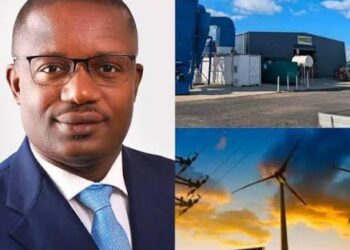
Energy law specialist Lom Nuku Ahlijah argues that framing the confrontation purely as a Middle Eastern crisis misses its deeper implications for African economies.
“The escalating confrontation involving the United States, Israel, and Iran is being framed as a Middle Eastern crisis. That is analytically incomplete. For Africa, it is a test of energy sovereignty.”
Energy law specialist Lom Nuku Ahlijah
At the centre of the unfolding uncertainty lies the Strait of Hormuz, a narrow maritime corridor through which more than one-fifth of global oil consumption and significant volumes of liquefied natural gas pass daily. According to Ahlijah, markets do not need an actual blockade to react.
“The mere possibility of disruption in Hormuz does not need to materialize physically to destabilize markets. In energy economics, perception is often as powerful as blockade.”
Energy law specialist Lom Nuku Ahlijah
How Conflict Travels to African Pumps

Ahlijah describes the transmission mechanism from geopolitical tension to African fuel stations as swift and unforgiving.
“Oil prices rise on anticipation. Freight costs spike on caution. Insurance premiums expand on risk assessment. And within days, African consumers pay more at the pump.”
Energy law specialist Lom Nuku Ahlijah
In this way, global conflict travels far beyond its geographic origin. For African states, many of which are net importers of refined petroleum products, price volatility quickly compounds into macroeconomic strain.
Yet Ahlijah insists that focusing solely on price fluctuations overlooks a more structural concern. “To understand the full implications for Africa, we must move beyond price volatility and examine the legal architecture that mediates these shocks,” he said.
Maritime Law and Commercial Reality
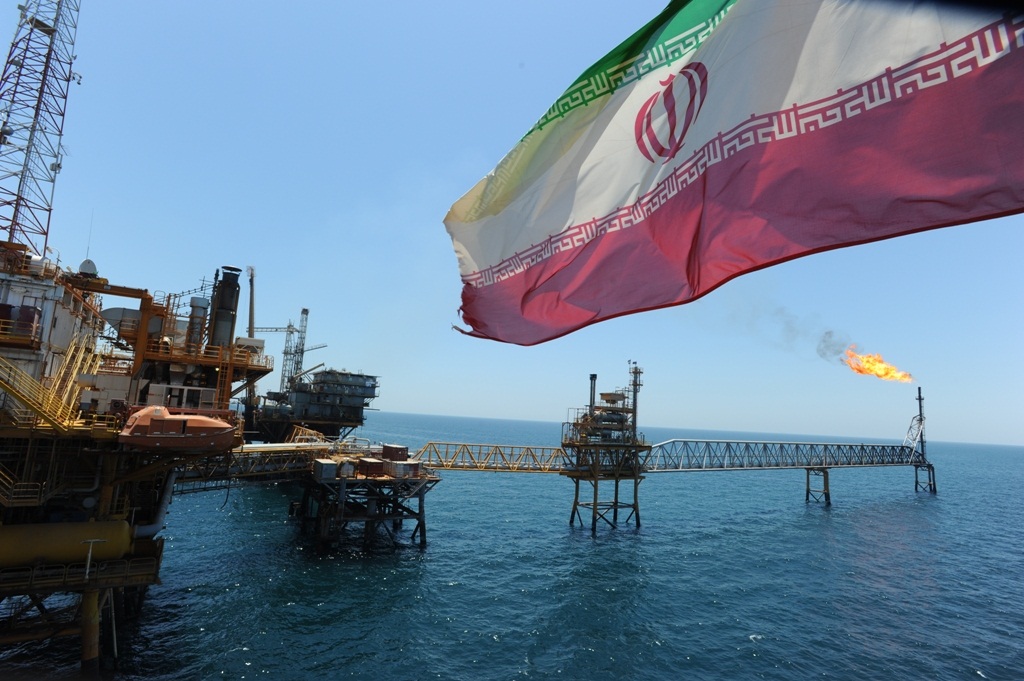
Under international law, navigation through straits used for international shipping is protected. However, Ahlijah points out that commercial actors operate based on risk calculations rather than legal abstractions.
“If insurers classify transit as high-risk, if shipping firms demand war-risk surcharges, or if compliance departments tighten sanctions exposure, cargo flows slow even without a single missile striking a tanker.”
Energy law specialist Lom Nuku Ahlijah
In other words, energy insecurity in Africa is shaped not just by physical supply disruptions but by maritime law, sanctions compliance, insurance underwriting and commodity futures markets.
The interplay of these legal and financial systems determines how quickly and severely shocks are transmitted.
Structural Exposure Across the Continent

Despite being home to hydrocarbon producers, Africa remains deeply exposed to external energy shocks. Many oil-producing countries still import refined products due to limited domestic refining capacity.
Several power systems depend on imported diesel or liquefied natural gas. Meanwhile, local currencies often react sharply to global commodity swings.
“When crude benchmarks rise by $10–$20 per barrel, the impact is not linear; it compounds through exchange rate depreciation, inflation expectations, and fiscal stress.”
Energy law specialist Lom Nuku Ahlijah
He cited Ghana as a case study of this structural vulnerability.
“Despite upstream production and expanding gas-to-power infrastructure, Ghana imported approximately $4.5 billion in crude oil and petroleum products in 2024, according to data from the Bank of Ghana.
“That figure represents more than trade statistics; it represents exposure.”
Energy law specialist Lom Nuku Ahlijah
A sustained Hormuz-related risk premium would immediately widen the country’s import bill, putting pressure on the cedi and driving pump prices higher.
Fiscal authorities would then face a difficult choice between allowing full price pass-through, risking social tension, or intervening with stabilization measures that strain public finances. “This is the structural vulnerability that global geopolitics exploits,” he said.
Sanctions and Contractual Risks

Beyond pricing pressures, Ahlijah highlights the sanctions dimension of the US–Israel–Iran confrontation. Iran-related sanctions regimes carry global implications, and financial institutions often adopt conservative compliance measures.
“African importers may find trade finance tightening, letters of credit delayed, and transaction costs elevated even when they are not directly trading with sanctioned entities. Legal risk becomes economic risk.”
Energy law specialist Lom Nuku Ahlijah
Energy contracts across the continent also contain force majeure, hardship and war-risk clauses. A credible shipping disruption could trigger disputes over cost allocation and performance obligations.
In tightly balanced power systems, even temporary fuel delivery interruptions may cascade into load shedding. “Energy security, in this context, is not about rhetoric. It is about legal preparedness,” Ahlijah emphasized.
According to Ahlijah, the current crisis should sharpen African strategic thinking in three key areas.
First, energy diversification must be treated as sovereign risk mitigation. Renewables, he argues, are not only climate instruments but geopolitical insulation. Reliable domestic gas supply reduces exposure to maritime chokepoints, while storage capacity provides a buffer against market panic.
Second, regulatory credibility is essential. Transparent tariff-adjustment frameworks and predictable pricing mechanisms can absorb volatility without eroding investor confidence. “Energy law must absorb volatility without collapsing into improvisation,” he stressed.
Third, regional cooperation is no longer optional. Strategic petroleum reserves, pooled procurement mechanisms and deeper power-pool integration could transform fragmented vulnerability into collective resilience.
From Price-Taker to Resilient Actor
He argues that energy sovereignty in the twenty-first century should be measured not only by reserves beneath the soil, but by the resilience of legal systems, fiscal buffers, diversified supply contracts and forward-looking regulatory institutions.
Geopolitical shocks will recur. The decisive question, he suggests, is whether African states will remain passive price-takers in global energy turbulence or evolve into legally and economically fortified actors capable of absorbing external shocks without destabilization.
The Strait of Hormuz may be thousands of miles from Accra, Lagos or Nairobi, but its tremors are felt in every African fuel depot. Unless resilience becomes central to energy governance, those tremors will continue to reverberate across the continent’s economies.
READ ALSO: GIPC Invites Indian Industrialists for Strategic Partnerships