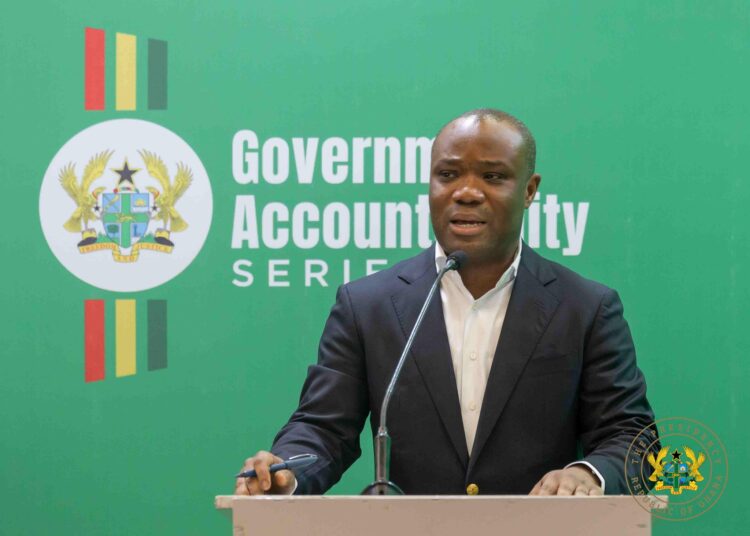
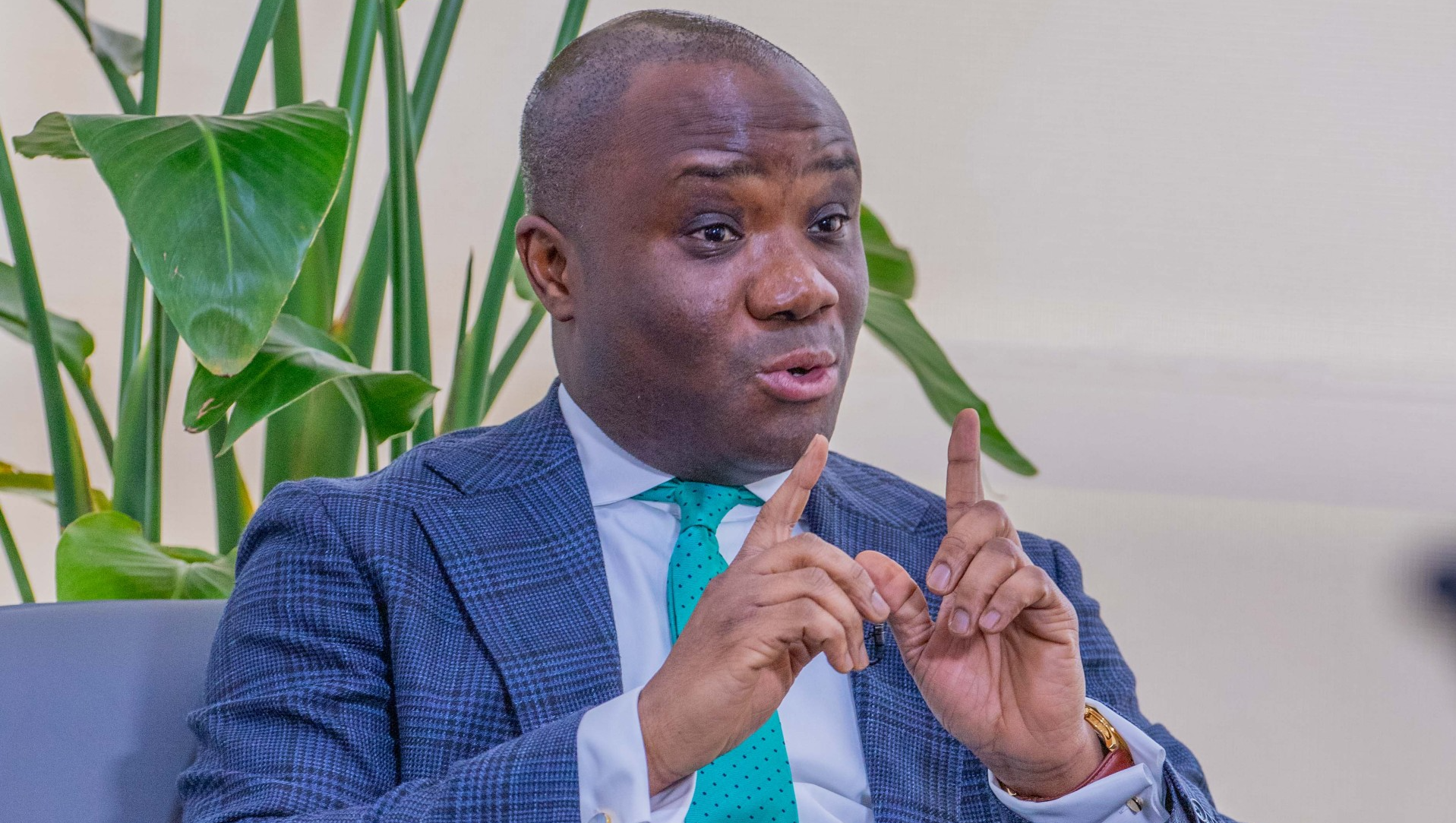
The Presidential Spokesperson and Minister for Government Communications, Hon. Felix Kwakye Ofosu, has announced his return to the Government Accountability Series to present the outcome of a committee review into last-minute public sector appointments made after the 2024 general elections.
In a brief statement ahead of the session, Hon. Kwakye Ofosu said he would outline the findings of the committee established by the Chief of Staff and also respond to questions from the media on the decisions taken by the government following the review.
The presentation is expected to clarify the rationale behind the revocation of appointments effected by the previous administration in the transition period after the December 2024 polls, a move that has generated intense political, legal and labour debate over the past year.
Government officials say the Accountability Series is intended to enhance transparency by providing regular public briefings on major policy decisions and administrative actions.
Directive That Sparked National Debate
The controversy over last minute appointments dates back to February 10, 2025, when the Chief of Staff, Julius Debrah, issued a directive annulling all public sector appointments and recruitments made after December 7, 2024.

The date corresponded with the declaration of results from the general elections, after which the outgoing administration was accused of rushing through mass employment exercises.
Government justified the directive on grounds of good governance and fiscal stability. According to official explanations at the time, preliminary assessments suggested that many of the affected appointments did not follow established recruitment procedures.
Reports pointed to cases where individuals were employed without submitting formal applications or undergoing interviews, raising concerns about transparency and merit based hiring.
Heads of affected institutions were instructed to report on actions taken to comply with the directive by February 17, 2025. The move immediately triggered political backlash, with the opposition New Patriotic Party warning that it would challenge what it described as unlawful terminations in court.
Institutions Affected and Partial Reinstatements
Several key state institutions were impacted by the revocation exercise. Among them were the Bank of Ghana, the Ghana Immigration Service and the National Health Insurance Authority.
Hundreds of workers across these bodies received termination letters, often only weeks after assuming duty. However, government later announced that the review process had led to the reinstatement of some categories of workers.
Teachers, nurses and midwives were among those restored to post after it was determined that their recruitment met legitimate standards and addressed critical staffing needs.
Some employees of the Bank of Ghana were also reinstated following further scrutiny of their appointment processes. Officials say these reinstatements demonstrate that the policy was not intended as a blanket punishment but as a corrective measure to address irregularities while protecting genuinely recruited workers.
Review Committee and Its Mandate
In response to growing criticism, the Chief of Staff set up a committee to examine the revoked appointments in detail. The committee was tasked with distinguishing between appointments that violated procedure and those that complied with public service rules.
According to government sources, the committee reviewed documentation, recruitment timelines, and approval processes across multiple institutions. Its work forms the basis of the report Hon. Kwakye Ofosu is expected to present at the Government Accountability Series.
The government has consistently maintained that any individual found to have been lawfully recruited would be reinstated or considered for re-engagement, while irregular appointments would remain annulled.
The revocation exercise provoked strong reactions from labour unions and civil society groups. The Trades Union Congress warned that the mass dismissals risked inflicting hardship on young workers and could undermine industrial harmony.
The TUC urged the government to reconsider aspects of the directive to avoid what it described as a dangerous partisan precedent. The opposition New Patriotic Party accused the administration of acting unconstitutionally, arguing that decisions taken by a sitting president remain valid until the official transfer of power.
The party said the revocations were politically motivated and vowed to support affected workers seeking legal redress. Dozens of former employees subsequently filed suits in the High Court, challenging the legality of their dismissal and seeking reinstatement or compensation.

Options for Affected Workers
Government spokespeople have outlined possible avenues for individuals whose appointments were revoked. One option is reapplication, with officials indicating that affected persons may apply when vacancies are formally advertised under transparent recruitment processes. Another option is judicial review, which many former employees are already pursuing in court.
As Hon. Kwakye Ofosu prepares to address the nation, expectations are high that the presentation will shed further light on how many appointments were ultimately deemed irregular, how many workers were reinstated, and what lessons the government has drawn to prevent similar controversies in future transitions.
The Accountability Series appearance is likely to be closely watched, not only by affected workers and political actors, but also by the wider public seeking clarity on how the state balances governance reforms with fairness and the protection of livelihoods.
READ ALSO: VALCO Achieves $120m Revenue as Government Targets Expansion