The National Petroleum Authority (NPA) is seeking to reposition consumer protection in Ghana’s downstream petroleum sector around a broader principle: safety and confidence must be built where petroleum products are sold, transported and used, not only through regulatory inspections.
That was the central message from NPA Chief Executive Godwin Kudzo Tameklo Esq. at the Authority’s 2026 Consumer Week celebration, held under the theme “Safe Downstream, Confident Consumers”.
In his address, Tameklo highlighted the importance of taking regulatory engagement into communities, educating households on liquefied petroleum gas (LPG) safety and discouraging dangerous behaviour around fuel-related accidents.
His remarks point to a challenge facing the downstream regulator: although inspections and enforcement are necessary, consumers also influence how safely petroleum products are handled, purchased, transported and used.
The Authority’s approach, as outlined by its Chief Executive, is to make public education an integral part of downstream regulation rather than treating it as an occasional awareness campaign.
“The NPA has been out of the office and into the communities, and Consumer Week is the moment to tell you what we did, what we heard and what comes next,”
The celebration, held at Kasoa Ofaakor Park on November 5, formed part of a week-long programme that included consumer education outreach in the Awutu Senya East area.
The choice of community engagement as a central feature reflects the Authority’s recognition that regulatory effectiveness depends partly on whether consumers understand the risks and standards governing the industry.
Safety Must Extend Beyond The Filling Station
One of the strongest messages in Tameklo’s address concerned the public response to accidents involving petroleum products, particularly incidents in which residents gather around damaged fuel tankers or attempt to collect leaking fuel.

He issued a direct warning against approaching such scenes, stressing that the potential value of recovered fuel cannot justify the risk to human life.
“No amount of fuel is worth your life. Stay away from the scene. Call the Fire Service and the Police.”
The warning addresses a public-safety problem that cannot be resolved through inspections at filling stations alone. When an accident involving a petroleum tanker occurs, the actions of people at the scene can influence the scale of the danger.
Attempts to siphon or collect fuel can expose individuals to fires, explosions and serious injuries.
The NPA has previously taken its “Stay Back, Stay Safe” campaign to communities, including Takoradi, to discourage residents from gathering around accidented fuel tankers and siphoning petroleum products.
The campaign demonstrates the importance of public behaviour in reducing risks along the downstream supply chain.
The issue also highlights the need for coordination between the NPA, the Ghana National Fire Service, the Police and local authorities.
Public education must be reinforced by effective emergency response and clear communication about what people should do when tanker accidents occur.
LPG Transition Brings Household Safety Into Focus
Tameklo also connected consumer safety to Ghana’s gradual movement from traditional cooking fuels such as firewood and charcoal towards LPG.
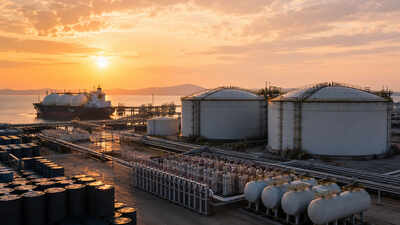
The shift has implications beyond access to a cleaner cooking fuel. As more households adopt LPG, the number of people who need to understand safe cylinder handling, storage, transportation and use also increases.
“As more Ghanaian homes move from firewood and charcoal to gas, safe handling must grow at the same pace,” he said.
The observation raises an important dimension of the country’s clean cooking agenda. Expanding access to LPG without strengthening public understanding of its safe use could expose households to avoidable risks.
The NPA’s own Cylinder Recirculation Model guidelines set out requirements for the handling and storage of LPG cylinders.
They require filled cylinders to be secured in an upright position during handling, transportation and storage, while storage areas must be open and well ventilated rather than located inside buildings.
These requirements illustrate why household education is important. Consumers need to understand that safety does not begin and end at the point of purchasing a cylinder.
It also depends on how the cylinder is transported, where it is stored and how it is handled during everyday use.
The Ghana National Fire Service has separately cautioned households against keeping gas cylinders in kitchens, citing the risks associated with leaks and mechanical faults in enclosed spaces.
For the NPA, the challenge is therefore twofold: ensuring that licensed operators comply with safety requirements while equipping consumers with the knowledge to identify unsafe practices and protect themselves.
Consumer Confidence Requires Accountability
Beyond physical safety, the Chief Executive placed emphasis on the relationship between consumer confidence and the everyday experiences of petroleum users.

“Consumer confidence is not built in offices. It is built in the market, at the lorry park, in the classroom and in the kitchen, one conversation, one honest litre and one safe cylinder at a time,”
NPA CEO, Godwin Kudzo Tameklo
The reference to an “honest litre” is particularly relevant to the regulator’s responsibility to protect consumers against irregularities in the quantity and quality of petroleum products sold in Ghana.
The NPA’s Quality Assurance Directorate monitors petroleum product quality at import points, refineries, depots and retail outlets.
It also conducts field monitoring and operates the Petroleum Product Marking Scheme, which helps identify unauthorised additions or contamination of products in the distribution chain.
However, confidence also depends on whether consumers have accessible channels to report suspected malpractice and receive redress when problems arise.
The Authority has previously engaged stakeholders on Consumer Complaints Guidelines intended to formalise how petroleum consumers report grievances, seek resolution and hold service providers accountable.
The proposed framework was designed to clarify complaint procedures, service-provider responsibilities and timelines for resolving disputes.
That work is important because consumer education must be matched by mechanisms through which complaints can produce action. Informing the public about its rights has limited value if consumers cannot easily report problems or establish whether their concerns have been addressed.
Tameklo acknowledged the role of public participation in strengthening regulatory work, stating: “An informed consumer makes every inspection more effective.”
The statement captures the relationship between regulatory oversight and consumer responsibility.
Consumers who understand product standards, recognise unsafe practices and know how to report irregularities can provide information that supports the Authority’s monitoring activities.
From Public Education To Measurable Results
The NPA’s challenge now is to ensure that the community-based approach translates into sustained changes in behaviour and improvements in service delivery.
Consumer Week provides an opportunity to communicate safety messages, gather feedback and bring the regulator closer to petroleum users.
But the impact of the exercise will depend on whether outreach continues beyond the celebration and whether concerns raised by consumers inform enforcement priorities.
The Authority will also need to demonstrate that public education complements, rather than substitutes for, its statutory responsibilities.
Operators must continue to meet licensing, product-quality and health and safety requirements, while violations must attract appropriate regulatory action.
For LPG users, that means greater awareness must go hand in hand with safe distribution and storage practices. For motorists and other fuel consumers, confidence requires reliable product quality, accurate dispensing and effective complaint resolution.
For communities near petroleum transport routes, it requires clear emergency information and a willingness to keep away from dangerous accident scenes.
Tameklo said the NPA would continue taking its work directly to the public, adding: “The NPA will keep going to the people, so that every Ghanaian can fill up, cook and travel with confidence.”
The message places consumers at the centre of downstream regulation, but it also establishes an expectation for the Authority.
Public engagement must be sustained, complaints must receive attention and safety standards must be enforced across the supply chain.
Ultimately, a confident consumer is not simply one who trusts the petroleum market. It is one who understands the risks, knows the standards to expect and has the means to seek accountability when those standards are not met.
READ ALSO: Minority Brands World Cup Raffle As “Ponzi Scheme”