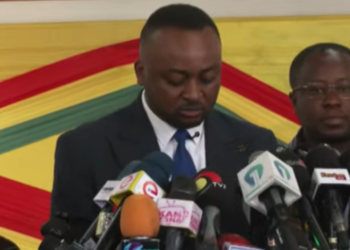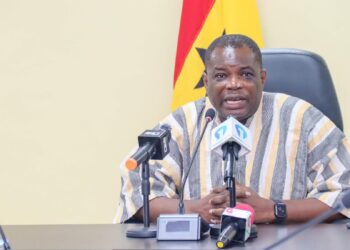
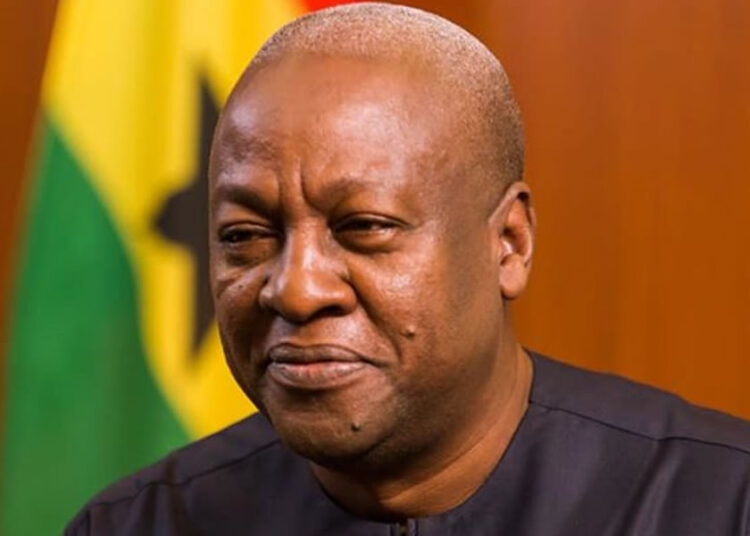
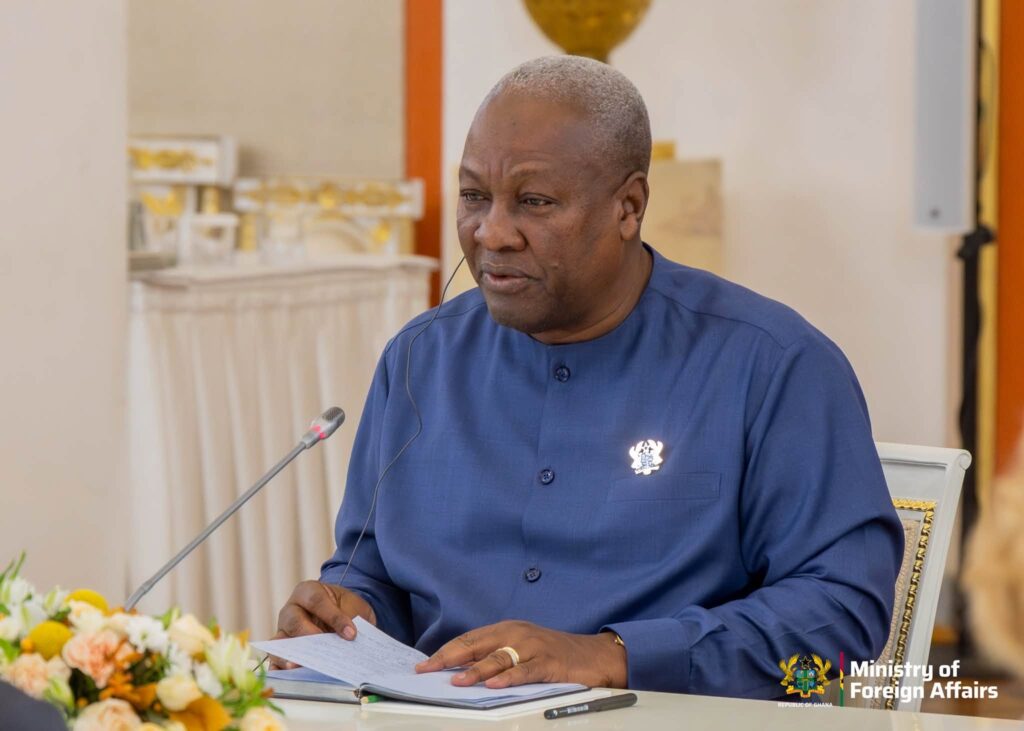
President John Dramani Mahama has urged the United States to confront its gun violence after the killing of 15-year-old Ghanaian Javits Rimpong, which has renewed concern over the safety of Ghanaians in the US.
He spoke to the Presidential Press Corps after returning from London, the Russia-Africa Summit in Russia and the 28th Commonwealth Heads of Government Meeting (CHOGM) in Antigua and Barbuda.
President Mahama asked Ghanaians to let the New York Police Department (NYPD) finish its investigation before drawing conclusions about the teenager’s death. He also commended the Ministry of Foreign Affairs for helping the boy’s mother travel to grieve and for supporting the family through the loss.
“But I do think that the American people have to reckon with the violent nature of their society, especially gun violence.”
President John Dramani Mahama
A Teenager Killed Within a Year of Arriving
Rimpong had lived in the United States for barely a year when he died. He had travelled to join his father. President Mahama stressed how young the victim was, and he admitted that the cause remains unclear. “We don’t yet know exactly what the cause of it is,” he stated.
Some people have blamed bullying. The president did not endorse that view, and he pointed instead to the police inquiry. He noted that “we should let the investigation go and find out exactly what happened,” a position that keeps the government from pronouncing on a case that is still open.
Why Mahama Points to Gun Access and Mental Health
The president widened his remarks beyond a single case. He described a country where the right to bear arms means that “anybody can go to a gun shop and buy a gun.” He did not name the constitutional amendment precisely, and he spoke loosely about it, but his point was plain: easy access to firearms makes violence more likely.
He paired that concern with mental health. Modern life carries many pressures, Mahama observed, and he warned that “mental health is becoming a major crisis.” A person under strain can look composed and well dressed, he explained, until the day he picks up a weapon. Mahama cited shootings at workplaces and schools as examples of that danger.
More Ghanaian Deaths Deepen the Concern
Rimpong’s death is not the only one on the president’s mind. Mahama disclosed that authorities had found another Ghanaian murdered, a 24-year-old man whose body turned up at a dump site. He indicated the discovery came about two days before his remarks, and he added that yet another Ghanaian had been killed before that.
“I mean, it’s something that happens,” he stated. The president stopped short of treating the deaths as targeted attacks on his countrymen. “I don’t believe it’s only Ghanaians being killed,” he argued, and he suggested that other nationalities suffer the same fate. “So it’s something that Americans need to deal with.”
Government Support for the Bereaved Family
The president turned from criticism to the state’s response. He thanked the Ministry of Foreign Affairs for facilitating the mother’s journey to the United States and for the support it extended to the family.
Ghana’s mission in New York also acted. Officials visited the family and conveyed condolences, Mahama explained, and the Foreign Minister instructed the mission to do whatever it can to help the family through a difficult time. The president offered no further detail on the assistance, and he gave no figures on how many Ghanaians have died in the United States.
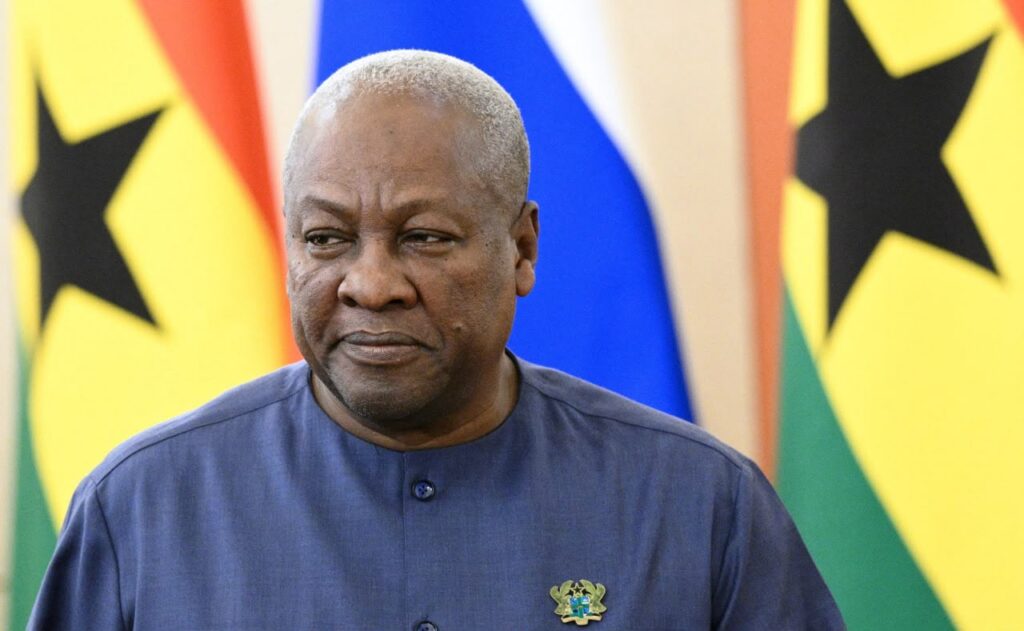
President Mahama made the remarks after a diplomatic tour that took him to London, to the Russia-Africa Summit, where he met President Vladimir Putin, and to CHOGM in Antigua and Barbuda. The press corps session gave him the first chance to address the deaths since his return home.
What the Remarks Mean for the Diaspora
The president’s message carries two threads. He wants American society to face the violence that endangers residents of every background, and he wants Ghanaians to wait for facts before assigning blame.
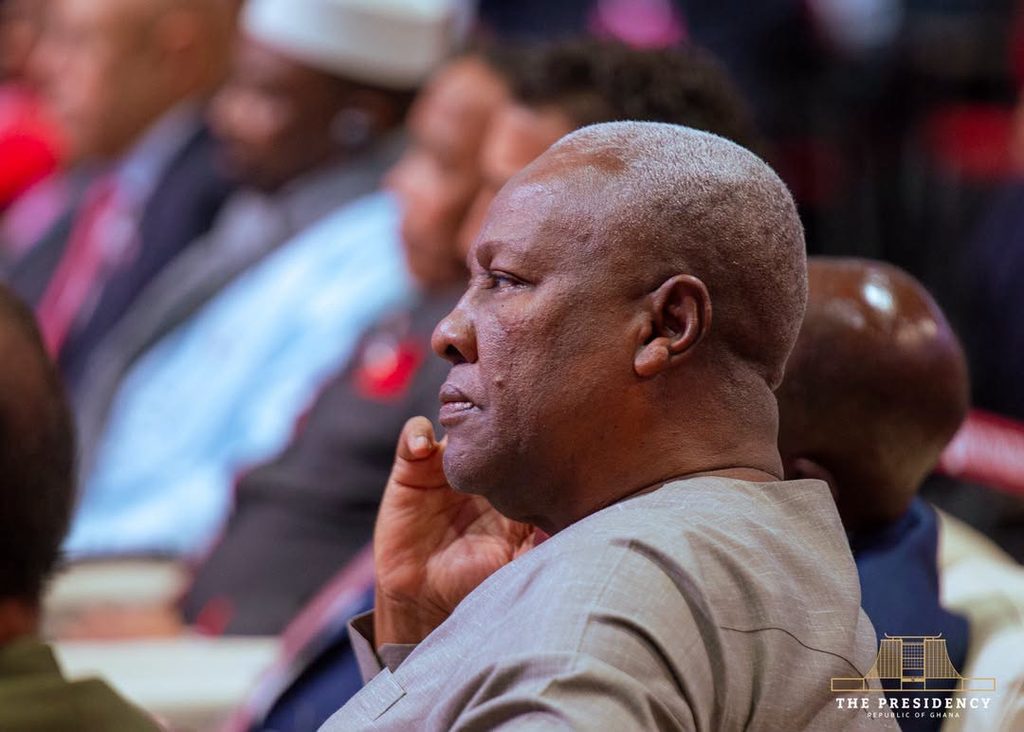
For families with relatives abroad, the NYPD inquiry will matter most, because it may explain what happened to Rimpong and settle the question of bullying.
Until investigators report, the government has committed to consular support for grieving families. Ghanaians in the diaspora and at home will watch whether that support continues and whether the findings bring answers.
READ ALSO: NPA Takes Consumer Protection Beyond Fuel Station Inspections