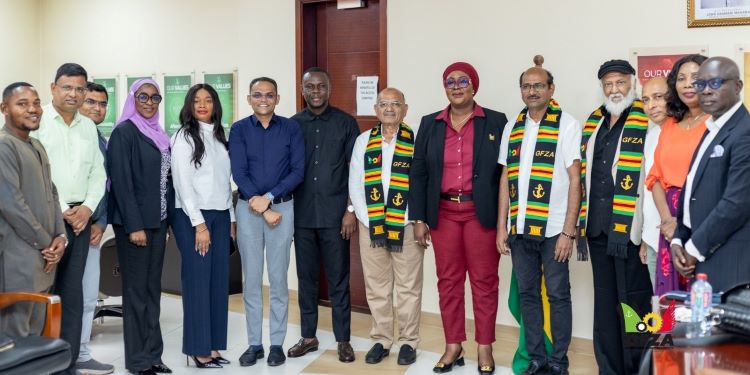
The Ghana Free Zones Authority (GFZA) has taken a definitive step toward deepening foreign direct investment in the nation’s value-addition chain by hosting a high-powered delegation from the JRJ Group of India.
The GFZA Head Office in Accra recently became a hub of strategic diplomacy as the Chief Executive Officer (CEO) of the GFZA, Dr. Mary Awusi, welcomed the Indian investors, led by their CEO, Mr. Jawahar Pavasia.
“The delegation was in Ghana to explore a range of investment opportunities within Ghana’s Free Zones, including cocoa processing, confectionery manufacturing, and cashew processing, among other ventures, leveraging Ghana’s rich agricultural and industrial resources”
Ghana Free Zones Authority
The engagement underscores the Administration’s aggressive “Look East,” investment strategy, specifically targeting global firms capable of driving large-scale Industrialization through the processing of Ghana’s raw materials.
This visit was a direct and rapid follow-up to the CEO’s diplomatic mission to India in January 2026. During that trip, Dr. Mary Awusi initiated high-level talks with the JRJ Group, presenting Ghana as the most stable and incentive-rich gateway for Indian manufacturers seeking to penetrate the West African and global export markets.
The transition from initial talks in Delhi to a formal technical site visit in Accra within sixty days highlights the efficiency of the Administration’s investment facilitation protocols.
According to the GFZA, the JRJ Group’s investment interest in cocoa processing, confectionery manufacturing, and cashew processing is precisely aligned with Ghana’s current economic priorities: moving away from the export of raw commodities toward the manufacturing of finished goods.

These sectors represent the “low-hanging fruit,” of Ghana’s industrial potential, where the proximity to raw Agriculture inputs provides a natural competitive advantage for any firm operating within the Free Zones enclave.
By focusing on cocoa and cashew, the JRJ Group aims to leverage the high-quality yields produced by Ghanaian farmers to create globally competitive brands. For Ghana, the benefits of such an investment are multi-dimensional.
Beyond the immediate injection of foreign capital, the establishment of confectionery and nut processing plants will generate thousands of sustainable jobs and significantly increase the “value-per-tonne” of Ghana’s exports, ensuring that the wealth generated from Ghana’s land stays within the national economy.
Navigating the Incentive Framework
To provide the Indian delegation with a clear roadmap, the GFZA’s Director of Marketing and Investment Promotion, Ms. Anita Quashie, delivered a comprehensive technical presentation on the Free Zones Scheme.
The scheme is designed to de-risk investments by providing a sanctuary from the standard tax and duty regimes that often hinder industrial growth. Key incentives discussed included the 10-year corporate tax holiday, total exemptions from import duties on raw materials and machinery, and the streamlined “one-stop-shop” licensing process.
The presentation also highlighted the “70-30” rule, which requires Free Zone enterprises to export at least 70% of their annual production. This requirement is central to the Administration’s goal of building a foreign-exchange-earning industrial base.
The JRJ Group delegation engaged in an interactive session, seeking granular details on regulatory requirements and the specific logistics of accessing the African Continental Free Trade Area (AfCFTA) markets from a Ghanaian base.
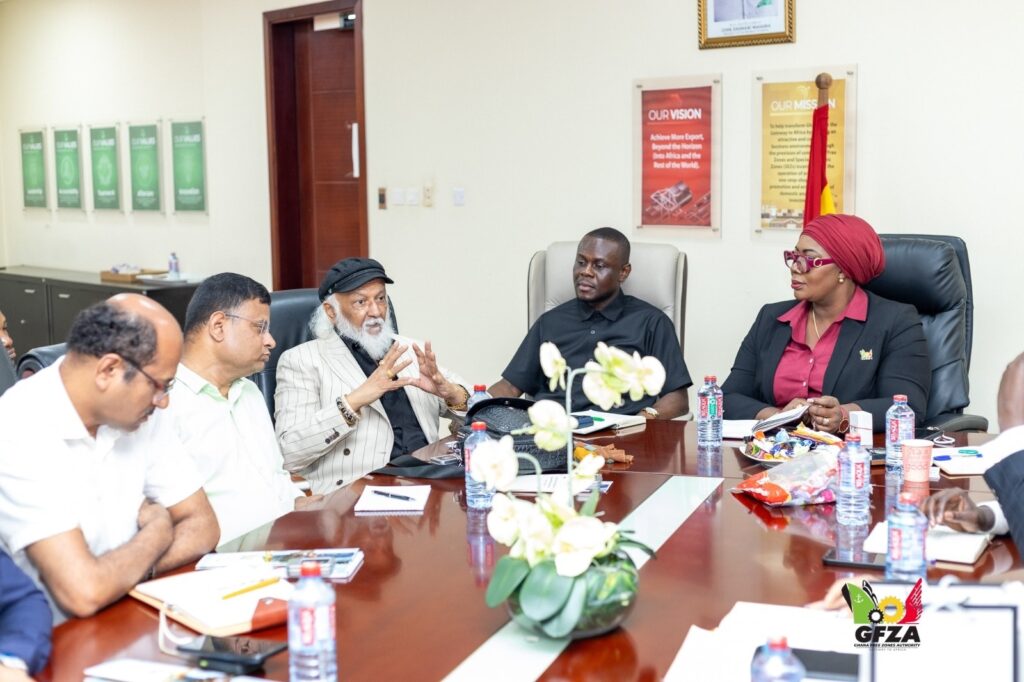
The presence of senior GFZA leadership at the meeting – including Mr. Lateef Apau Wiredu (Deputy CEO, Operations) and Mr. Edward Adu-Ntiamoah (Director of Business Development and Research) – sent a clear signal of the importance the state attaches to the JRJ Group’s potential entry.
The Authority’s commitment to “aftercare” services was a recurring theme, ensuring that once an investment is made, the GFZA remains a partner in navigating the local operational landscape.
Dr. Mary Awusi reaffirmed that the Authority is not merely looking for investors, but for partners in national development. She noted that the GFZA is specifically prioritizing projects that integrate local supply chains.
For example, a confectionery plant would not only process cocoa but would also stimulate the local sugar and packaging industries. This holistic view of Industrialization is intended to create a “ripple effect,” throughout the domestic economy, supporting the growth of indigenous sub-contractors and service providers.
As the JRJ Group concludes its exploratory visit, the competitive advantages of Ghana remain the primary selling point. Compared to its regional neighbors, Ghana offers superior port infrastructure, a stable energy supply optimized for the 24-Hour Economy, and a highly skilled workforce.
The GFZA’s ability to offer designated enclaves with “plug-and-play” utility connections further reduces the lead time for setting up manufacturing plants. The visit of the JRJ Group marks the beginning of what is expected to be a wave of Indian industrial interest in 2026.
As the Administration continues to market the Ghana Free Zones as a sanctuary for manufacturing excellence, the integration of Indian technology and capital with Ghanaian raw materials and labor is poised to become a defining feature of the nation’s industrial landscape.
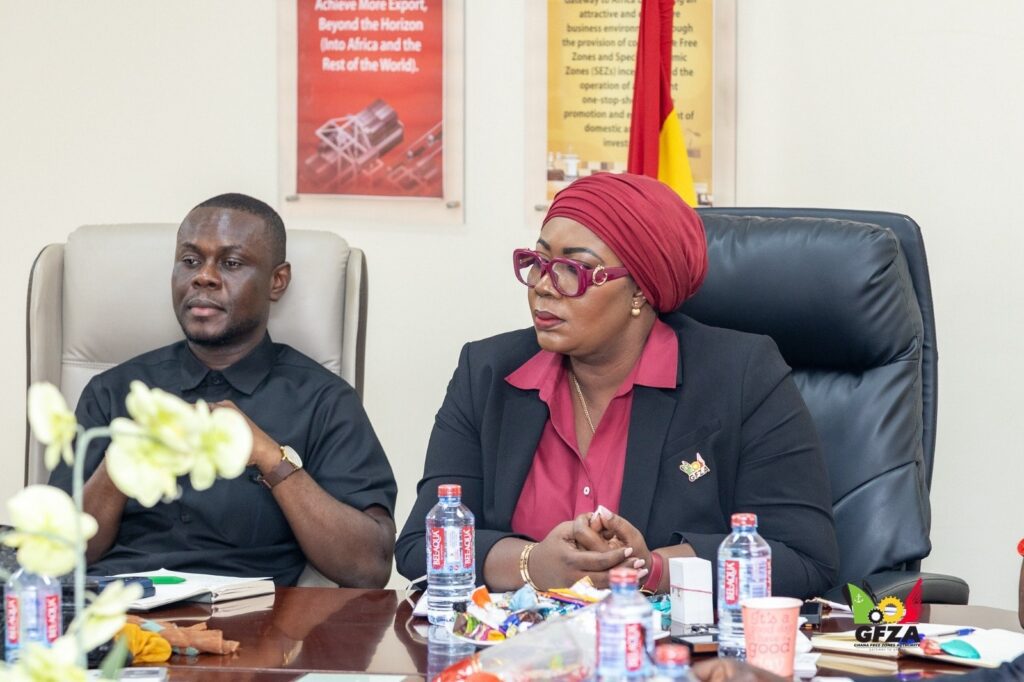
The “investment bridge,” built between Accra and Delhi in January is now seeing its first heavy traffic.
READ ALSO: US Sinks Iranian Warship In Indian Ocean