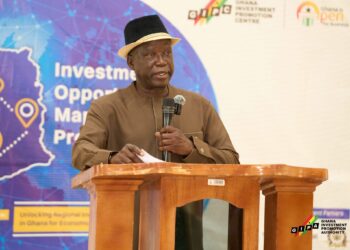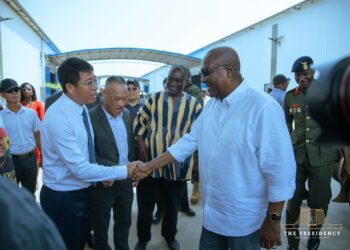
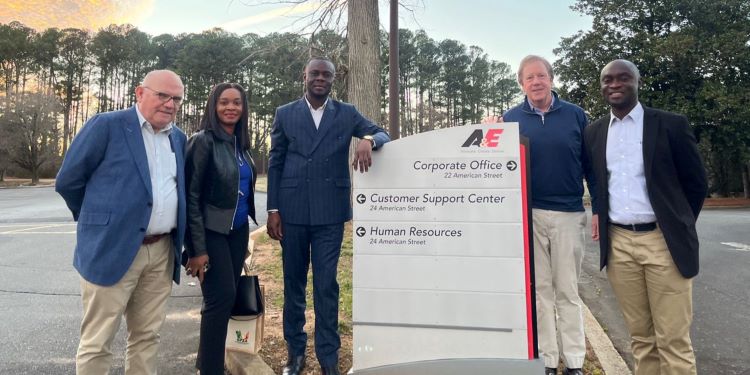
In a strategic maneuver to accelerate Ghana’s Industrialization agenda, the Ghana Investment Promotion Centre (GIPC), in collaboration with the Ghana Free Zones Authority (GFZA), has successfully concluded a high-level trade mission to the United States.
Supported by technical expertise from the Tony Blair Institute for Global Change, the delegation capitalized on the momentum from the Sourcing at MAGIC exhibition in Las Vegas to conduct an intensive “add-on” mission – targeting some of the most influential names in the global textile and apparel value chain, including American & Efird, Kontoor Brands, and Perry Ellis International.
According to the GIPC, the mission served as a critical component of its broader strategy to transition Ghana from a raw material exporter to a sophisticated manufacturing hub by engaging directly with industry giants in Charlotte, Greensboro, and Miami.
“These engagements mark another important step in strengthening partnerships and positioning Ghana as a preferred hub for textile and apparel investment in Africa. The mission provided deeper insight into global supply chains and opportunities for Ghana to further integrate into them”
Ghana Investment Promotion Centre
The centre noted that the delegation sought not only to showcase Ghana’s current capacity but to secure long-term investment commitments that will fundamentally reshape the domestic Agriculture and light manufacturing sectors.
A core theme of the discussions in the United States was Ghana’s readiness to serve as a competitive gateway for the U.S. market. The Administration highlighted several unique value propositions, most notably the recent renewal of the African Growth and Opportunity Act (AGOA).

This legislative extension provides a vital 15-month window of duty-free access, which the GIPC is leveraging to assure potential investors of a stable, predictable fiscal environment for their manufacturing operations. Yet beyond tariff preferences, the delegation emphasized the Administration’s commitment to infrastructure development and human capital.
Ghana boasts a young, highly trainable workforce – a demographic asset that aligns with the global industry’s shift toward “near-shoring” to shorten supply chains.
Furthermore, the specialized incentives offered under the Free Zones regime – including tax exemptions on capital goods and streamlined customs processes – are being positioned as the gold standard for Industrialization on the continent, especially for apparel manufacturing.
Network Expansion
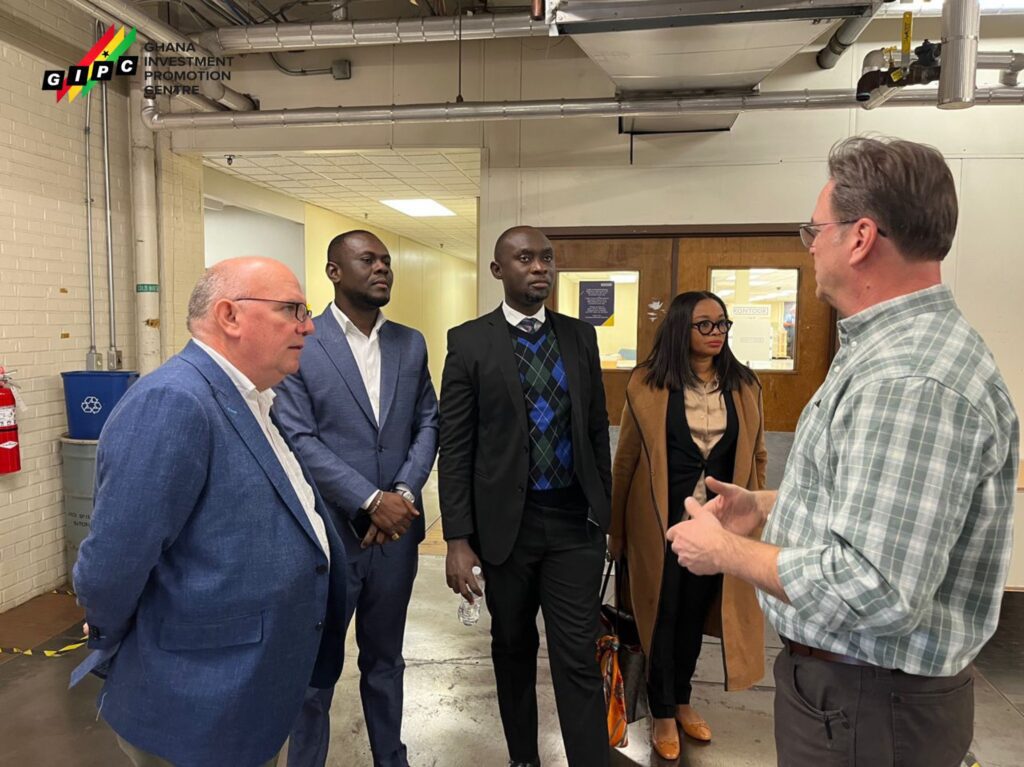
The GIPC noted that the mission went beyond mere presentations, incorporating factory tours and technical workshops that allowed the delegation to observe global best practices in real-time.
These interactions provided an invaluable perspective on the complexities of modern supply chains, from high-speed digital cutting to automated sewing processes.
The feedback from U.S. industry leaders was markedly positive, with several firms expressing an immediate “strong interest,” in introducing their established vendor networks to the Ghanaian ecosystem, as well as making the country their sourcing and investment destination.
For the Centre, this represents a significant win. In attracting established vendors who already hold long-term contracts with major U.S. brands, Ghana can bypass the slow process of building a manufacturing reputation from scratch.
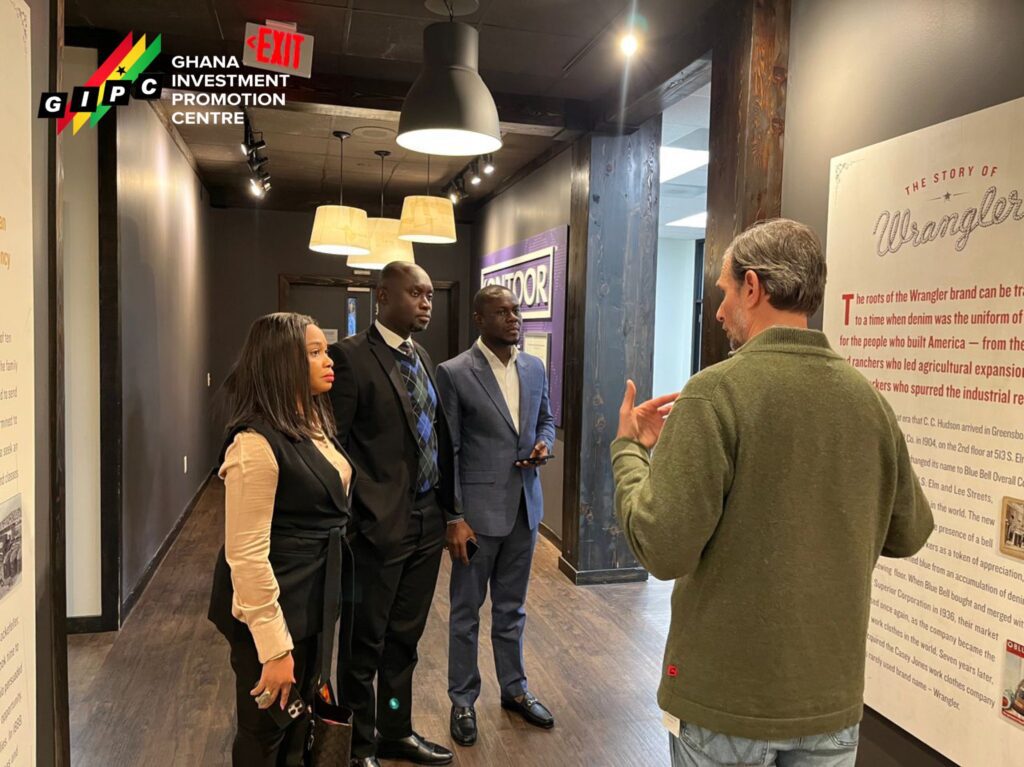
This “plug-and-play” approach to Industrialization is expected to accelerate job creation and ensure that local factories meet the rigorous quality and compliance standards required by the U.S. market.
As the GIPC and the Ghana Free Zones Authority return, the focus shifts to aftercare and the rigorous implementation of the partnerships forged during the tour. The government remains cognizant that preferences are merely the “door,” while long-term competitiveness in the global textile market depends on consistent efficiency, energy reliability, and logistics excellence.
To support these objectives, the Administration is intensifying its efforts to harmonize industrial policies, ensuring that the apparel sector benefits from the same level of institutional support as traditional Agriculture. The integration of technical advice from the Tony Blair Institute for Global Change will be crucial in refining these policies to ensure they remain attractive to global investors while delivering tangible economic growth for Ghanaians.
“The mission featured presentations from industry stakeholders, providing deeper insight into global supply chains and opportunities for Ghana to further integrate into them”
Ghana Investment Promotion Centre
By aligning international market access with targeted domestic investment, the Administration is steadily constructing a robust, export-oriented textile sector. The success of this U.S. mission reinforces the belief that Ghana is rapidly becoming the destination of choice for investors seeking to diversify their global footprint and build sustainable, ethical supply chains in Africa.
As the nation moves deeper into 2026, the progress in the apparel sector stands as a testament to the power of structured, strategic collaboration between the public and private spheres.