
Ghana Gold Board (GoldBod) has underscored the historical and structural importance of gold as the primary anchor of the nation’s financial stability and industrial growth.
According to the Board, the mineral remains the most significant contributor to the country’s Gross Domestic Product (GDP) within the extractive sector, serving as a critical engine for development.
This assertion highlights a strategic pivot toward reclaiming the narrative of Ghana’s mineral wealth, positioning gold not just as an export commodity, but as a central pillar for long-term macroeconomic resilience and national prosperity.
“For decades, gold has been central to Ghana’s economic story. As one of the world’s leading gold producers, the country has long relied on the mineral to generate foreign exchange, support livelihoods, and drive economic activity”
Ghana Gold Board (GoldBod)
As one of the premier producers globally, Ghana has utilized gold proceeds to stabilize its balance of payments and support the livelihoods of millions involved in both large-scale and artisanal operations.
However, GoldBod pointed out that the historical reliance on gold was frequently undermined by a disjointed ecosystem, where a lack of formalization prevented the state from capturing the full fiscal dividends of its natural endowment.
“The creation of the Ghana Gold Board is a landmark reform aimed at bringing order, transparency, and national benefit to the gold trading sector,” the board asserted.
Addressing Structural Leakages in the Small-Scale Sector

The extractive landscape in Ghana has long grappled with a “fragmented trading channel” that allowed significant portions of the nation’s wealth to bypass the central treasury.
GoldBod identifies that the artisanal and small-scale mining (ASM) sector, while productive, previously suffered from limited traceability and significant “foreign exchange leakages.”
These loopholes meant that despite record-breaking production volumes, the direct impact on the national purse was often diluted by unregulated purchasing frameworks and informal cross-border trade.
To rectify this, the Board has introduced a “formalized gold purchasing and aggregation framework” designed to mopup liquidity from the ASM value chain.
By integrating these miners into a supervised network, Gold Board is effectively plugging the holes that once led to capital flight.
The Board’s mandate now focuses on overseeing every gram of gold from the pit to the refinery, ensuring that “responsible and transparent trade practices” become the industry standard rather than the exception.
This regulatory overhaul is viewed as an essential evolution to ensure that the “immense value generated” stays within the Ghanaian economy.
Strengthening the Cedi and National Reserves

One of the most tangible outcomes of this new regulatory regime is its direct impact on Ghana’s monetary policy. Through a strategic “collaboration with the Bank of Ghana,” GoldBod has facilitated a system where locally produced gold is used to bolster the country’s “foreign exchange reserves.”
This synergy has become a vital tool in the government’s arsenal to “stabilize the Ghanaian cedi” against major international currencies.
By channeling more gold through formal domestic avenues, the central bank can reduce its reliance on external borrowing to support the local currency, thereby enhancing “national resilience.”
This strategic accumulation of gold reserves acts as a buffer against global economic volatility. GoldBod asserts that this framework allows the government to leverage mineral wealth to support “macroeconomic stability” in real-time.
The shift from merely exporting raw gold to using it as a strategic financial asset represents a sophisticated leap in how Ghana manages its resources.
The Board emphasizes that these reforms are part of a “long-term vision” to reposition the extractive sector as a proactive participant in currency management and inflation control.
Stakeholder Partnership and the Path to Economic Independence

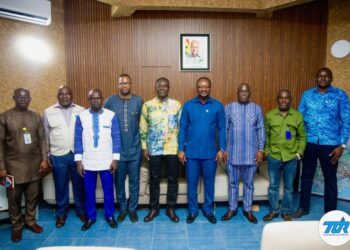
The Ghana Gold Board views its current operations as an “institution in formation,” acknowledging that the transition to a fully transparent ecosystem requires “time, feedback, and partnership.”
To this end, the Board has prioritized “dialogue as a cornerstone of its operations,” engaging a wide spectrum of actors including aggregators, jewellers, and financial institutions. These consultations are vital to ensure that the “regulatory frameworks” are not merely theoretical but reflect the “realities of those who work within the industry,” creating a sense of shared ownership over the nation’s resources.
Ultimately, the establishment of GoldBod is framed as a modern extension of Ghana’s “independence movement.”
READ ALSO: US-Israel-Iran War Threatens Ghana’s Fragile Economic Recovery