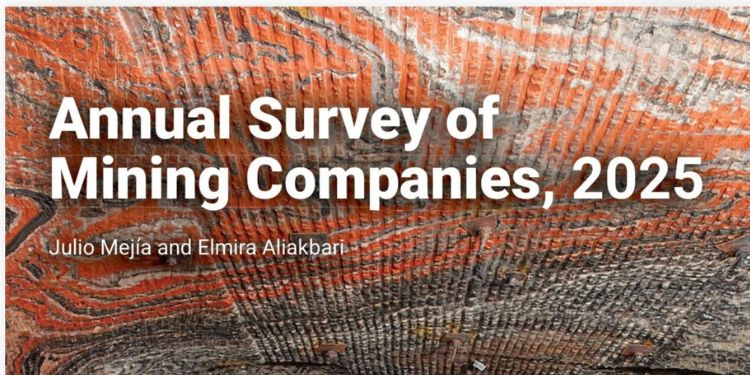
Zambia has touted its milestone and a historic turning point in its extractive sector as it significantly climbed the 2025 Fraser Institute Annual Survey of Mining Companies’ ranking as one of the most attractive investment destinations on the planet.
This elevation in status serves as a formal validation of the country’s aggressive regulatory reforms and fiscal restructuring, positioning the “Land of Work and Joy” as a premier hub for global mineral exploration.
By securing a higher standing in this prestigious index, the Ministry of Finance and National Planning has signaled to the international community that Zambia is no longer just a country of vast geological potential, but a jurisdiction defined by administrative certainty and investor-friendly governance.
According to the latest data released by the Canadian-based Fraser Institute, Zambia now ranks 25th globally on the Investment Attractiveness Index (IAI), a substantial jump from its 28th position in the previous cycle while Ghana saw a decline.
“The alignment between the leadership provided by the President and the rest of Cabinet, and technocratic execution, has been essential to the progress that we have registered not only in the mining sector, but across the wider economy. These results are anchored in the vision of President Hakainde Hichilema, whose emphasis on macroeconomic stabilization and private-sector-led growth has shaped the reform architecture guiding economic managers.”
Ministry of Finance and National Planning

This metric, which serves as a critical barometer for mining executives worldwide, is derived from a composite score that evaluates both mineral endowment and policy perception.
The survey, which incorporated insights from 256 mining executives managing a collective $4.2 billion in exploration capital, saw Zambia’s overall score rise to 72.84.
This upward trajectory is particularly notable within the African context, where Zambia now sits firmly in third place, trailing only behind Botswana and Morocco, thereby consolidating its role as a continental leader in the race for critical mineral investment.
Strategic Shifts in Policy and Perception
The internal mechanics of this achievement reveal a massive improvement in how the global market views Zambia’s regulatory environment.
On the Policy Perception Index (PPI), the nation advanced to 30th globally with a score of 74.96, moving up ten spots from its previous ranking of 38th.
Finance Minister Dr. Situmbeko Musokotwane noted that this shift suggests that “investor sentiment regarding regulatory consistency, macroeconomic stability, and governance predictability has strengthened.”
Furthermore, the Best Practices Mineral Potential Index, which assumes a scenario of globally competitive policy standards, ranked Zambia 20th globally and 6th in Africa with a score of 71.43. This confirms a “structural truth” that the country’s copper, cobalt, and gold assets remain among the most competitive in the world.
However, the report also serves as a roadmap for future improvements, identifying areas such as trade-related processes and labor regulatory clarity as sectors requiring continued attention.
These findings provide “actionable insights rather than setbacks,” ensuring that the current reform momentum is sustained through the 2026 Budget cycle and beyond.
Implications for the Zambian and African Extractive Landscape

The impact of this ranking extends far beyond mere statistics; it serves as a catalyst for Zambia’s ambitious goal to produce 3 million metric tons of copper annually by 2031.
For the Zambian mining industry, this milestone reduces the perceived “risk premium” often associated with emerging markets, potentially lowering financing costs for capital-intensive projects.
As the nation aligns its annual inflation with a 6–8 percent target band and stabilizes the exchange rate, the mining sector becomes the primary engine for foreign exchange inflows and debt restructuring.
This improved standing validates the “New Dawn” administration’s efforts to rebuild external credibility, ensuring that “citizens will benefit more from macroeconomic stability as the economy progressively registers higher growth, more jobs, and household income growth.”
On a continental scale, Zambia’s rise challenges the traditional dominance of other mining jurisdictions and sets a new benchmark for Southern African development.
By proving that “geology alone is insufficient” and that policy clarity is the true anchor for investment, Zambia is leading an African renaissance in mining governance.
This success story encourages a regional shift toward transparency and efficient licensing regimes, which are essential for attracting the multi-billion-dollar investments required to tap into the continent’s “emerging critical mineral assets.”
Zambia’s progress demonstrates that African nations can successfully compete on a global stage by harmonizing geological strength with administrative excellence.
A Trajectory Toward Copper Supremacy
The Ministry of Finance and National Planning viewed this global ranking not as a final destination, but as a “validation of reform credibility” that paves the way for industrial expansion.
The government remains committed to preserving the ingredients that produced this progress: disciplined economic management and a predictable policy environment.
With approximately $12 billion in mining capital already injected into the sector since 2021, the path toward the 3-million-ton copper target appears increasingly viable.
As the global demand for green energy minerals intensifies, Zambia’s improved standing ensures it will remain at the forefront of the global supply chain, transforming its underground wealth into sustainable national prosperity.
READ ALSO: Ghana Demands UN Investigation After Missile Attack on Lebanon Force