Ghana Gold Board (GoldBod) has issued a nationwide call to stakeholders and the general public to decouple the institution’s ongoing regulatory reforms from political interests, framing the transformation of the gold sector as a non-partisan national priority.
According to the Board, the shift toward a more structured and transparent marketplace is designed to protect the collective interests of all Ghanaians by ensuring that the nation’s mineral wealth is managed with the highest standards of integrity and accountability.
Gold Board noted that by moving beyond “partisan lenses,” the country can better support the “transformation of Ghana’s gold sector,” which is now being positioned as a “national project” rather than a political tool.
The Board highlighted that these reforms aim to create a fair playing field for both legitimate small-scale miners and large-scale buyers, ultimately strengthening the cedi and building robust national reserves.
“The transformation of Ghana’s gold sector is a national project that requires the support and cooperation of all well-meaning Ghanaians, regardless of political affiliation. The success of these reforms will ultimately benefit the country as a whole, strengthening the economy, improving resource governance, and ensuring that Ghana’s gold truly works for the Ghanaian people.”
Ghana Gold Board (GoldBod)
Strategic Significance of GoldBod’s 2026 Operational Rollout
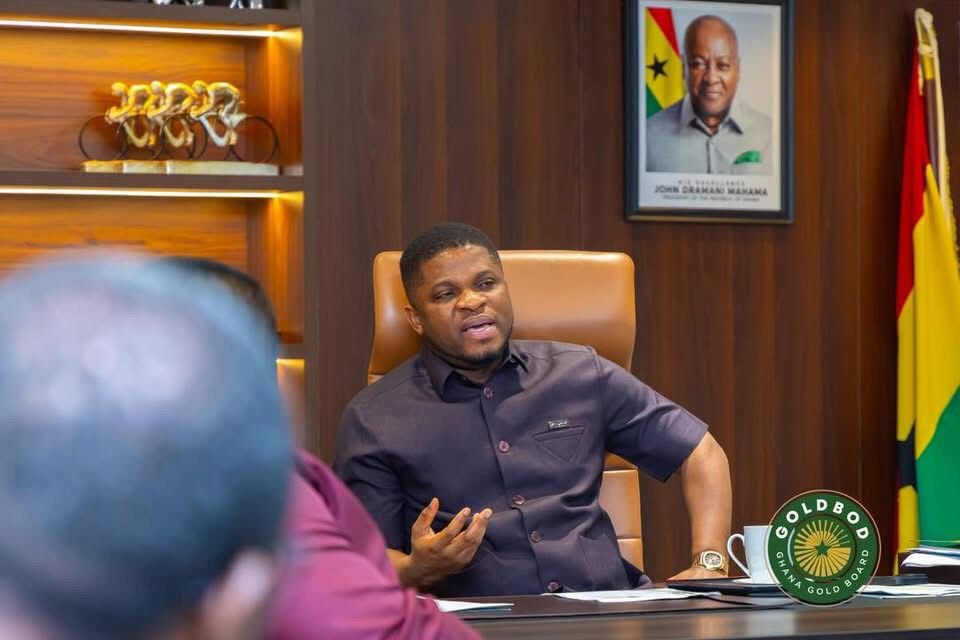
The significance of GoldBod’s operations lies in its transition from an interim agent to a permanent, “sovereign instrument” of resource management. The Board has assumed full responsibility for signing off-take agreements and managing the sale of all Artisanal and Small-Scale Mining (ASM) gold through its licensed gold buyers.
This centralized approach is a historic shift from the fragmented systems of the past, which were often marred by “smuggling, undervaluation, and fragmented governance.”
By acting as the “sole authority with exclusive rights” to assay and export precious minerals, Gold Board is effectively plugging revenue leakages that have long plagued the extractive sector.
The institution’s ability to “mop up” gold through official channels has already bolstered Ghana’s Gross International Reserves to a record-breaking $13.8 billion, providing an unprecedented 5.7 months of import cover.
This operational brilliance demonstrates that GoldBod is not merely a bureaucratic entity but a “strategic vehicle” for macroeconomic stability.
Traceability and Fairness: Building a Global Standard

Central to the 2026 reforms is the introduction of a comprehensive “Track-and-Trace” initiative. This system ensures that every ounce of gold can be linked back to its specific mining concession, meeting the “strict compliance with responsible sourcing standards” demanded by international markets.
For the local miner, this means access to premium pricing and a “structured licensing regime” that rewards legal operations.
Beyond the numbers, the Board’s “improved traceability and clearer regulatory oversight” are designed to eliminate “fronting” an illegal practice where foreign entities use Ghanaian nominees to bypass local laws.
By enforcing these rules “without fear or favor,” GoldBod is fostering a marketplace where “legitimate gold buyers and miners” can thrive within a framework that “protects both industry players and the national interest.”
This transparency is the cornerstone of the “Golden Reset” intended to make Ghana a world-class hub for precious minerals.
Collective Action for a Ghana Beyond Debt

Realizing the full benefits of these reforms requires a “collective support and sustained commitment” from the Ghanaian populace.
Industry experts suggest that when the public, particularly those in the “mining communities of the Ashanti, Western, and Eastern regions,” align with GoldBod’s centralized purchasing system, they are actively participating in the “stabilization of the cedi.”
This unified front is the most effective weapon against the “environmental and social devastation” caused by unregulated mining.
The journey toward economic transformation is a shared responsibility. As the nation reflects on the “responsibilities that come with freedom” during this independence season, the consensus is clear: supporting strong institutions like Ghana Gold Board is a “direct investment” in a future where Ghana no longer relies on “high-interest loans” but on its own “high-value assets.”
Through “collaboration, transparency, and reform,” the nation is finally poised to ensure its natural wealth contributes “meaningfully to prosperity, stability, and national pride.”
READ ALSO: UK Prioritizes National Interest Over Allies – Yvette Cooper