
Ing. Wisdom Gomashie, a Mining Consultant and Fellow at Africa Policy Lens (APL), has expressed significant reservations regarding the government’s apparent trajectory toward the state-led acquisition of the Damang Mine.
The expert’s caution arrives amidst heightened speculation following the expiration of Gold Fields’ lease, with the government signaling a preference for the asset to transition into Ghanaian ownership by April 2026.
In an interview with The Vaultz News, Ing. Gomashie insisted that “If the state wants to go into mining, it should do so in good intention.”
The expert also highlighted the delicate balance the state must strike between the ambition for increased resource nationalism and the imperative of maintaining a predictable investment climate that does not alienate global capital providers.
“We should make sure that the steps we are taking as a country, we don’t send signal to the investment community that now in Ghana, if your mining lease expire, the country is going to take it. As it stands now, I have not seen any of such capacity displayed by the Government of Ghana in this regard, and will be glad that government shows that capacity.”
Ing. Wisdom Gomashie
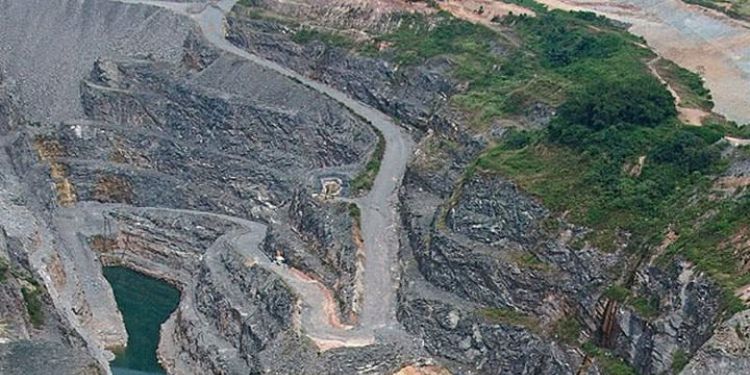
Dwelling on this development, the transition follows a twelve-month lease extension granted to Gold Fields in 2025 specifically to facilitate a “safe and seamless” handover of the asset located in the Wassa West District.
While the legislative framework dictates that mineral rights revert to the state upon the expiration of a mining lease, the shift toward state management for an asset requiring an estimated US$600 million in reinvestment to sustain a nine-year mine life is being viewed as a high-stakes gamble.
An analyst suggests that any perception of “draconian” policy shifts could inadvertently stall broader industry expansion, as existing multinational firms monitor the Damang case as a litmus test for the security of their own long-term tenure in the world’s sixth-largest gold-producing nation.
Risks to Investment Stability and Employment

The primary concern shared by industry stakeholders is the potential for a “chilling effect” on the wider extractive ecosystem. Ing. Gomashie warned that “the moment that signal goes,” existing mining giants may reconsider their capital expenditure plans, choosing to withhold further investment in exploration and facility upgrades.
This is not merely a theoretical risk to the balance sheet; it translates directly into a threat against the social fabric of the Western Region.
With approximately 2,000 livelihoods comprising 500 direct employees and over 1,500 contractors currently tied to the Damang operation, any disruption in continuity due to a poorly managed transition could lead to significant job losses.
The expert noted that “if investment and expansion is going down, it’s going to affect jobs,” and could ultimately “affect government revenue” if the asset’s productivity falters under state leadership.
The Technical and Financial Capacity Gap
A successful transition requires more than just political will; it necessitates a “demonstrated capacity” to manage the complex geological and commercial demands of a world-class gold mine.
Currently, the state has not publicly unveiled a substantive operator or a financing partner capable of injecting the massive capital required to move beyond processing old stockpiles to active in-pit mining.
The prospect of the state “genuinely investing” or holding a “better stake” is welcomed in principle, yet the lack of a clear, proven operational roadmap remains a point of contention.
Industry observers argue that for the government to garner public and professional support, it must first “show capacity” in managing high-risk extractive environments before taking on the responsibility of an asset that produces over 100,000 ounces of gold annually.
Implications for National Reputation and Policy
The Damang acquisition move coincides with the implementation of the Ghana Accelerated National Reserve Accumulation Policy (GANRAP) 2026-2028, which seeks to use gold as a strategic anchor for economic stability.
However, the expert insisted that achieving these long-term reserves should not come at the cost of the country’s reputation as a stable mining hub.
Ghana has recently seen its standing on the global mining competitiveness index fluctuate, and “twisting arms in the middle of agreements” or upon lease expiry without mutual consensus could further erode investor trust.
To avoid being labeled as a jurisdiction practicing “resource nationalization” through state capture, the government is urged to ensure that its actions remain “policy-led” rather than reactionary, preserving the country’s status as a premier destination for sustainable mining capital.
READ ALSO : GIPC and Partners Drive U.S. Apparel Investment