
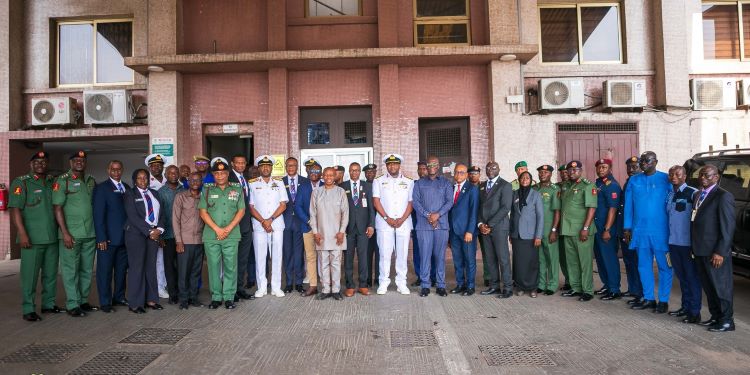
The Ghana Cocoa Board (COCOBOD) has formalized a high-level engagement with the National Defence College of Nigeria, centering on the strategic nexus between agricultural sustainability and regional security.
During a recent study tour hosted at Cocoa House in Accra, leadership from both institutions explored how the protection of Ghana’s primary commodity – cocoa – functions as a bedrock for national economic stability.
“Dr. James Kofi Kutsoati, Deputy Chief Executive in charge of Operations, welcomed the delegation on behalf of the Chief Executive, framing the visit as a pivotal opportunity to address the trans-border threats that continue to undermine the cocoa value chain.
“Discussions during the meeting highlighted the significant contribution of cocoa to Ghana’s economy and reaffirmed COCOBOD’s commitment to promoting high-quality cocoa production, improving farmer welfare, and strengthening partnerships that support economic growth and regional security”
Ghana Cocoa Board
The discussion served as a critical platform to evaluate the role of Agriculture in the broader regional security architecture of West Africa. For Ghana, cocoa is not merely a commercial export; it is a vital pillar of the national economy, contributing significantly to government revenue, rural livelihoods, and the balance of payments.
By analyzing the challenges of smuggling and illicit trade, the Ghana Cocoa Board sought to foster closer collaboration with security counterparts in Nigeria to create a coordinated response to the “smuggling bandits,” who threaten the integrity of regional agricultural markets.

“This visit would help strengthen cross-border collaboration to protect Ghana’s cocoa industry from smuggling and other related challenges,” COCOBOD noted.
Also central to the deliberations was the urgent need to stabilize the production environment for thousands of smallholder farmers.
The Ghana Cocoa Board has consistently prioritized the implementation of high-quality standards and the enhancement of farmer welfare, recognizing that an economically empowered farmer is the most effective defense against the encroachment of illicit traders.
When smuggling networks siphon off cocoa beans across borders, they do more than just deprive the state of tax revenue; they destabilize the entire supply chain and erode the pricing mechanisms designed to support domestic producers.
The engagement with the National Defence College of Nigeria underscores that the protection of agricultural assets is increasingly being viewed as a national security priority. By sharing intelligence and operational strategies, COCOBOD and its regional partners aim to disrupt the networks that facilitate the illegal movement of goods.
This collaborative framework is essential for maintaining the reputation of Ghanaian cocoa in global markets, ensuring that every bag of beans exported conforms to the strict sustainability and quality criteria demanded by international buyers.
Driving Industrialization
The long-term vision for the Ghana Cocoa Board remains firmly rooted in the goal of increased local value addition. As the nation moves deeper into Industrialization, the domestic processing of cocoa into semi-finished and finished products becomes the primary lever for capturing more value within the borders.

However, this industrial ambition is contingent upon the availability of a steady, reliable, and legally sourced supply of raw beans. If smugglers are permitted to bypass official procurement channels, local processing plants face the risk of supply shortages and increased price volatility, which threatens the viability of their industrial investments.
This regional security study tour is a signal that COCOBOD is taking a holistic approach to these issues. Through engaging with defense strategists, the Board is acknowledging that the threats to the cocoa industry are as much logistical and border-related as they are agronomic.
According to the Board, ensuring that cocoa reaches state-sanctioned buying centers – and eventually domestic processors – is the only way to safeguard the gains made in farmer productivity and to fuel the growth of Ghana’s manufacturing sector.
The partnership with the National Defence College of Nigeria highlights a broader trend: the movement toward integrated regional economic governance. As Ghana and Nigeria work to deepen trade ties under the AfCFTA, the security of their respective commodity sectors becomes a shared interest.
The knowledge exchange initiated at Cocoa House is expected to lead to more refined protocols for border management and surveillance, specifically tailored to protect the agricultural lifelines of the two nations.
As the Ghana Cocoa Board continues to refine its operational strategies amid the recent past crisis, the commitment to protecting farmer welfare remains non-negotiable. The Board is actively deploying new technologies for cocoa traceability, ensuring that beans can be mapped from the farm gate to the processing facility.

This level of oversight, combined with regional cooperation on border security, provides a robust defense against the exploitation of the cocoa industry.
With the spotlight now on these regional synergies, COCOBOD is reaffirming its role as the guardian of the nation’s most valuable resource, ensuring that the fruits of Ghanaian labor continue to drive growth, security, and prosperity for the benefit of all citizens.
READ ALSO: New Minerals Royalties Regulation Comes into Force After 21-day Period