Ministry of Lands and Natural Resources has justified the government’s decision to depart from the status quo in the mining sector in terms of royalties’ benefits, asserting that the state must secure “maximum benefits” from its vast mineral wealth to address pressing national needs.
This policy shift, framed as a non-negotiable step in the country’s current “national life,” justifies a controversial adjustment to mineral royalties intended to provide the fiscal space necessary for broad-based development and environmental security.
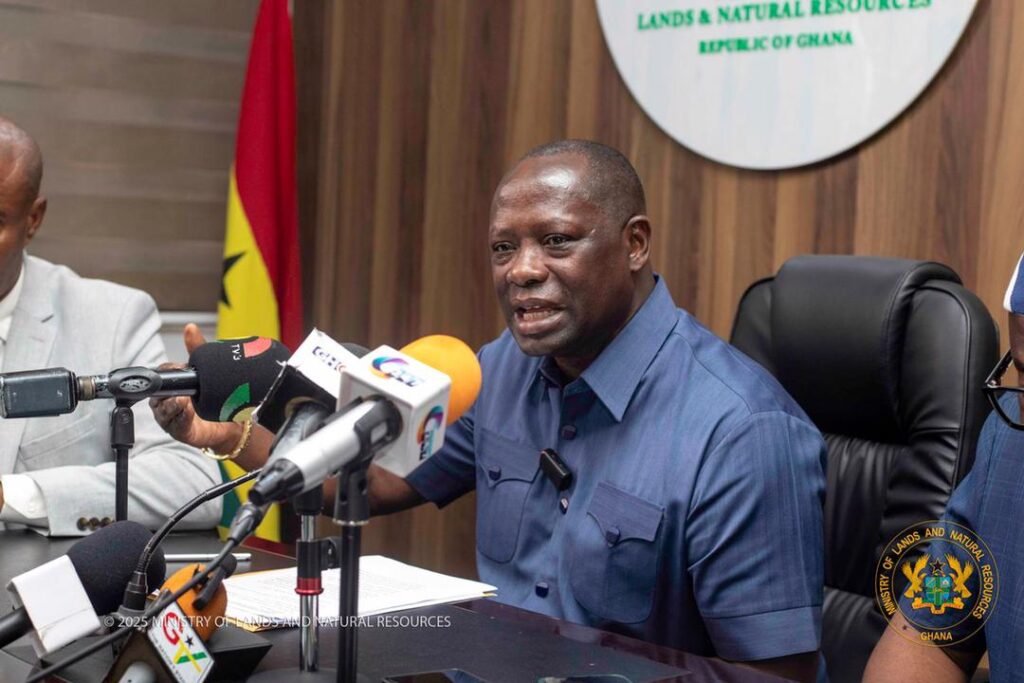
“Government believes that as of now we have come to a point in our national life where we have to get maximum benefits from our mineral endowments. We are not withdrawing this piece of legislation absolutely; we are going ahead with implementation. At this point, it cannot even be withdrawn.”
Paa Kwesi Schandorf

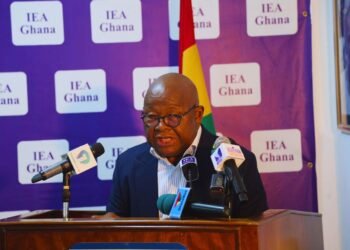
Broadening the scope of this decision, Paa Kwesi Schandorf, Media Relations Officer at the Ministry of Lands and Natural Resources revealed that despite ongoing diplomatic engagements and concerns from international missions, the government’s stance remains “unchanged” regarding the implementation of the new legislation.
Officials maintain that while the state remains sensitive to industry stakeholders, the current fiscal framework has left the nation with “scanty” resources to combat critical threats like illegal mining, leaving the government with no choice but to pursue a more aggressive revenue-mobilization strategy.
Financing the Fight Against the Galamsey ‘Canker’
A central pillar of the Ministry’s justification is the urgent need to fund the National Anti-Illegal Mining Operations Secretariat (NAIMOS).
The Ministry described the menace of illegal mining as a “canker” that has consistently drained state resources without a matching dedicated funding stream. According to official cost estimates, deploying NAIMOS personnel to various “flashpoints across the length and breadth of the country” requires an investment exceeding 250 million Ghana Cedis a sum that currently lacks a clear budgetary source.
The government argues that it is a paradox for a nation so “endowed” with gold to struggle with the costs of protecting its own environment.
By adjusting the royalties, the state aims to create a reliable “appropriate source” of income to ensure that security personnel can be permanently stationed at illegal mining sites, rather than relying on ad-hoc, underfunded operations.
Balancing Industry Sensitivity with National Interest

While the Ministry acknowledges the concerns raised by the Chamber of Mines and other relevant parties, it insists that the legislation is in the “interest of the general” public.
The government has faced significant pressure from diplomatic missions who “come to the ministry all the time” to discuss the implications of the royalty hike.
However, the Ministry’s position is that the time for debate has passed, noting that as “we speak, really nobody can put pen and paper” to alternative funding for the state’s environmental and developmental mandates.
The adjustment is seen as a necessary evolution of the “mining space” to ensure that the wealth generated from minerals does not just support development “across board” but specifically targets the sectors that facilitate the industry’s own sustainability.
Government officials remain adamant that they are “going ahead” with the rollout, viewing the move as a vital correction to a system that has historically favored stability over the immediate needs of the Ghanaian people.
Royalties Adjustment and National Growth
Economic projections into the sliding-scale royalty model suggests that such adjustments allow the state to capture “windfall” profits during periods of high global commodity prices.
Unlike a fixed-rate system, this flexible mechanism ensures that as the value of gold and lithium increases on the global market, the percentage paid to the state increases proportionally.
This revenue is often funneled into the Minerals Income Investment Fund (MIIF), which supports infrastructure, education, and healthcare in mining host communities.
Furthermore, by securing the 250 million Ghana Cedis needed for NAIMOS, the country stands to save billions in the long term by preventing the “environmental and fiscal leak” caused by illegal mining.
Protecting water bodies and forest reserves reduces the future cost of water treatment and land reclamation, effectively making the royalty adjustment a tool for “stewardship” rather than just taxation.
Ultimately, the Ministry believes that this “way to go” will transform the mining sector into a more accountable engine for Ghanaian prosperity.
READ ALSO: Albanese Vows To Protect Citizens Amid Middle East Tensions