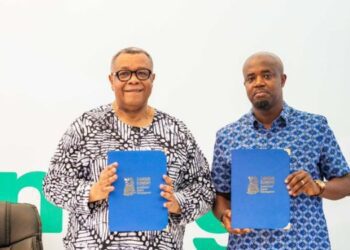
Hon. Akwasi Konadu, the Member of Parliament for Manhyia North and Deputy Ranking Member on the Lands and Natural Resources Committee, has strongly criticized the government’s recent push to overhaul the nation’s mineral royalty framework, describing the move as a “hasty policy decision” that could jeopardize the stability of the extractive sector.
The lawmaker raised these concerns in response to the Ministry’s swift introduction of a new sliding-scale royalty regime, which seeks to replace the long-standing flat-rate system with a more aggressive, price-sensitive model.
According to Hon. Konadu, the speed at which this policy was drafted and presented suggests a lack of thorough consultation and a failure to appreciate the long-term economic consequences for Ghana’s mining investment climate.
“This is a hasty policy decision, very hasty, as it is just about two months and 20 days that this policy was drafted and brought in this matter. We are just boxing every single mineral or company into just one mathematical arrangement, yet every single agreement or concessional contract must be negotiated on its own merit and strength. I don’t see the role of the minister again in supervising the ministry if we go into agreements that already box us into a certain confinement.”
Hon. Akwasi Konadu

While on his critique, the Manhyia North legislator highlighted that the policy was moved from conception to implementation in just about two months and 20 days, a timeframe he argues is insufficient for a reform of this magnitude.



He expressed deep concern that the Ministry is attempting to “box every single mineral or company into just one mathematical arrangement,” effectively ignoring the distinct operational and geological realities of the 21 diverse mining companies currently active in the country.
By stripping away the ability for the Minister to supervise and negotiate agreements based on individual “merit and strength,” Hon. Konadu warned that the state is creating a rigid “confinement” that will inevitably lead to significant friction and “kicking back” from industry players who see no direct benefit in the sudden tax hike.
Assessing the Operational Strain on Multinational Giants

The transition from a fixed 5% royalty to a dynamic 5%–12% sliding scale represents a fundamental shift in Ghana’s fiscal policy that has sent ripples through the international mining community.
For multinational giants like Newmont, AngloGold Ashanti, and Gold Fields, this “mathematical arrangement” threatens to significantly increase the average tax rate, potentially making Ghana one of the most expensive jurisdictions in Africa for gold production.
Industry analysts suggest that while the government aims to capture “windfall” profits during periods of record-high bullion prices, the lack of a stabilized ceiling could discourage these companies from committing to the long-term capital expenditures required for mine expansion and deep-level exploration.
Furthermore, the “aggressive” nature of the upper bands which can hit 12% when gold exceeds $4,500 per ounce creates a fiscal environment where companies may prioritize projects in neighboring countries with more predictable tax regimes.
The diplomatic community, including representatives from the U.S., China, and Australia, has already voiced rare, coordinated concerns, noting that such a “hasty” shift undermines the sanctity of existing stability agreements.
As Hon. Konadu aptly noted, the companies are “not going to expand” if they feel their profitability is being squeezed by a framework that doesn’t account for their specific “geography” or cost structures.
Geographical Disparities and the Flaw of Universal Application

One of the most salient points raised by Hon. Konadu is the “different geography” associated with each mining operation in Ghana.
A universal sliding scale assumes that all mines have the same cost-to-profit ratio, ignoring the fact that a high-grade surface mine in the Western Region has vastly different economics than a low-grade underground operation elsewhere.
By imposing a “one-size-fits-all” model, the government risks making marginal mines unviable.
The lawmaker pointed out that the Minister’s subsequent proposal to reduce the Growth and Sustainability Levy (GSL) by 2% as a “compensatory” measure is a clear admission that the initial royalty hike was “done in a hit” and lacked a balanced fiscal impact assessment.
The Threat to Negotiated Concessions and Future Investment

The integrity of Ghana’s mining sector has historically rested on the ability to negotiate concessional contracts that reflect the “strength” of each individual project.
Hon. Konadu argues that by “boxing” these entities into a singular framework, the government is effectively abdicating its role in strategic sector management.
If the policy remains unamended, the “kickback” from the 21 different companies could lead to a stalemate, stalled production, and a decline in the very revenue the state seeks to maximize as criticized by the Ghana Chamber of Mines.
To maintain its status as Africa’s top gold producer, Ghana must move away from “hasty” dictates and return to a system where each agreement is scrutinized on its unique merits.
READ ALSO: GoldBod Pledges Robust Export & Traceability Systems for Ghana’s Diamond