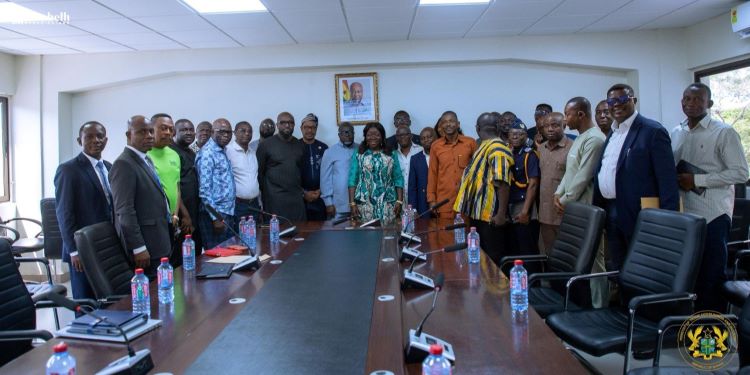
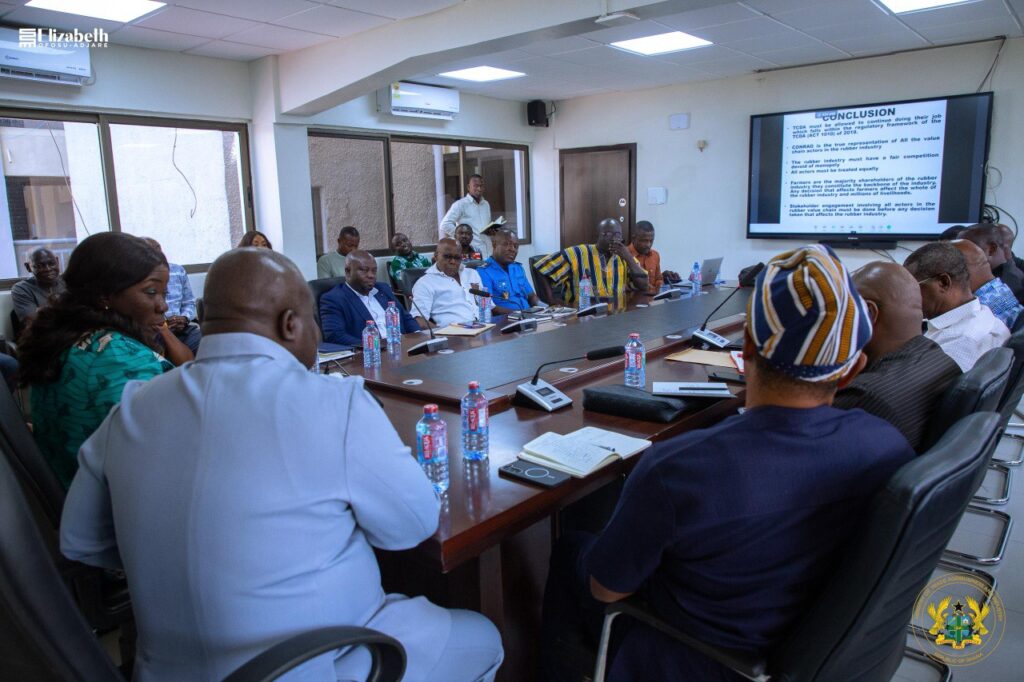
The Minister for Trade, Agribusiness, and Industry, Hon. Elizabeth Ofosu-Adjare, has initiated a decisive regulatory offensive to secure the domestic supply chain of Ghana’s rubber industry in a stakeholder engagement to end the era of unregulated raw material flight, moving to solidify the government’s total ban on the exportation of raw rubber.
This strategic intervention is not merely a policy reminder but a comprehensive industrial triage to force raw materials back into local processing plants, effectively operationalizing the “Feed the Industry” mandate.
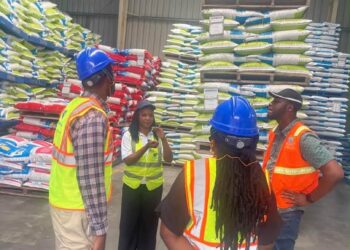
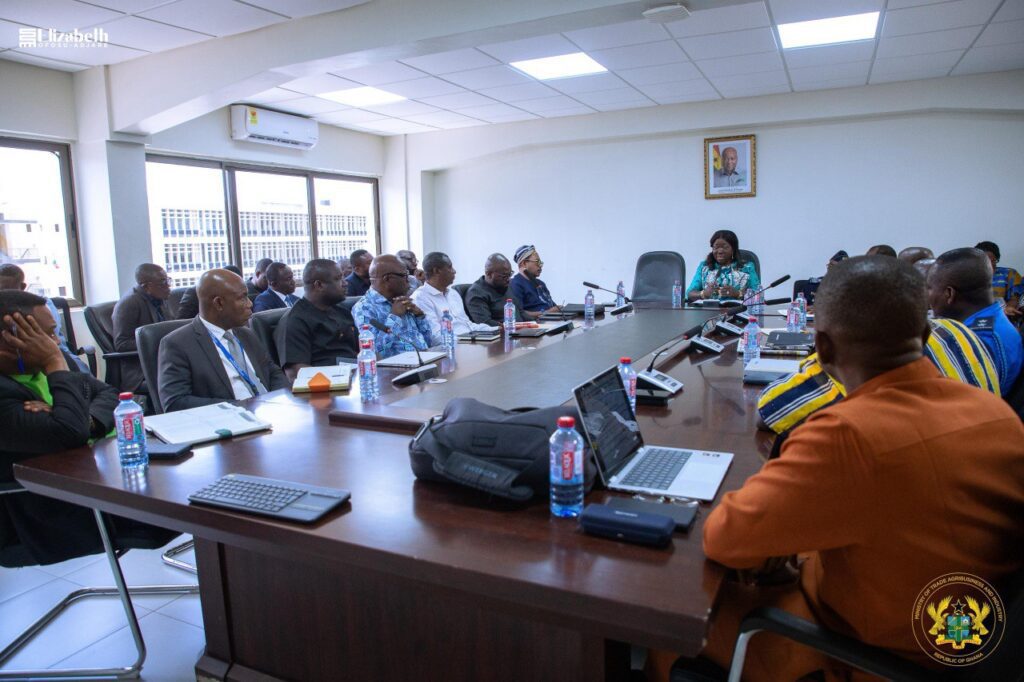
According to the Ministry of Trade, Agribusiness, and Industry (MoTAI), convening a heavy-hitting assembly of rubber farmers, processors, including the Tree Crops Development Authority (TCDA), and the top brass of the Ghana Revenue Authority’s Customs Division underscores the transition of protecting Ghana’s industrial base from a rhetorical goal to a hardline enforcement priority.
“Hon. Ofosu-Adjare reaffirmed the government’s commitment to building an industrialized Ghana, where raw materials are sourced, manufactured, and processed locally. She urged stakeholders to comply with the government’s ban on the exportation of raw rubber and assured them that her ministry would collaborate with relevant agencies to address bottlenecks”
Ministry of Trade, Agribusiness, and Industry
The central pillar of the engagement was the government’s uncompromising stance on value addition. For years, Ghana’s rubber processing infrastructure has operated under the shadow of raw material scarcity, as “cup-lumps” – the raw form of natural rubber – were aggressively exported to foreign markets, depriving local factories of the lifeblood needed for industrial scaling.
Hon. Ofosu-Adjare’s address to the stakeholders was a clear articulation of the “reset agenda,” which posits that the export of raw commodities is essentially the export of Ghanaian jobs and economic potential.
According to her, the goal is to create a captive domestic market that ensures every kilogram of rubber tapped on Ghanaian soil remains within the sovereign borders to fuel the nation’s manufacturing hubs.
The Ministry noted that the presence of the Commissioner General of the Ghana Revenue Authority (GRA), Mr. Anthony Kwasi Sarpong, transformed the meeting from a trade dialogue into an enforcement briefing, as the discussion dived into closing the “porous gaps” that have allowed raw rubber to bypass the export ban.
The GRA’s involvement was a move toward border-policing as an industrial tool, leveraging the GRA’s surveillance and enforcement capabilities, to ensure that the ban on raw rubber is physically upheld at every exit point and border crossing in the country.
This synergy between the Ministry of Trade and the Revenue Authority is geared towards a “compliance wall” that makes the unauthorized export of cup-lumps a high-risk, low-reward endeavor for smugglers and unscrupulous actors.
The Pricing Triage
Beyond the physical enforcement of the ban, the Ministry is grappling with the volatile economic tension between rubber farmers and industrial processors, as farmers, naturally seeking the highest global price for their labor, have often found the export market more lucrative than domestic sales.
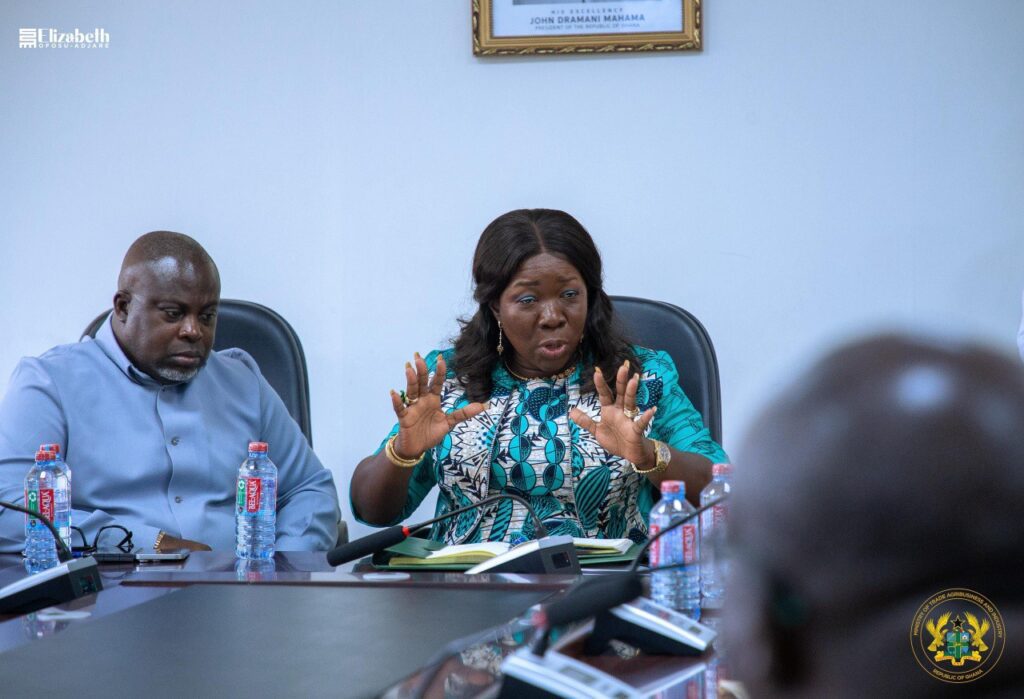
This price disparity is “a bottleneck” that Hon. Ofosu-Adjare pledged to dismantle, with the TCDA being the technical key to this resolution. As the regulator responsible for the sector, the Authority was tasked with stabilizing raw rubber pricing – a delicate fiscal balancing act that must keep farming commercially viable while ensuring that local processors are not priced out of the market.
MoTAI noted that this pricing triage is essential for the long-term stability of the sector. If the government forbids export but fails to ensure a fair domestic price, it risks a farmer-led contraction of the industry or a surge in illegal smuggling.
The Minister’s assurance of collaboration with relevant agencies to regulate the pricing framework, where the TCDA sets seasonal floors to protect the income of the 100,000+ smallholder farmers across the rubber-growing belt, was echoed throughout the meeting.
“The Commissioner General of the Ghana Revenue Authority encouraged all participants to work collectively to safeguard their businesses and strengthen the rubber industry, noting that collaboration is the cornerstone of sustainable industrial growth”
Ministry of Trade, Agribusiness, and Industry
Under the leadership of Hon. Elizabeth Ofosu-Adjare, MoTAI is aggressively pursuing a policy of industrial protectionism that treats raw materials as strategic national assets, marking a departure from the laissez-faire trade policies of the past to a controlled value chain, where the state dictates that industrialization must precede exportation.
The rubber industry is the current theater for this policy, but the implications are far-reaching for other sectors such as oil palm, coconut, and cashew. The government is signaling to international investors that Ghana is no longer a mere source of raw inputs, but a destination for high-value manufacturing and processing investment.
The competitiveness of Ghana’s agribusiness industry now hinges on the success of this rubber initiative. As the engagement concluded, the message to the rubber industry players was that the export ban is non-negotiable. The government has mobilized its policy-making, regulatory, and enforcement arms to ensure that “Made in Ghana” begins at the very source of the raw material.
READ ALSO: Ghana Tourism Authority Opens Call for Event Proposals for December in GH 2026