The United Nations has renewed calls for stronger international support to eliminate the remaining elements of Syria’s chemical weapons program.
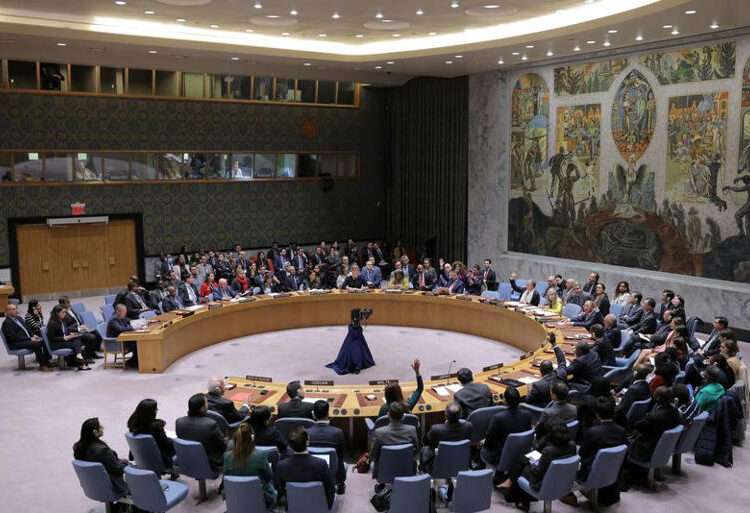
Briefing the United Nations Security Council, Deputy to the High Representative for Disarmament Affairs Ebo Adedeji, emphasized ongoing cooperation between the Organization for the Prohibition of Chemical Weapons (OPCW) and the Syrian Arab Republic.
He called on the UN Security Council members to provide sustained support as he noted that “the United Nations stands ready to support and will continue to do our part to uphold the norm against the use of chemical weapons anywhere and at any time.”
The international effort to dismantle Syria’s chemical weapons program began in 2013, following reports of large-scale chemical attacks during the country’s civil war, including the notorious Ghouta incident.
These attacks sparked global outrage and a swift international response. Under pressure, the Syrian Arab Republic joined the Chemical Weapons Convention in September 2013, pledging to eliminate its chemical weapons stockpiles and production facilities under international supervision.
The United Nations Security Council subsequently adopted Resolution 2118, mandating Syria to provide a complete declaration of its chemical weapons program and cooperate fully with inspectors from the Organization for the Prohibition of Chemical Weapons (OPCW).
While these initial operations marked a milestone in global disarmament, the OPCW Technical Secretariat has not been able to confirm that the declaration submitted by the previous Syrian government was accurate and complete because of the insufficient and inaccurate information it contained, prompting follow-up investigations and inspections.
According to Ebo Adedeji, the OPCW Technical Secretariat reported a “serious concern, over the declaration’s issues as it involved large quantities of potentially undeclared or unverified chemical warfare agents and chemical munitions.”
Since then, Syria’s new government has worked with the OPCW Technical Secretariat to clarify the full extent and scope of the program developed under the previous government, ensuring long-term compliance with the Chemical Weapons Convention.
In this month’s report, the OPCW Technical Secretariat reiterated that, in addition to the 26 declared chemical weapons-related sites, information made available suggests that there are more than 100 other sites that may have been involved in the previous government’s chemical weapons-related activities.
As part of its work on this matter, Adedeji indicated that the OPCW Technical Secretariat plans to visit all these locations, taking into account security and other relevant considerations.
He added that, since March 2025, the OPCW has interviewed former chemical weapons experts, collected 19 samples, and obtained over 6,000 documents from visited sites.
The Syrian government also provided 34 sealed boxes of documents to the OPCW Technical Secretariat, which have been documented and scanned and are awaiting translation and analysis, and also in January 2026, inspectors visited an Aleppo-area site and observed storage containers containing chemical precursors and 75 undeclared cylinders.
The cylinders were reportedly removed and destroyed at a local scrapyard. Nevertheless, parts possibly from the cylinders were later discovered, reflecting the programme’s scale and complexity.
Global Responsibility in Upholding Chemical Weapons Compliance
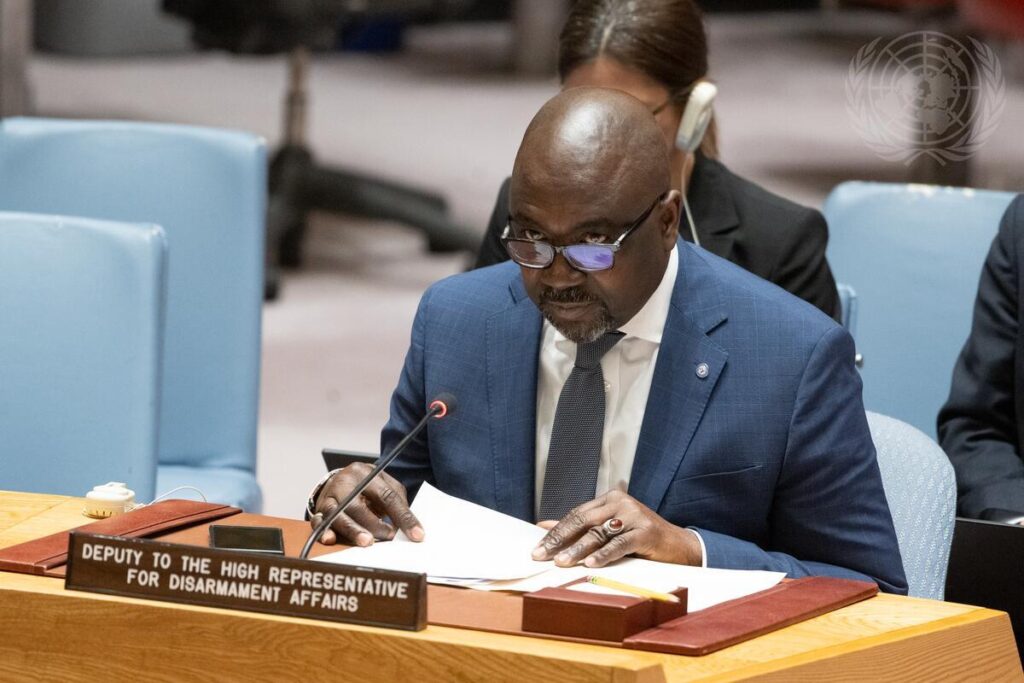
Ebo Adedeji also urged Council members to unite and show leadership. He called for strong support for the effort to fully dismantle Syria’s chemical weapons programme and verify compliance with the Chemical Weapons Convention.
“The significant and consistent support from the international community is also needed to complete the extraordinary efforts to rid Syria of all chemical weapons. I also take this opportunity to reiterate United Nations support for the integrity, professionalism, impartiality, objectivity, and independence of the work of the OPCW.”
Ebo Adedeji
The support from member states reinforces global standards and maintains integrity in the international disarmament framework as it enables the OPCW and the Syrian government to conduct inspections, analyse documents, and verify sites, even under difficult security conditions.
International cooperation extends beyond technical support, as it strengthens the credibility of global norms. The Security Council’s engagement sends a message to Syria and other nations that transparency, compliance, and responsibility are critical to chemical weapons disarmament.
Countries can help remove chemical weapons for good by supporting the OPCW’s efforts and working with the UN. This assures that these destructive capabilities are not redeveloped or utilized again.
Sustained global responsibility is therefore required to address problems in removing chemical weapons and ensuring Syria’s long-term adherence to obligations.
READ ALSO: German Court Jails Lebanese National over Hezbollah Membership