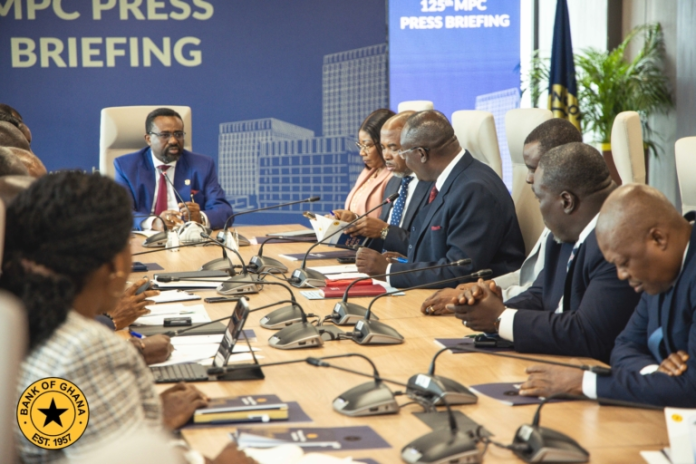
Ghana’s declining inflation rate has strengthened expectations that the Bank of Ghana could consider easing its monetary policy stance at its upcoming meeting.
According to professional services firm PwC, the February 2026 Consumer Price Index data provides a compelling case for the central bank to either maintain or reduce the Monetary Policy Rate.
PwC believes that the probability of a rate cut at the next Monetary Policy Committee meeting scheduled for March 18, 2026 is now higher than the likelihood of the rate being maintained. The firm explained that several key indicators within the inflation data suggest that price pressures are stabilising, creating room for policy easing to support economic recovery.
Inflation Falls Well Within Target Range
The latest data released by the Ghana Statistical Service shows that Ghana’s year on year inflation declined to 3.3 percent in February 2026. This represents a drop from the 3.8 percent recorded in January 2026 and a significant decline from the 23.1 percent recorded during the same period last year.
PwC noted that the current inflation level sits comfortably within the Bank of Ghana’s medium term target band of 8 percent plus or minus 2 percent. In practical terms, this means inflation is currently well below the upper limit of the central bank’s acceptable range.

The firm emphasised that the sustained decline in inflation indicates a stable price environment. According to its analysis, both food and non food inflation components are contributing to the downward trend.
“At 3.3%, inflation is not only anchored but showing sustained stability, supported by both food and non-food categories. This provides the Bank with a strong justification to consider a rate cut to support economic activity”.
PwC
This development, PwC said, strengthens the argument for a possible reduction in the policy rate in order to stimulate lending, support businesses, and encourage economic expansion.
Imported Inflation and Exchange Rate Stability
Another factor supporting the case for a potential rate cut is the decline in imported inflation. PwC pointed out that imported inflation has dropped significantly to 0.6 percent, suggesting that exchange rate pressures have eased.
According to the firm, this improvement signals greater external stability and indicates that earlier monetary tightening measures have been effective in controlling price pressures.
“The decline in imported inflation to 0.6% suggests reduced exchange rate pressures and improved external stability. Declining inflation for goods and services indicates that earlier tightening measures have taken effect, limiting the risk of an immediate inflation rebound”.
PwC
The easing of imported inflation also reflects improved global price conditions and relatively stable currency dynamics. These factors reduce the likelihood that inflation could suddenly surge again in the near term.

Short Term Price Pressures Remain Moderate
Despite the overall decline in inflation, PwC noted that there are still mild short term price pressures that could attract the attention of policymakers.
The firm highlighted that the month on month inflation rate rose slightly to 0.8 percent, while non food month on month inflation increased to 1.2 percent.
However, PwC believes these developments are unlikely to significantly influence the Monetary Policy Committee’s decision because the broader trend continues to show strong disinflation.
“The MoM uptick to 0.8% may draw MPC scrutiny, especially rising non-food MoM inflation (1.2%). However, given the strong YoY disinflationary trend, the MPC is likely to interpret this as seasonal or transitory rather than a reversal of the inflation trend”.
PwC
In essence, the firm views the increase in month on month prices as temporary movements that are unlikely to derail the overall downward trajectory of inflation.
Emerging Risks Could Influence Decision
While the inflation outlook remains positive, PwC warned that medium term risks could still emerge from global and regional developments.
The firm highlighted the possibility of supply side disruptions that could affect food and energy prices in the coming months.
“Disruptions to regional trade flows particularly across Sahelian corridors affected by terrorist activity pose a risk of elevating inflation expectations as key food supply chains become more volatile. Concurrently, the ongoing conflict in the Middle East is likely to exert upward pressure on energy related components of the inflation basket in the coming months, increasing the possibility of a temporary interruption to the recent disinflationary trend”.
PwC
These factors could potentially create temporary inflation spikes if supply chains become unstable or energy prices rise sharply.
Policy Decision Hinges on Multiple Factors
Despite the positive inflation trend, PwC indicated that the final decision by the Bank of Ghana will depend on several other macroeconomic indicators.
These include exchange rate stability, the government’s commitment to fiscal consolidation, the flow of external financing, and the potential impact of supply side shocks on inflation expectations.

If concerns about global financial conditions or domestic liquidity risks persist, the MPC may opt for a cautious hold. However, the data strongly supports a measured reduction in the policy rate to stimulate credit, ease borrowing costs, and reinforce the macroeconomic recovery.
The Monetary Policy Committee meeting scheduled for March 18, 2026 will therefore be closely watched by investors, businesses, and financial institutions.
With inflation now significantly below the central bank’s target range and economic recovery gradually strengthening, expectations are growing that the Bank of Ghana may soon begin easing its policy stance to support growth while maintaining macroeconomic stability.
READ ALSO: Trade Ministry Hosts Nigerian Military Cocoa Study