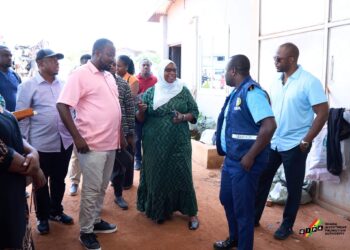
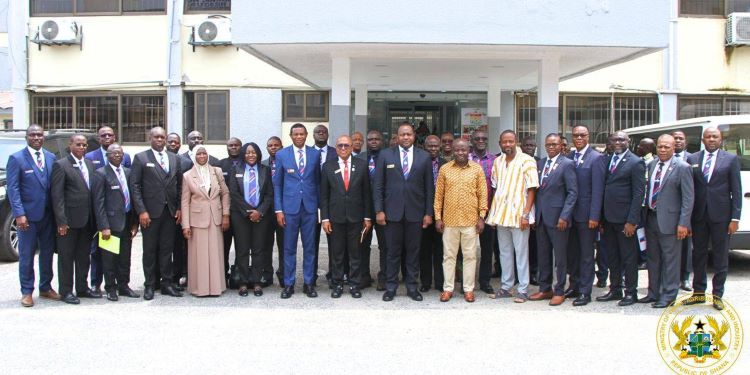
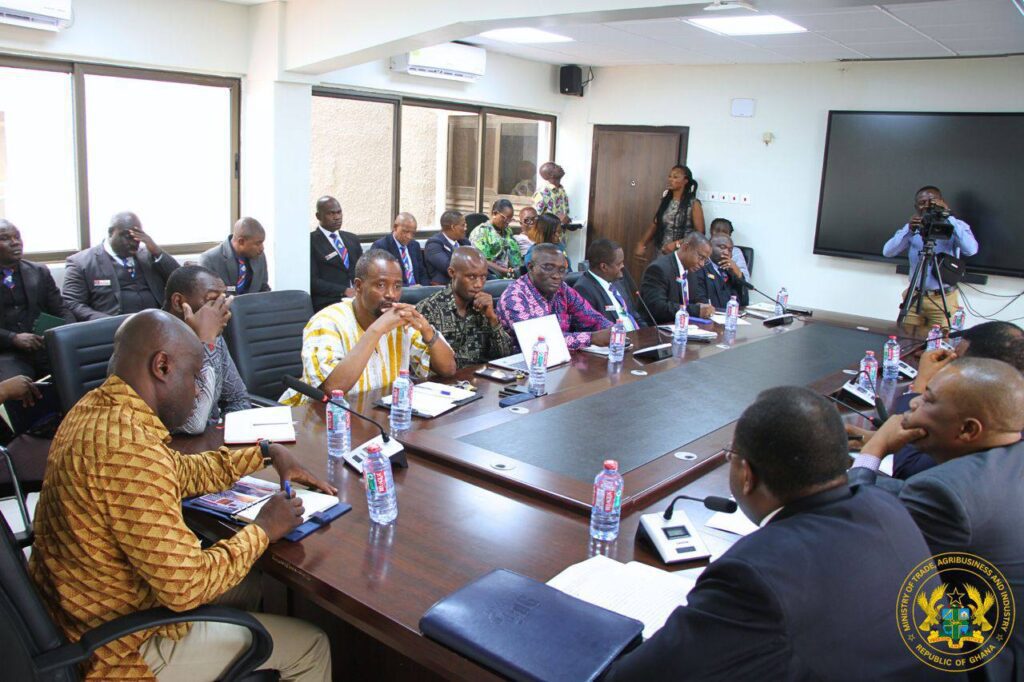
The Ministry of Trade, Agribusiness and Industry (MoTAI) has hosted a high-level delegation from the National Defence College (NDC) of Abuja, Nigeria, marking a significant intersection between regional security and economic strategy.
The 29-member delegation, led by Commodore Tahir S. Ngada, arrived at the Ministry’s headquarters in Accra to examine the structural successes of Ghana’s cocoa sector.
This study tour, themed “Cocoa Production and Economic Growth in Ghana: Lessons to Nigeria,” underscores the growing recognition of agricultural commodities as a vital instrument of national power and regional stability within West Africa.
“The study tour allowed participants to complement their classroom-based academic training with practical exposure, particularly in areas linked to the instruments of national power such as diplomacy, information, military capability and economic development”
Ministry of Trade, Agribusiness and Industry
The visit comes at a pivotal time for MoTAI, which has recently accelerated its Industrialization agenda by moving away from the export of raw cocoa beans toward a policy of aggressive local value addition.
As Nigeria seeks to diversify its own economy away from oil, the Ghanaian model of integrating Agriculture with industrial processing serves as a critical case study. The engagement provided the Nigerian strategic leaders with a first-hand look at how a sovereign state can leverage a single commodity to drive fiscal stability, rural development, and international diplomatic leverage.
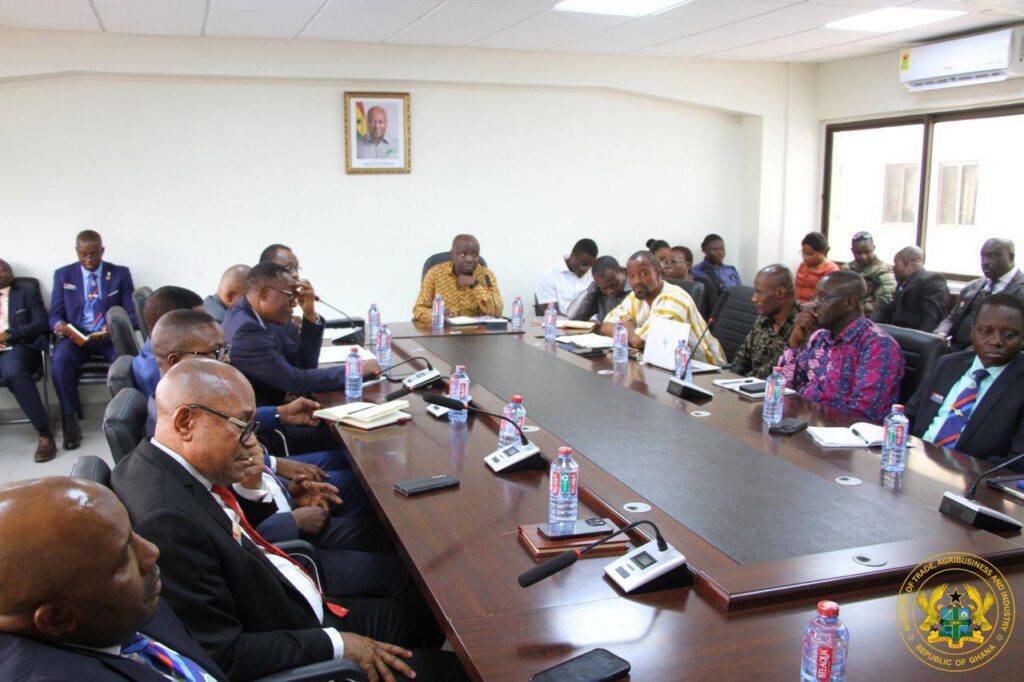
During the presentation to the delegation, Mr. Kwame Oppong-Ntim, Director for Agribusiness, articulated the Ministry’s evolving role in the cocoa value chain. While the Ghana Cocoa Board (COCOBOD) remains the primary regulator of production, MoTAI has taken the lead in the “post-farmgate” economy.
Through strategic partnerships with the Ghana Investment Promotion Centre (GIPC) and the Ghana Free Zones Authority, the Ministry is actively courting private capital to establish more chocolate and cocoa powder refineries on Ghanaian soil.
According to MoTAI, this shift toward local processing is not merely an economic preference; it is a strategic necessity to insulate the national economy from the volatility of global commodity prices.
Echoing the sentiments of President John Dramani Mahama, the Director emphasized that by increasing the percentage of cocoa beans processed domestically, Ghana can retain a larger share of the multi-billion dollar global chocolate industry.
For the visiting military and security leaders, this served as a lesson in economic resilience – demonstrating that national security is inherently tied to a country’s ability to process its own raw materials rather than remaining a peripheral supplier in the global market.
The Private Sector Model
One of the key takeaways for the Nigerian delegation was the government’s reliance on a private-sector-led industrial model. Ministry officials explained that while the government provides the enabling environment and infrastructure, the majority of cocoa processing plants in Ghana are privately owned.
According to MoTAI, this approach allows for greater efficiency and technological innovation, which the government supports through targeted incentives and quality standard enforcement via the Ghana Standards Authority (GSA).
This model of “state-guided, private-executed,” industrialization offered the NDC participants a blueprint for similar reforms in Nigeria’s agricultural sub-sectors. However, the dialogue also touched upon the significant threats facing the sector, most notably the scourge of illegal mining, locally known as “galamsey.”
Officials were candid about the fact that the destruction of cocoa-growing land for unregulated gold mining remains a major bottleneck to output. The Nigerian leaders, whose curriculum often covers the protection of critical national assets, observed how the destruction of agricultural land is a direct threat to economic stability.
The Ministry noted that addressing galamsey requires an inter-agency approach, linking environmental protection with national security forces to preserve the “golden bean,” that sustains millions of livelihoods.
The interactive question-and-answer session allowed participants to dive into the specifics of land tenure and farmer support. Unlike some regional peers that utilize direct cash transfers, the Ministry of Trade, Agribusiness and Industry highlighted its focus on “input-based” support.
By providing high-quality seedlings, fertilizer, and expert extension services, the government ensures that its investment directly translates into increased productivity and yield quality. This also ensures that the state’s resources are tied to tangible agricultural outcomes, a practice that the NDC participants noted as a valuable lesson for fiscal discipline in agricultural reform.
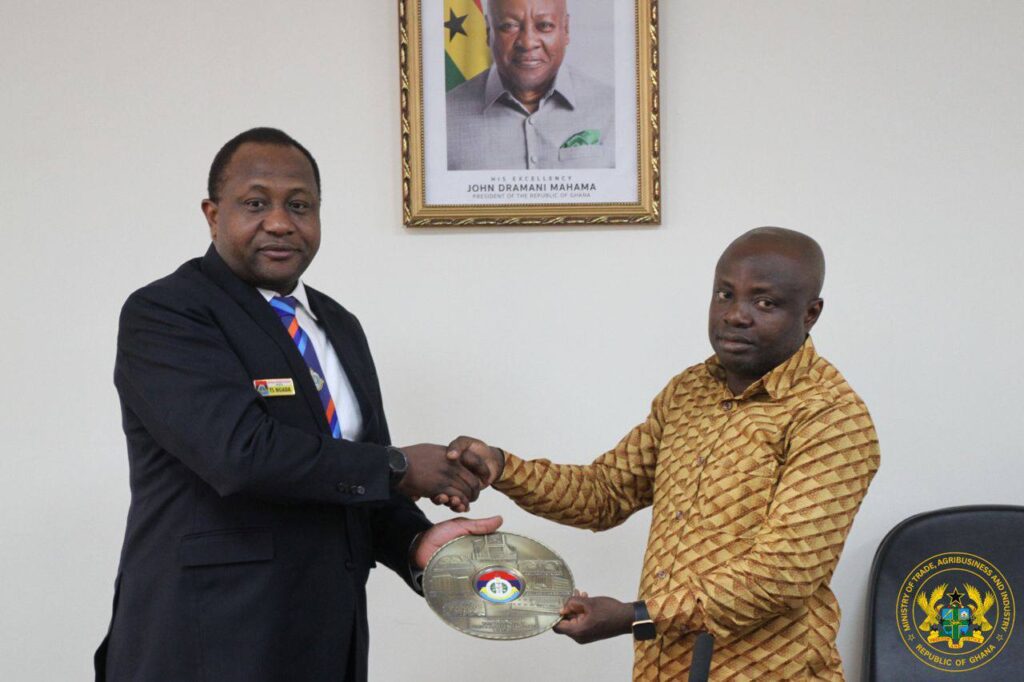
As the study tour concluded, both the Ghanaian hosts and the Nigerian visitors recognized that the prosperity of the West African sub-region is interdependent, as the success of Ghana’s cocoa processing sector provides a market for regional services and sets a standard for neighboring countries.
Through sharing these “lessons to Nigeria,” MoTAI is fostering a more robust regional economy that can withstand global shocks. The visit highlights that in 2026, the definition of a “strategic leader” has expanded to include those who understand how a cocoa bean can be transformed into an engine for national growth and regional power.
READ ALSO: Ghana, Korea Sign Agreements to Deepen Cooperation