

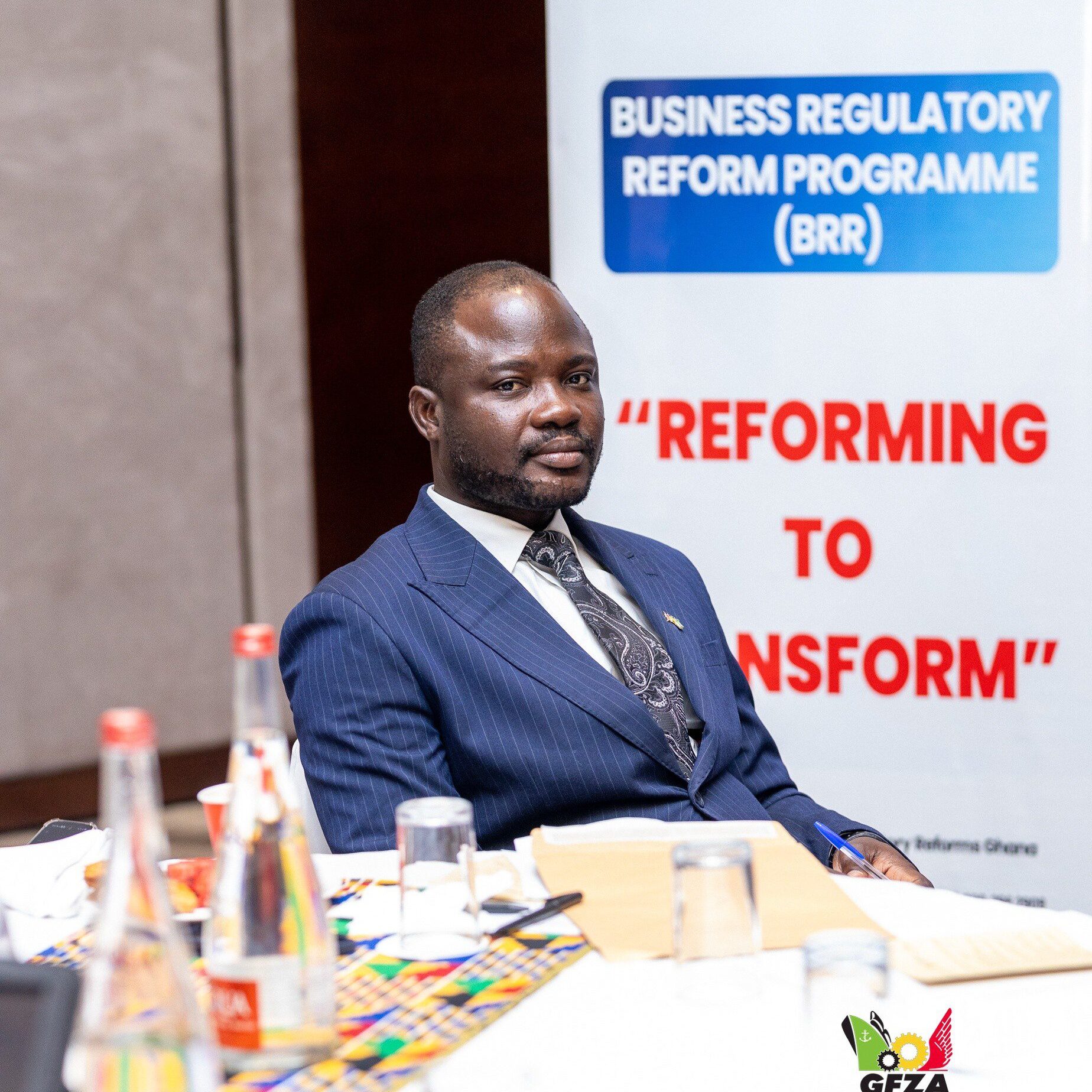
In a decisive move to streamline Ghana’s commercial landscape, the Ghana Free Zones Authority (GFZA) took center stage at a high-level Public-Private Dialogue on Business Regulatory Reforms held in Accra.
Organized by the Ministry of Trade, Agribusiness and Industry (MoTAI), in collaboration with the UK-Ghana Chamber of Commerce, the forum served as a critical platform for addressing the bureaucratic bottlenecks that have historically hampered market entry.
“The forum brought together key public and private sector stakeholders to discuss practical reforms aimed at improving Ghana’s business environment, particularly in easing business entry and facilitating market access. It highlighted international perspectives on enhancing business competitiveness”
Ghana Free Zones Authority
According to the GFZA the dialogue forms part of the broader Business Regulatory Reforms Programme, a strategic initiative designed to enhance the ease of doing business through transparency and inter-agency coordination. For the Authority, these reforms are not merely administrative exercises but the bedrock of the national Industrialization strategy.
The government aims to attract high-value manufacturing and service-oriented enterprises that can drive job creation and export growth through reduced time and cost of business entry.
The presence of Samina Bhatia, Deputy Development Director of the British High Commission, underscored the international community’s interest in seeing Ghana modernize its regulatory frameworks to remain competitive in a rapidly evolving global market.

28-Day Licensing Guarantee
Representing the GFZA, the Deputy Chief Executive Officer in charge of Finance and Administration, Hamidu Sibiri Musah, participated in a pivotal panel discussion on Business Entry and Market Access.
Mr. Musah utilized the platform to demystify the Free Zones scheme, emphasizing its role as a “fast-track” mechanism for investors. Under the provisions of the Ghana Free Zones Act, 1995 (Act 504), the Authority has institutionalized a 28-day turnaround time for the issuance of licenses.
This guarantee is contingent upon the submission of all required documentation, a standard that the GFZA maintains to provide predictability in an often unpredictable global investment climate. Mr. Musah’s contribution highlighted a fundamental shift in the GFZA’s operational philosophy: moving from a traditional regulator to a proactive facilitator.
He detailed the “handholding” service provided by the Authority, which guides prospective investors through the complex web of regulatory requirements, to ensure that documentation processes with other bodies – such as the Office of the Registrar of Companies (ORC) or the Lands Commission – do not overlap or result in redundant delays.
This integrated approach, he noted, is “essential for converting investor interest into tangible industrial projects.”
Inter-Agency Coordination
The forum also addressed the critical issue of market access, which remains a primary concern for export-oriented businesses. The panel featured representatives from the Ghana Investment Promotion Centre (GIPC) and the Lands Commission, highlighting the interdependence of land acquisition, investment certification, and free zone licensing.

Mr. Musah explained that the GFZA’s success is inextricably linked to the efficiency of these sister agencies. When an investor faces delays at the Lands Commission or the ORC, it reflects on the entire national business environment, regardless of how fast the GFZA processes its specific license.
Beyond entry, the dialogue delved into the operational challenges of “Ports Management,” and “Regulatory Predictability.” Frontline agencies such as the Ghana Revenue Authority (Customs Division), the Ghana Shippers Authority, and the Ghana Ports and Harbours Authority (GPHA) engaged in candid discussions with private sector leaders.
The goal was to identify specific friction points in the logistics chain that increase the cost of doing business. For Agriculture-based exporters operating within Free Zones, the speed and transparency of customs clearance are vital for maintaining the quality and competitiveness of their products on the international market.
Strengthening the 24-Hour Economy
The emphasis on regulatory transparency and predictability is a cornerstone of the “24-Hour Economy.” By automating processes and ensuring that regulatory bodies operate with synchronized efficiency, the government is creating an environment where industrial production and trade do not stop at the close of a traditional business day.
The Business Regulatory Reforms Programme sought to eliminate the “human interface” bottlenecks that often lead to delays, replacing them with digital solutions that provide 24/7 access to government services and certifications.
Mr. Musah was accompanied by a technical team including Anita Quashie, Director of Marketing and Investment Promotion, signaling the GFZA’s commitment to translating the dialogue’s high-level themes into practical marketing strategies.
The Authority noted its intent to use the outcomes of this forum to further refine its investment promotion efforts, specifically targeting UK-based firms looking to leverage Ghana as a manufacturing hub for the African Continental Free Trade Area (AfCFTA).
READ ALSO: MDF Urges Collaboration to Ensure Best Mining Practices