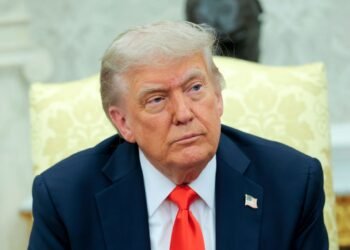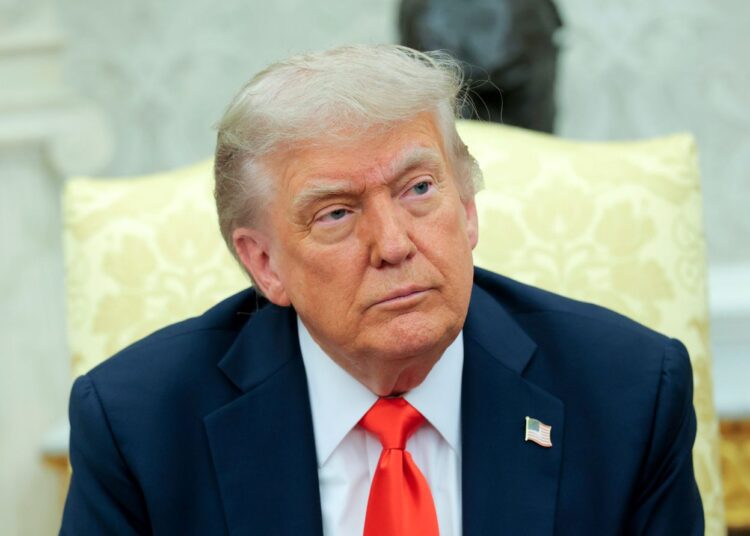
President Donald Trump has downplayed the economic toll the war in Iran is taking on gas prices across the US, writing on Truth social that “when oil prices go up, we make a lot of money.”
The US President’s comment came as the American Automobile Association reports that the average price for a gallon of gas hit $3.60, a week after the beginning of the US-Israel military operation against Iran prompted the largest price spike since the opening days of Russia’s invasion of Ukraine in 2022.
Costs at the pump have increased in line with the price of crude, which climbed above $100 per barrel on Thursday, March 12, 2026, as Iran launched attacks on oil facilities across the Middle East, despite the release of global petroleum reserves intended to stabilize markets.
His remarks reflect ongoing debates about how geopolitical tensions in the Middle East can influence oil prices and, by extension, economic conditions in major producing countries.
“The United States is the largest Oil Producer in the World, by far, so when oil prices go up, we make a lot of money. BUT, of far greater interest and importance to me, as President, is stoping an evil Empire, Iran, from having Nuclear Weapons, and destroying the Middle East and, indeed, the World. I won’t ever let that happen!”
Donald Trump
Despite acknowledging the potential financial benefits of higher oil prices, Trump stressed that economic considerations were not his primary concern. Instead, he said that his focus as President was on preventing Iran from obtaining nuclear weapons and averting what he described as a potentially catastrophic threat to international security.
While the US is the top global crude producer, prices are influenced by global markets and supply chains, with some products coming from refineries overseas.
Meanwhile, Iran’s new Supreme Leader released his first statement since succeeding his late father, saying that his country would keep up attacks on Gulf Arab neighbors and use the effective closure of the Strait of Hormuz as leverage against the United States and Israel.
A fifth of the world’s oil typically sails through the strait, and oil producers in the region are cutting production because their crude has nowhere to go.
A top official in President Donald Trump’s Administration noted that the United States military is “not ready” to accompany oil ships through the Strait of Hormuz, as Iran continues to block the strategic waterway.
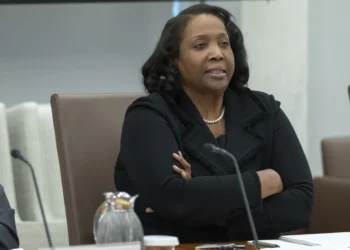
US Energy Secretary, Chris Wright told a news agency that the markets are experiencing a “short-term disruption,” predicting that the war would go on for “weeks, not months.”
Wright described the effects of the crisis as “short-term pain for long-term gain”, arguing that the US is “destroying” Iran’s ability to threaten the energy market.
Last week, Trump suggested that the US Navy would escort ships through the Gulf, but Wright said that the move “can’t happen now.”
“We’re simply not ready. All of our military assets right now are focused on destroying Iran’s offensive capabilities and the manufacturing industry that supplies their offensive capabilities.
“We don’t want this to be a brush-off for a year or two. We want to permanently destroy their ability to build missiles, to build roads, to have a nuclear programme.”
Chris Wright
Rise In Gas Prices Poses Political Liability For Trump
The rise in gas prices poses a political liability for Trump as primaries have begun ahead of the November midterm elections, when his Republican allies will be defending their small majorities in the Senate and House of Representatives.
Democrats have placed concerns about the cost of living at the center of their pitch to voters, and routinely lambast Trump for pursuing hostilities against Iran that they argue fail to meet his campaign promise of lowering prices.
Don Beyer, a Democratic congressman from Virginia, said in response to Trump’s post, “President Trump should end this stupid war now and bring down gas prices for the American people.”
“Fortunately for his big oil donors though, Trump doesn’t mind your pain at the pump since they are going to ‘make a lot of money.’”
Don Beyer
The issue of Iran’s nuclear program has been a major subject of international negotiations for years, involving global powers and multilateral agreements designed to limit Iran’s nuclear activities.
However, tensions surrounding the program have periodically escalated, particularly during periods of confrontation between Iran and Western countries.
The United States has repeatedly argued that Iran’s nuclear ambitions pose a serious threat to regional and global security.
US officials have maintained that preventing Iran from acquiring nuclear weapons is essential to protecting allies in the Middle East and maintaining stability in a region already affected by multiple conflicts.