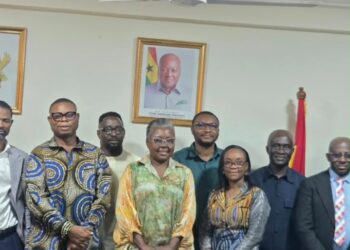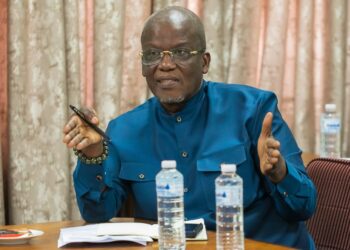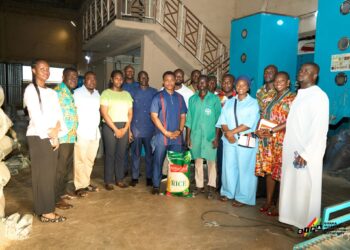
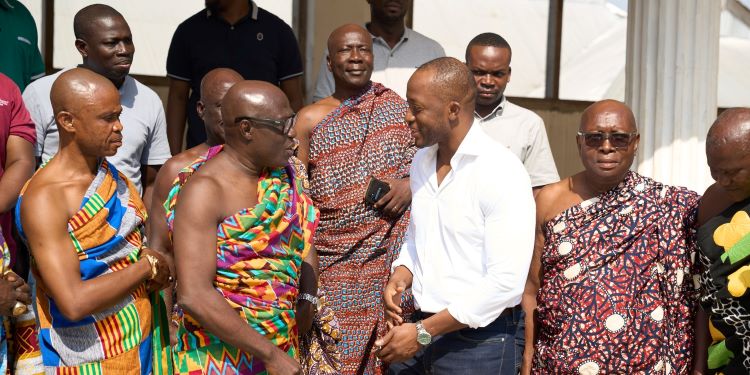
The Ghana Investment Promotion Centre (GIPC) has intensified its nationwide drive to decentralize capital and industrial growth, by turning its strategic focus toward the Western North Region, where Deputy Chief Executive Officer Mr. Abdul Razak Baba, recently led a high-level delegation to the Sefwi Wiawso Traditional Council.
This engagement, part of the ongoing 2025/2026 Regional Investment Roadshows, is to bridge the gap between global investment and local resource potential through mapping out “bankable projects,” within Ghana’s youngest regions, and ensuring that the government’s industrialization agenda penetrates the rural heartlands.
“Discussions focused on opportunities to unlock the Western North Region’s investment potential, particularly in agribusiness development, with oil palm highlighted as a key growth area. The team was received by the Kontihene and Acting President of the Council, Nana Ofori Ahenkan II”
Ghana Investment Promotion Centre
During the call, the GIPC team outlined a vision for a diversified agricultural economy. While the Western North is traditionally recognized as a cocoa powerhouse, the Centre is now pivoting toward Oil Palm as a primary growth area, to establish an integrated value chain that moves beyond subsistence farming into the realm of large-scale industrial agribusiness.
The GIPC plans to identify high-yield sectors and pair them with ready-to-use land, as a way of “de-risking” the region for both domestic and foreign investors. The centre noted that the success of any large-scale agriculture project in Ghana hinges on the cooperation of traditional authorities, who serve as the custodians of the land.
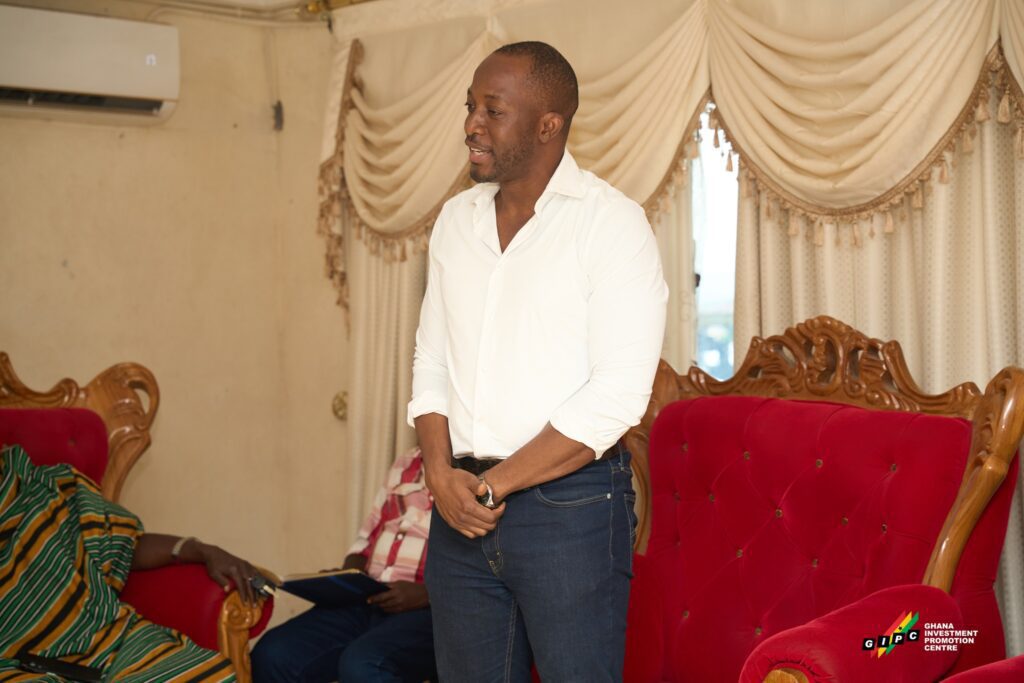
In a significant victory for the roadshow, Nana Ofori Ahenkan II reaffirmed the Council’s readiness to provide vast tracts of arable land for productive ventures. This commitment effectively removes one of the most significant bottlenecks to investment – land litigation and acquisition delays.
The Traditional Council’s proactive stance signals a shift in local governance, where traditional leaders are now acting as primary economic development partners with the state. The Western North’s readiness for investment comes at a time when the national government is pushing the 24-Hour Economy initiative.
Mr. Abdul Razak Baba noted that large-scale oil palm plantations and processing mills are ideal candidates for this model, as continuous, round-the-clock operations would allow the region to meet the increasing demand for vegetable oils and industrial fats in both the domestic market and the wider AfCFTA zone.
According to the Centre, leveraging the Traditional Council’s support to secure contiguous land blocks, is preparing the ground for multi-million-dollar investments that can sustain 24-hour production cycles.
Value Addition
A central theme of the engagement was the urgent need for Industrialization within the region. Despite being a top contributor to Ghana’s cocoa output, the Western North has historically exported its beans in their raw state, losing out on the wealth generated by processing.
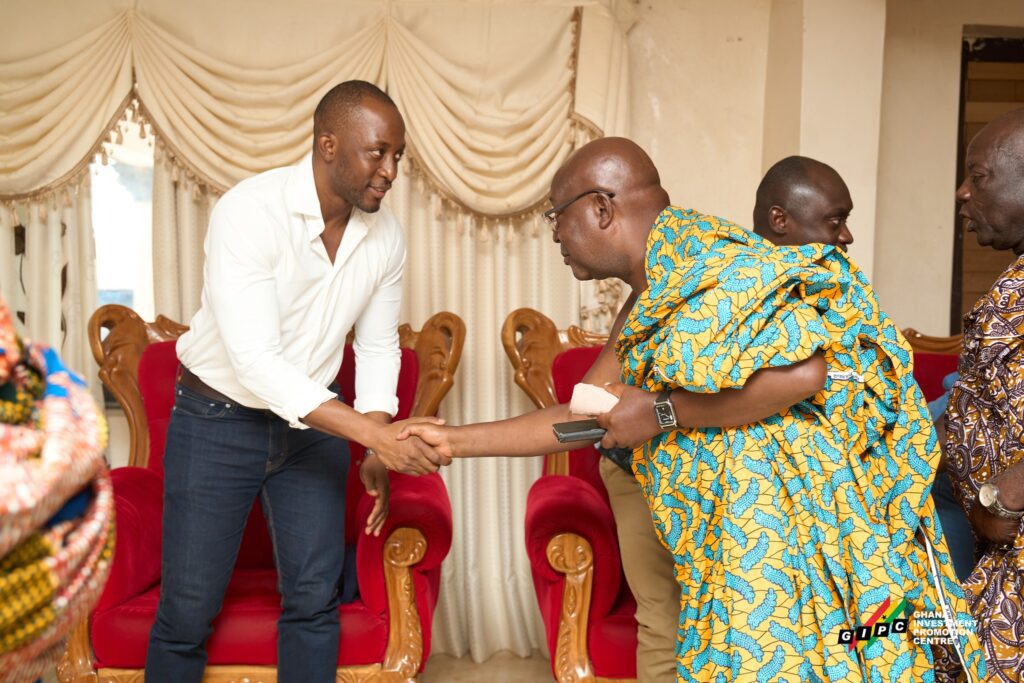
Nana Ofori Ahenkan II was vocal in his advocacy for local cocoa processing plants, arguing that the region should no longer be a mere “source” of raw materials but a hub for finished goods. This aligns perfectly with the Accelerated Export Development strategy, which seeks to boost the value of Ghana’s non-traditional and processed exports.
The GIPC reiterated that its “Investment Mapping” exercise in Sefwi Wiawso is specifically looking for partners interested in setting up processing units for cocoa and oil palm, since “processing cocoa into butter, liquor, and powder within the Western North, can capture a higher percentage of the global value chain,” for the region.
Mr. Baba underscored that the Centre is prepared to facilitate specific incentives – including tax holidays and duty-free equipment imports – for investors who commit to building factories that process local raw materials. He noted that this strategy was essential for creating the high-quality, sustainable jobs that the youth of the region desperately need.
The DCEO further added that the Western North roadshow is part of a broader “Zero-Footprint” personalization of investment promotion – where instead of waiting for investors to visit Accra, the GIPC is taking the opportunities to the global stage by packaging them at the source.
The delegation, which included specialists in monitoring and evaluation, is currently documenting “shovel-ready” projects that will be presented to international delegations in the 2026 fiscal year.
The Western North represents a “frontier market” within Ghana – a region with the land, the labor, and now the political will to support an industrial explosion – and the GIPC’s commitment to it is, therefore, a commitment to a more inclusive national economy where prosperity is not confined to the coastal cities.
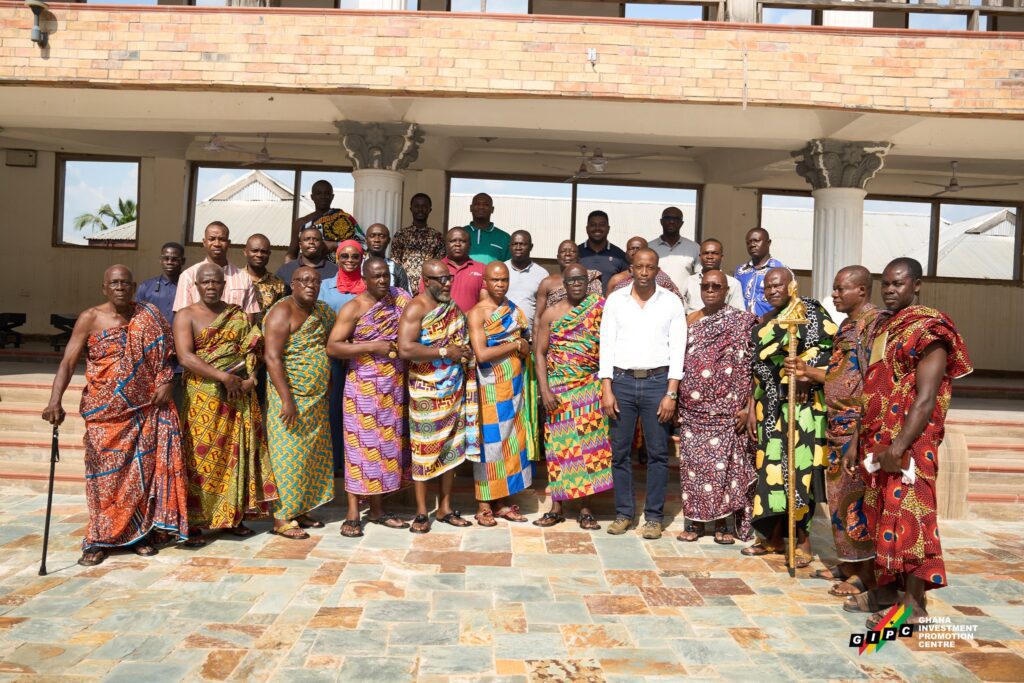
“Mr Baba commended the traditional authorities for their continued support and reaffirmed GIPC’s commitment to working closely with the chiefs and people of the Western North Region to attract investments that will unlock the area’s full economic potential”
Ghana Investment Promotion Centre
As the roadshow moves to its next phase, the GIPC remains focused on the “quality” of investment. Mr. Abdul Razak Baba emphasized that the Centre is not just looking for capital, but for partners who prioritize environmental sustainability and community development.
The oil palm and cocoa sectors are particularly sensitive to global sustainability standards, and the GIPC is working to ensure that any new industrial projects in the Western North meet “international ESG (Environmental, Social, and Governance) criteria.”
READ ALSO: GoldBod to Establish Gold Buying Centres Across Mining Districts